














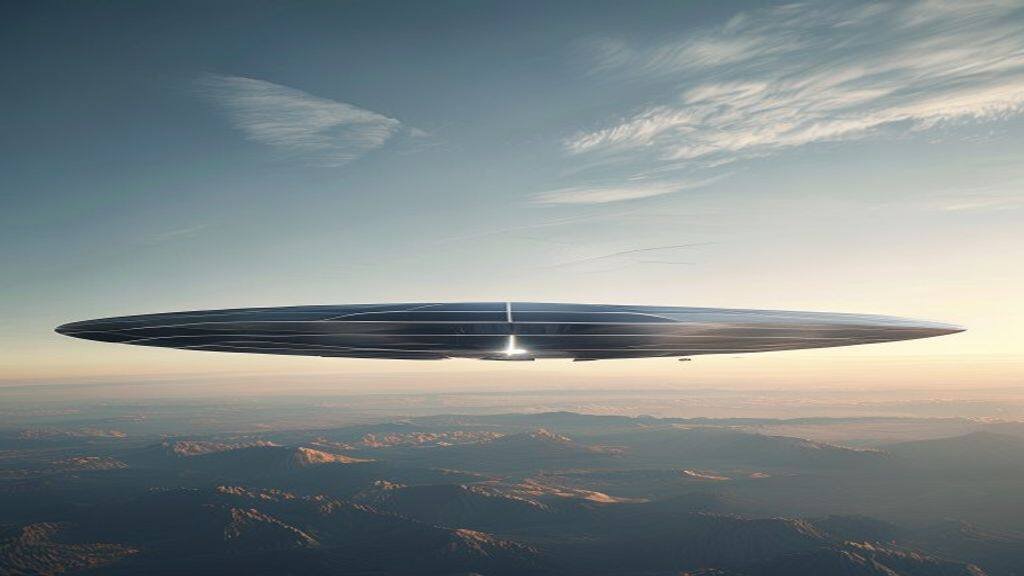
The quest to bridge the global digital divide has long been hampered by the physical limitations of terrestrial infrastructure. Laying fiber-optic cables across mountainous terrain or sparsely populated rural regions is often cost-prohibitive, leading to significant disparities in connectivity. However, a new paradigm in aerospace technology is emerging: high-altitude solar-powered platforms. These autonomous, long-endurance aircraft are positioning themselves not just as experimental drones, but as critical nodes in a global AI-driven telecommunications network, promising to deliver high-speed internet from the stratosphere.
The Mechanics of High-Altitude Connectivity
Unlike traditional satellites that orbit hundreds of miles above the Earth, high-altitude platforms (HAPs) operate within the stratosphere, typically at altitudes between 60,000 and 70,000 feet. At this height, these platforms sit above the weather and commercial flight paths, providing a stable environment for long-term deployment. The core innovation lies in the propulsion and power systems; by utilizing lightweight, high-efficiency solar arrays and advanced battery storage, these craft can remain airborne for months at a time without requiring a return to the ground for refueling.
From a technical standpoint, these platforms function as “floating cell towers.” By beaming signals directly downward, they can cover vast geographic areas with minimal latency compared to their orbital counterparts. Because the signal distance is significantly shorter than that of a satellite in Low Earth Orbit (LEO) or Geostationary Orbit (GEO), the round-trip time for data packets is drastically reduced, enabling real-time applications such as remote surgery, autonomous vehicle coordination, and high-frequency trading in areas that were previously considered “dead zones.”
The Role of Artificial Intelligence in Stratospheric Operations
While the aerodynamic design of these platforms is impressive, the true “brain” behind the operation is Artificial Intelligence. Managing a fleet of solar-powered drones requires constant, split-second decision-making that exceeds human capability. AI algorithms are essential for flight path optimization, analyzing real-time meteorological data to navigate wind currents and turbulence. By predicting weather patterns, the onboard AI can adjust the aircraft’s altitude and trajectory to maximize solar intake while minimizing energy expenditure.
Furthermore, AI plays a pivotal role in dynamic load balancing for network traffic. As thousands of users connect to the platform simultaneously, the system must intelligently allocate bandwidth based on demand and priority. Machine learning models analyze traffic patterns in real-time to predict surges, ensuring that the platform’s beamforming antennas are precisely oriented to maintain stable connections. This intelligent orchestration allows the platform to act as a self-healing network, automatically rerouting data if a specific node experiences technical degradation or atmospheric interference.
Overcoming the Challenges of Stratospheric Deployment
Despite the promise, the deployment of solar-powered platforms is fraught with engineering hurdles. The stratosphere is an unforgiving environment characterized by extreme temperature fluctuations and intense ultraviolet radiation, which can degrade sensitive electronics and structural materials. Engineers are currently focusing on developing advanced composite materials that are both incredibly lightweight and resilient enough to withstand the stresses of prolonged flight. Thermal management is another critical concern; the electronics powering the sophisticated AI and signal processing systems generate heat that must be dissipated efficiently in the thin, low-density air of the upper atmosphere.
Regulatory and airspace management also presents a complex puzzle. Integrating these autonomous platforms into civil airspace requires sophisticated collision-avoidance systems, often referred to as “detect and avoid” (DAA) technology. These systems rely on a fusion of onboard sensors—including radar, lidar, and optical cameras—processed through AI to ensure that the platforms can safely navigate around other aircraft without human intervention. As international aviation authorities begin to draft framework regulations for unmanned high-altitude flight, the industry is moving toward a standardized protocol that ensures these internet-delivering platforms can coexist with commercial aviation safely.
Economic Implications and the Future of Access
The economic impact of reliable, high-speed internet delivered from the stratosphere cannot be overstated. For developing nations, the ability to bypass the need for expensive ground-based infrastructure could accelerate economic growth, improve educational outcomes, and increase access to digital banking and healthcare services. By lowering the barrier to entry for internet service providers, these platforms foster competition and innovation in regions that have historically been neglected by major telecommunications corporations.
Furthermore, the integration of AI-driven platforms into the global infrastructure grid allows for a more decentralized internet. During natural disasters or infrastructure failure, these platforms can be rapidly deployed to restore communication links, providing critical support for emergency services and humanitarian efforts. As the cost of solar technology and autonomous flight systems continues to decline, we are approaching a tipping point where stratospheric internet becomes not just a specialized solution, but a fundamental component of the global communications architecture.
Outlook
The horizon for high-altitude, solar-powered connectivity is bright, yet the coming years will be defined by rigorous testing and regulatory maturation. We can expect to see an increase in pilot programs that demonstrate long-endurance flight capabilities in diverse climates. As AI models become more adept at managing both the flight dynamics and the complex data routing required for modern telecommunications, these platforms will likely transition from experimental prototypes to essential pillars of the global internet. The marriage of aerospace engineering and artificial intelligence is not merely changing how we access the internet; it is redefining the geographic boundaries of the digital age.
Original reporting: source.











![Nvidia CEO Jensen Huang tells Trump ‘we’re not going to let [an AI slowdown] happen’](https://in24tech.com/wp-content/uploads/2026/09/nvidia-ceo-jensen-huang-tells-trump-were-not-going-to-let-an-ai-slowdown-happen-218x150.jpg "Nvidia CEO Jensen Huang tells Trump ‘we’re not going to let [an AI slowdown] happen’")