



















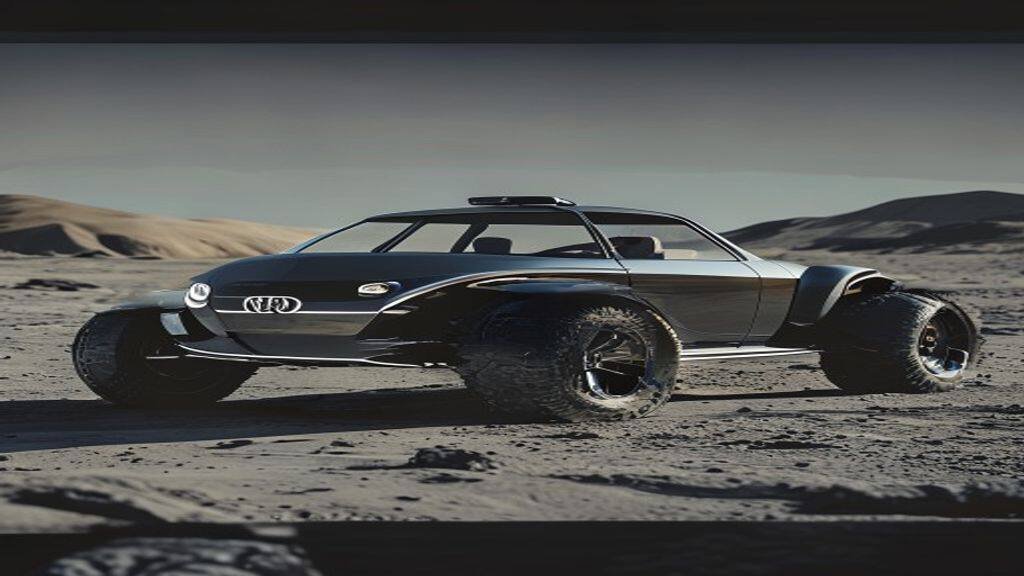
In the landscape of modern automotive design, the pursuit of the “next big thing” often leads manufacturers toward aerodynamic efficiency, autonomous software, and minimalist interior aesthetics. However, a new venture spearheaded by a cohort of industry veterans from Apple and Audi has taken a decidedly different path. By drawing inspiration from the Lunar Roving Vehicle (LRV) used during the Apollo missions, this startup is aiming to redefine the luxury electric vehicle (EV) segment through a lens of rugged, space-age minimalism. The result is a vehicle that feels less like a commuter car and more like an interplanetary explorer for the terrestrial elite.
The Genesis of a Lunar-Inspired Vision
The project, which has been operating under a veil of secrecy for several years, brings together a unique blend of Silicon Valley software expertise and German automotive engineering heritage. The founding team recognized a stagnation in the premium EV market, where many vehicles have begun to look indistinguishable from one another—often described as “jellybean” shapes optimized for drag coefficients. To break this cycle, the designers looked back at the 1971 Lunar Roving Vehicle. The goal was not to replicate the moon buggy’s utilitarian, wire-mesh construction, but to capture its spirit of purposeful, exposed engineering and lightweight durability.
By blending Apple’s obsession with material science and user interface simplicity with Audi’s legacy of chassis rigidity and mechanical precision, the team has developed a modular platform. This architecture prioritizes structural integrity while shedding the excess weight that plagues traditional battery-electric luxury sedans. The result is a machine that feels raw and visceral, a stark departure from the plush, isolated cabins offered by legacy luxury brands.
Design Philosophy: Form Following Function
At the center of this vehicle’s appeal is its “exoskeletal” aesthetic. While most EVs hide their mechanical components beneath smooth, composite body panels, this car highlights its structural members as a design feature. The chassis is constructed from a proprietary aluminum-titanium alloy, providing a strength-to-weight ratio that would be the envy of any aerospace engineer. The cabin is housed within a “capsule” design, featuring panoramic, reinforced glass that offers nearly 360-degree visibility, mimicking the wide-angle view astronauts had from the lunar surface.
Inside, the luxury is defined by subtraction rather than addition. In a clear nod to the Apple design philosophy, there are almost no physical buttons. Instead, the vehicle utilizes a haptic-feedback interface embedded directly into the dashboard’s reclaimed aerospace-grade materials. The seats are modeled after ergonomic harnesses, providing support that adjusts dynamically based on the vehicle’s tilt and acceleration, ensuring that the driver remains centered even on the most uneven terrain.
Engineering Performance and Range Dynamics
While the aesthetic is inspired by the moon, the performance is firmly rooted in the requirements of Earth’s modern infrastructure. The vehicle utilizes a high-density solid-state battery architecture, a technology that many legacy automakers are still struggling to bring to mass production. This allows for a significantly smaller battery footprint compared to current market leaders, which in turn keeps the vehicle light and nimble. The powertrain consists of four independent hub motors, allowing for torque-vectoring capabilities that enable the vehicle to perform “tank turns” and navigate high-friction surfaces with ease.
The range, according to early testing data, is competitive with the current high-end luxury market, boasting an estimated 450 miles on a single charge. However, the true differentiator is the charging efficiency. Thanks to an 800-volt electrical architecture, the vehicle can recover 80% of its battery capacity in less than 15 minutes, provided the user has access to ultra-fast DC charging infrastructure. This focus on rapid turnaround times aligns with the “expedition” mindset of the vehicle’s design team.
The Challenge of Market Positioning
Entering the luxury automotive space is notoriously difficult, even for teams with pedigree. The primary challenge for this startup will be shifting the consumer perception of “luxury.” For decades, luxury has been defined by leather, wood grain, and soundproofing—a cocoon of comfort. This lunar-inspired EV challenges that notion by suggesting that true luxury is found in the connection between the driver, the machine, and the environment. It is a high-stakes gamble that requires a specific type of buyer: one who values technical prowess and unconventional aesthetics over traditional status symbols.
Furthermore, the production process is significantly more complex than standard unibody manufacturing. By utilizing advanced additive manufacturing (3D printing) for several chassis components, the startup is essentially reinventing the assembly line. While this allows for unprecedented design flexibility, it also introduces significant hurdles in scaling production to meet global demand. If the company can maintain its quality standards while moving toward mid-volume manufacturing, it may well become a benchmark for future EV innovation.
Outlook: A New Frontier in Mobility
As the automotive industry continues its transition toward electrification, the novelty of “being electric” is rapidly wearing off. Consumers are beginning to demand more from their vehicles, looking for unique experiences that reflect their personal values and aesthetic preferences. By looking toward the stars for inspiration, this Apple and Audi-backed venture has successfully created a product that stands out in a crowded market. Whether or not this vehicle becomes a commercial success, it has already achieved something significant: it has proven that the future of luxury transportation need not be a refined version of the past, but a bold, experimental leap into the unknown.
Original reporting: source.