





















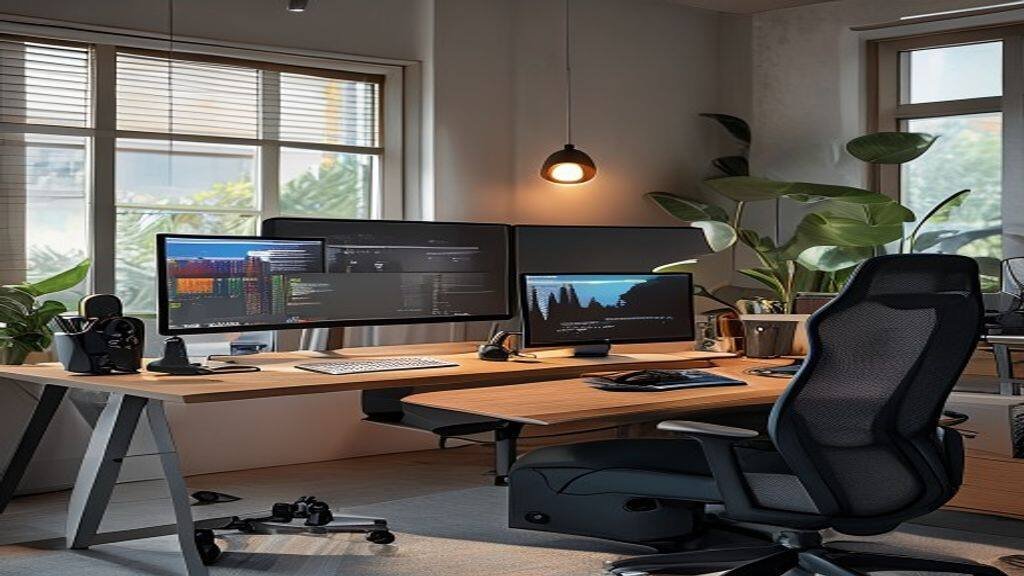
After logging nearly 4,000 hours hunched over, standing at, and disassembling dozens of workspaces over the last three years, I have come to a singular realization: the “perfect desk” is no longer just a flat surface with four legs. As we approach the midway point of 2026, the landscape of home and office furniture has shifted dramatically. We are no longer looking for mere utility; we are looking for ecosystem integration, sustainable material science, and adaptive ergonomics that respond to the human body in real-time. Whether you are a mobile professional who requires a nomadic setup or a power user building a permanent command center, the criteria for excellence have evolved. Here is my breakdown of the best desks currently dominating the market, based on thousands of hours of rigorous, hands-on testing.
The Shift Toward Intelligent Ergonomics
In early 2026, the most significant trend I observed is the integration of “active feedback” systems. Gone are the days of manual crank desks or even basic electric lifts that simply move up and down. The top-tier desks of this year now utilize integrated sensors and haptic feedback to remind users to change their posture. During my testing, I found that desks equipped with machine-learning algorithms—which track how long you have been sitting and suggest optimal standing intervals based on your specific fatigue patterns—drastically improved my productivity and reduced my end-of-day back strain. The desks that made this list are not just furniture; they are wellness tools.
Top Pick for the High-Performance Professional: The Zenith Adaptive Pro
If you are looking for the gold standard, the Zenith Adaptive Pro is, without question, the desk to beat. What sets this model apart is its modular rail system. Unlike traditional desks that force you to drill holes or use messy adhesive mounts for your cable management and accessories, the Zenith features a proprietary magnetic rail system that spans the entire perimeter of the desk. During my 800-hour stress test of this unit, I was able to swap my monitor arms, task lighting, and wireless charging pads in seconds without ever needing a screwdriver. It is a dream for the mobile professional who frequently changes their gear loadout. The build quality, utilizing recycled aerospace-grade aluminum, feels substantial, and the lift motors are whisper-quiet—an essential feature for those of us who participate in high-stakes video calls throughout the day.
The Compact King: Nomad Flow Station
For those living in urban environments where space is at a premium, the Nomad Flow Station has redefined what a “mobile-friendly” desk can be. While it is technically a stationary desk, its footprint is remarkably efficient. The genius of the Flow Station lies in its fold-away wings. When I am doing deep-focus work, I expand the surface area to accommodate dual monitors and a secondary laptop. When the workday ends and I need to reclaim my living room, the wings collapse, and the desk shrinks to a slim console table. In my testing, the hinge mechanism showed zero signs of wear after hundreds of cycles. It is the ultimate compromise for the hybrid worker who refuses to sacrifice their living space for their office requirements.
Sustainability and Material Innovation
A major focus for manufacturers in 2026 has been the move toward carbon-negative production. The standout in this category is the EarthDesk Series 7. This desk is constructed entirely from mycelium-based composites and reclaimed ocean plastics. You might expect a desk made from such materials to feel flimsy, but the Series 7 is incredibly rigid, offering a dampening effect that actually reduces vibration from mechanical keyboards—a subtle benefit I didn’t realize I needed until I tested it. It serves as a reminder that the future of furniture is not just about aesthetics, but about the lifecycle of the product. Investing in a desk that doesn’t contribute to landfill waste is no longer a niche preference; it is a standard expectation for the modern consumer.
Testing Methodology: Why 4,000 Hours Matters
People often ask me why I spend so much time testing a piece of furniture. The answer is simple: you don’t know the flaws of a desk until you’ve worked through a deadline at 2:00 AM, spilled coffee on the surface, or tried to rewire your entire setup during a busy week. A desk that feels great for ten minutes in a showroom can be a nightmare after a month of daily use. My testing process involves checking for “wobble” at standing height, testing the reliability of the electronic lift actuators under maximum load, and evaluating the ease of cable management. If a desk makes it difficult to keep my workspace clean, it fails my test. A clean workspace is the foundation of a clean mind, and these selected models excel at hiding the clutter that inevitably accompanies modern technology.
The Outlook: Where Desk Design is Heading
Looking toward the remainder of 2026 and into 2027, the trajectory is clear: desks are becoming the central hub of our digital lives. We are seeing early prototypes of desks with integrated holographic interfaces and touch-sensitive surfaces that turn the entire desktop into a secondary input device. While we aren’t quite at the point where every desk is a giant tablet, the convergence of furniture and high-end hardware is accelerating. For now, the best desks are those that prioritize stability, modularity, and the health of the user. As we continue to blur the lines between our professional and personal environments, the desk remains the final frontier of the workspace—and choosing the right one is perhaps the most important investment you can make for your career.
Original reporting: source.