








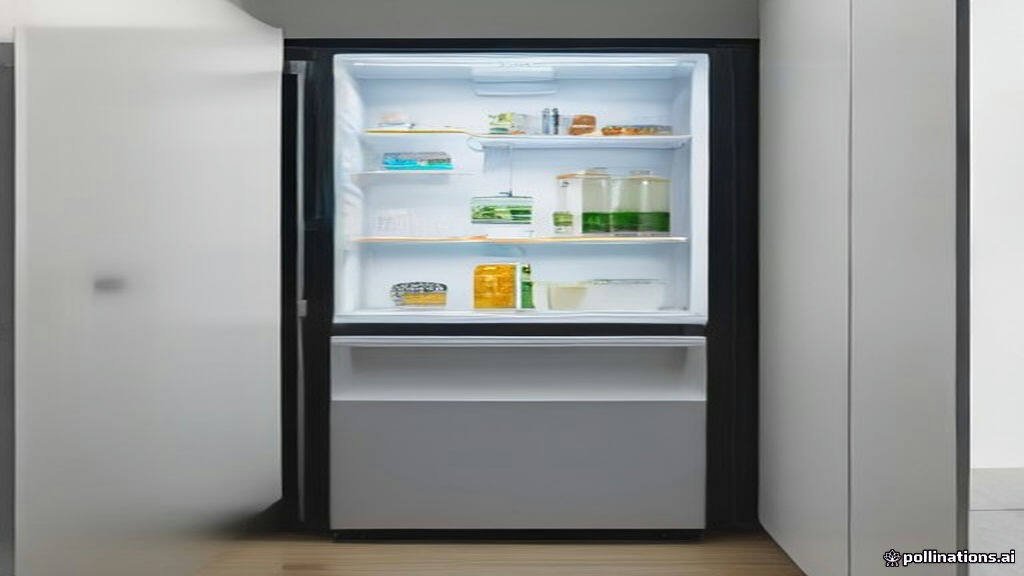
For the better part of a decade, the “smart” revolution has promised to transform the kitchen from a place of manual labor into a hub of automated efficiency. Among the most ambitious of these appliances is the smart refrigerator—a device equipped with high-definition touchscreens, internal cameras, voice assistants, and constant internet connectivity. While the vision of a fridge that tracks your inventory, suggests recipes, and manages your grocery list sounds like the pinnacle of modern living, the reality for many consumers is far more complicated. As the novelty fades, many homeowners are discovering that a refrigerator’s primary job—keeping food cold—is often overshadowed by the logistical and technical burdens of its “smart” features.
The Problem of Planned Obsolescence and Software Decay
The most significant drawback of a smart refrigerator is the fundamental conflict between the lifespan of a kitchen appliance and the lifespan of consumer electronics. A traditional, “dumb” refrigerator is built to last between 15 and 20 years. Its mechanical components are robust, and its primary function—compressing refrigerant—does not rely on software updates. In contrast, the computing hardware and operating systems integrated into smart fridges often become obsolete within five to seven years.
When a manufacturer stops providing security patches or software updates for your fridge’s internal tablet, you are left with a massive, energy-consuming appliance that features a slow, potentially insecure, or broken interface. Unlike a smartphone, which is designed to be replaced every few years, replacing a refrigerator is a major financial and logistical undertaking. You may find yourself in a bizarre situation where your fridge is still cooling your milk perfectly, but the “smart” screen is glitching, the app connectivity has been discontinued, or the user interface has become so sluggish that it is practically unusable.
Data Privacy and the Connected Kitchen
In an era where data is the most valuable commodity, smart refrigerators have become persistent data collectors. These devices are constantly gathering information about your household habits: what you eat, when you eat it, and how often you replenish your supplies. While companies often frame this data collection as a way to improve user experience or provide “personalized” shopping lists, it also opens the door to invasive targeted advertising and potential data breaches.
Furthermore, because these fridges require a constant Wi-Fi connection to function at their full capacity, they become another node on your home network that requires security management. If the manufacturer’s security protocols are weak, the refrigerator could theoretically serve as a backdoor for hackers to access your private network. For the average consumer, the trade-off—giving up household behavioral data in exchange for the ability to see the inside of their fridge while at the grocery store—is becoming increasingly difficult to justify.
The High Cost of Maintenance and Repair
When a mechanical component in a standard refrigerator fails, a local technician can usually identify the issue and source the necessary part. When a smart refrigerator encounters a problem, the diagnostic process becomes significantly more complex. Many smart fridges use proprietary sensors, specialized control boards, and integrated software systems that are often locked behind manufacturer-specific service protocols.
If the touchscreen fails or the integrated camera system goes dark, you are often at the mercy of the manufacturer’s customer support and their specific supply chain. Repairs that would be minor for a traditional model can turn into weeks-long ordeals, sometimes requiring specialized technicians who are trained specifically on that brand’s software. Additionally, the parts for these high-tech components are significantly more expensive than standard mechanical switches or thermostats. In many cases, the cost of repairing the “smart” features of a five-year-old fridge can approach the cost of buying a brand-new, basic model.
The Myth of Convenience and Cognitive Load
We are often sold the idea that technology reduces our cognitive load, but smart fridges frequently do the opposite. They introduce a layer of digital friction into a space that was previously simple. Instead of opening the door and looking at your shelves, you might find yourself navigating through menus, waiting for a software update to finish, or troubleshooting why the fridge’s internal camera isn’t syncing with your phone.
Moreover, the “smart” features often rely on user input to be effective. For the inventory tracking to work, every item placed in the fridge needs to be scanned or entered into the system. In the reality of a busy household, manually updating an inventory list every time you put away groceries is a chore that most people abandon within the first month. The result is a high-tech appliance that is being used as a low-tech icebox, with the added burden of an expensive, glowing screen that serves no practical purpose.
Outlook
The smart refrigerator sits at an awkward intersection of luxury gadgetry and essential infrastructure. While the technology will undoubtedly improve, the current iteration of the connected kitchen remains a cautionary tale of “feature creep.” As consumers become more aware of the long-term costs associated with software-dependent appliances, we may see a shift back toward “durable intelligence”—devices that prioritize energy efficiency and mechanical longevity over flashy, short-lived digital interfaces. Until manufacturers can guarantee software support for the duration of the fridge’s physical life, the smartest choice for many remains the reliable, offline model.
Original reporting: source.