













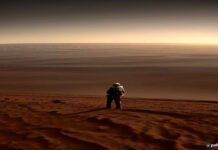

For decades, the exploration of Mars was a slow, methodical process defined by human intervention. Every movement, every turn, and every scientific measurement was orchestrated by engineers back on Earth, separated by millions of miles and a communication delay that could span up to 20 minutes. However, the paradigm of planetary exploration has shifted dramatically. With the successful deployment and sustained operation of the Perseverance rover’s autonomous navigation system, known as AutoNav, the red planet has officially entered the era of the self-driving vehicle. This technological milestone is not merely an incremental improvement; it is a fundamental transformation of how we conduct interplanetary science.
The Evolution of Martian Mobility
To understand the magnitude of this success, one must look at the history of previous missions. The Spirit, Opportunity, and Curiosity rovers were marvels of engineering, but they were essentially remote-controlled vehicles. Their “driving” was a labor-intensive process where navigators at NASA’s Jet Propulsion Laboratory (JPL) would analyze stereo images, map out a safe path, and send a specific sequence of commands to the rover. If the rover encountered a rock or a slope that hadn’t been clearly identified in the imagery, it would stop and wait for further instructions. This “stop-and-go” method was safe, but it was incredibly inefficient, often limiting the rover to mere meters of travel per day.
Perseverance, which landed in the Jezero Crater in 2021, was equipped with a significantly more advanced brain. The integration of the AutoNav system represents the first time a vehicle on another planet has been granted the autonomy to make high-level decisions regarding its own path. By utilizing a high-performance computer dedicated to vision processing—independent of the rover’s primary scientific computer—Perseverance can process terrain data in real-time. This allows the rover to “see” hazards, calculate the safest route around them, and keep its wheels moving toward its destination without needing a human to sign off on every inch of progress.
How AutoNav Redefines Efficiency
The success of this system can be measured in the dramatic increase in daily travel distance. Where older rovers might cover a few dozen meters in a day, Perseverance has been documented traversing hundreds of meters in a single sol (a Martian day). The brilliance of AutoNav lies in its “thinking” process. As the rover moves, it constructs a three-dimensional map of the surrounding environment. It identifies potential obstacles such as sharp rocks, loose sand traps, or steep inclines that could potentially jeopardize the mission.
Crucially, the rover does not have to stop to perform these calculations. The hardware aboard Perseverance is capable of performing “thinking while driving.” It constantly updates its route as it rolls forward, adjusting its trajectory to avoid newly detected hazards. This continuous motion is the key to unlocking the vast distances of the Martian surface. By removing the “wait-for-Earth” bottleneck, the mission team has effectively doubled or even tripled the amount of ground the rover can cover over the course of a year. This has allowed the mission to visit diverse geological sites—ranging from ancient river deltas to rugged crater rims—that would have been considered too far away under the old model of exploration.
The Technical Challenges of Autonomous Off-Roading
Driving on Earth is a challenge, but driving on Mars is an order of magnitude more difficult. The Martian surface is unpredictable; it is covered in fine, powdery regolith that can cause wheels to slip, and sharp, jagged rocks that can slice through aluminum tire treads. Furthermore, the lighting conditions on Mars change throughout the day, and the lack of a global positioning system (GPS) means the rover must rely entirely on visual odometry—tracking its position by observing the shift of landmarks in its field of view.
The engineering team behind the AutoNav system had to account for these variables by implementing sophisticated machine learning algorithms. The rover is trained to recognize “safe” terrain versus “hazardous” terrain based on the geometry of the ground and the texture of the surface. If the onboard system determines that the risk of traversal is too high, it pauses, signals back to Earth, and waits for human intervention. However, in the vast majority of cases, the rover has proven capable of navigating complex obstacles with a level of precision that rivals—and often exceeds—human drivers operating via low-resolution imagery.
A New Standard for Future Missions
The success of the self-driving rover on Mars is not just a win for the Perseverance team; it is a blueprint for the future of space exploration. As we look toward sending more sophisticated robots—and eventually humans—to the Moon and Mars, the ability for equipment to operate autonomously will be the deciding factor in mission viability. We are entering an era where robotic scouts can map out entire regions, identify samples of interest, and prepare landing zones before human explorers even leave the launchpad.
Furthermore, this technology has significant implications for terrestrial applications. The lessons learned in the extreme, high-latency environment of Mars are already being fed back into the development of autonomous systems on Earth, particularly for search-and-rescue operations in disaster zones or mining equipment operating in remote, hazardous environments. The “smashing success” of Perseverance’s autonomous navigation proves that we can trust machines to make life-or-death decisions in the most unforgiving environments imaginable.
Outlook: The Road Ahead
As Perseverance continues its journey across the Jezero Crater, the focus is shifting from simply proving that the vehicle can drive itself to using that autonomy to conduct more ambitious scientific campaigns. The rover is now routinely tasked with navigating to sites that were previously deemed too remote or too difficult to reach, significantly increasing the volume of geological data returned to Earth. Moving forward, the integration of even more advanced AI will likely allow future rovers to not only navigate autonomously but also to identify scientifically significant rocks and perform initial analysis without human oversight. The era of the planetary chauffeur is over; we have officially entered the age of the robotic pioneer.
Original reporting: source.