














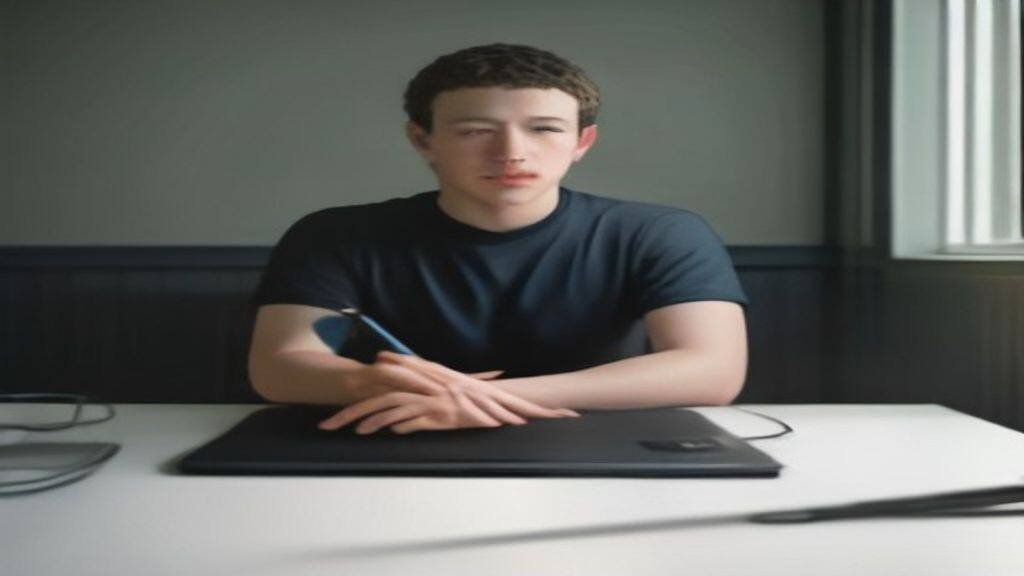
The Silicon Valley Paradox: Is Mark Zuckerberg Losing Touch with the Human Experience?
In the high-stakes world of technology, few figures command as much influence—or draw as much scrutiny—as Meta CEO Mark Zuckerberg. Over the past two decades, he has transitioned from a college dorm room coder to the architect of the social fabric that connects billions of people. Yet, as he pivots his empire toward the “Metaverse” and increasingly integrates artificial intelligence into the core of his products, a growing chorus of critics and observers are raising a provocative question: Has Zuckerberg become so insulated by his own technology that he has fundamentally lost his grasp on how to live a human life?
The Digital Insulation of the Tech Elite
To analyze this critique, one must first understand the environment in which Zuckerberg operates. For the ultra-wealthy in Silicon Valley, reality is often curated. When your daily life is managed by personal assistants, security details, and private logistics, the mundane friction of human existence—the grocery store lines, the bureaucratic hurdles, the quiet moments of unmonitored solitude—often disappears. This insulation is not necessarily a malicious choice; it is a byproduct of extreme success. However, it creates a “reality distortion field” where the problems one chooses to solve are often abstract, mathematical, or algorithmic, rather than grounded in the visceral realities of the average user.
Critics argue that this detachment is reflected in Zuckerberg’s recent product launches. From the early, somewhat sterile iterations of Horizon Worlds to his heavy emphasis on virtual avatars, there is a recurring theme of replacing the physical world with a digital facsimile. For a man who spends his professional life trying to build a better version of reality, the irony is that he may be viewing the actual world as a series of bugs that need to be patched, rather than an experience to be lived.
The Quest for Optimization vs. The Beauty of Chaos
Mark Zuckerberg is famously a man of extreme optimization. Whether it is his well-documented daily routines, his physical fitness challenges, or his disciplined approach to business strategy, he approaches life as a project to be debugged and iterated. While this mindset is arguably why Meta has remained a dominant force in the global economy, it stands in direct opposition to the messy, non-linear nature of human existence.
Living, in the traditional sense, involves embracing spontaneity, inefficiency, and the unplanned. Technology, by contrast, is designed to minimize these elements. When an individual applies an engineering mindset to their personal life, they risk viewing human connection as a data point and leisure as a productivity metric. When Zuckerberg engages in activities—such as his well-publicized interest in mixed martial arts or his various physical challenges—there is often a performative quality to them. It is as if he is testing the limits of the hardware (his body) rather than experiencing the richness of the activity itself. This leads to the perception that he is not “living” in the sense of finding joy or meaning, but rather “operating” in the sense of maximizing output.
The Metaverse: A Symptom or a Solution?
The pivot to the Metaverse is perhaps the strongest piece of evidence for those who claim Zuckerberg is out of touch. By investing billions into a virtual environment, he is essentially proposing that the physical world is insufficient. For someone who has spent his adulthood staring at screens and building platforms that mediate human interaction, it is perhaps a logical conclusion that the next step is to move the entirety of the human experience into a digital container.
However, this vision fundamentally ignores the sensory and psychological needs of humanity. We are biological creatures who thrive on tactile feedback, the unpredictability of nature, and the unscripted energy of physical presence. By attempting to replicate this through VR headsets and haptic feedback, Zuckerberg may be demonstrating a profound misunderstanding of what makes life worth living. He is attempting to build a digital heaven while seemingly neglecting the complexities of the earthly plane he already inhabits.
The Disconnect from the Average User
Perhaps the most significant critique is that Zuckerberg’s vision for the future does not align with how normal people want to spend their time. While he sees the future as a seamless transition between the physical and the virtual, the average user is increasingly seeking “digital detox” and a return to analog experiences. There is a palpable fatigue regarding social media and screen-based connectivity. When the CEO of the world’s largest social network seems to believe that more time in the digital realm is the ultimate goal, it highlights a disconnect between the boardroom and the living room.
If Zuckerberg truly understood how to live, he might prioritize tools that help people disconnect from their devices rather than tethering them to them more tightly. The failure to grasp this sentiment suggests that he is not just building products; he is building a reality that he himself prefers, which may not be the reality that humanity actually needs.
Outlook
As Zuckerberg continues to steer Meta through the turbulent waters of AI integration and the long-term development of the Metaverse, the question of his personal philosophy will remain relevant. Whether he is truly disconnected from the human experience or simply operating on a vision that the rest of the world has yet to catch up to is a matter of debate. However, as technology continues to blur the lines between the virtual and the real, the need for leaders who understand the value of the un-optimized, the physical, and the authentic has never been greater. The future of his empire may depend on whether he can balance his engineering prowess with a deeper, more grounded understanding of what it means to be human.
Original reporting: source.