Meta’s Leap into Generative Frontiers: Unveiling Muse Wonder
The landscape of artificial intelligence is shifting once again as Meta Platforms Inc. officially pulls the curtain back on “Muse Wonder,” the company’s first true entry into the high-stakes world of frontier-level generative models. While Meta has previously dominated the open-source conversation with its Llama series, Muse Wonder represents a departure from strictly language-based LLMs. It is a multi-modal powerhouse designed to bridge the gap between creative visual synthesis and complex conceptual reasoning. For the tech community, this release signals that Mark Zuckerberg’s vision for the metaverse is no longer just about social networking—it is about building the underlying architecture for a generative reality.
Beyond Language: The Architecture of Muse Wonder
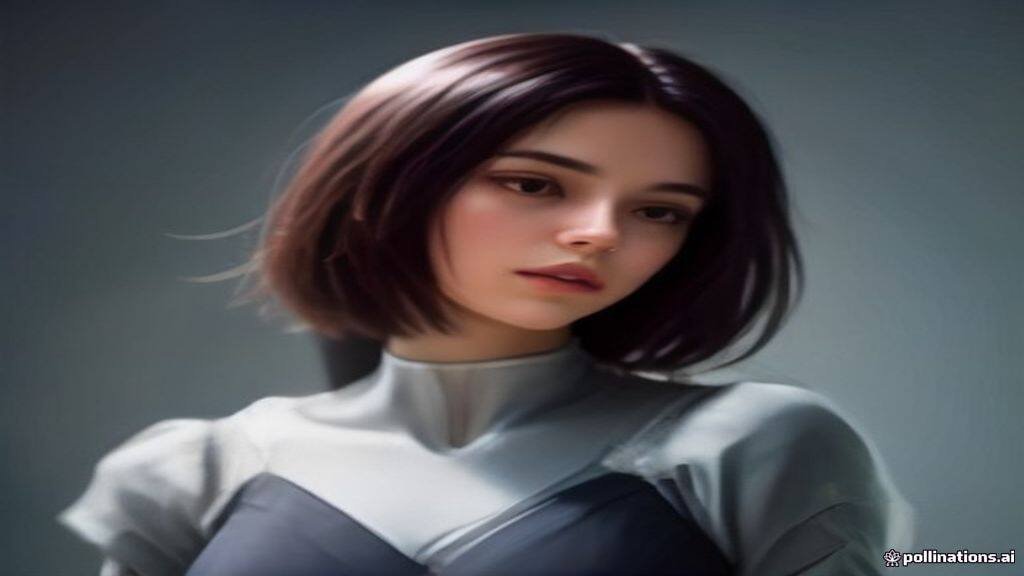
For years, the industry has defined “frontier models” through the lens of text-based performance on benchmarks like the Bar Exam or coding challenges. Muse Wonder flips this script by prioritizing “visual cognition.” Unlike previous iterations of image-generating models that relied on diffusion processes, Muse Wonder utilizes a proprietary parallel decoding architecture. This allows the model to generate high-resolution, photorealistic imagery and complex 3D assets in a fraction of the time required by its predecessors.
At its core, Muse Wonder is trained on a massive, multimodal dataset that encompasses not just static images, but spatial mapping data, video sequences, and architectural blueprints. By treating visual space as a language of its own, Meta has enabled the model to understand the laws of physics—such as lighting, shadow, and depth—with a level of nuance that current competitors struggle to replicate. This isn’t just about making a pretty picture; it’s about creating a model that understands the environment it is rendering.
The Strategic Shift: Open Weights vs. Closed Ecosystems
Meta has long positioned itself as the champion of the “open” AI movement. However, the release of Muse Wonder introduces a nuanced strategy. While Meta is releasing a distilled version of the model to the research community to foster innovation, the full-parameter version remains under a restricted license. This “hybrid approach” is a clear response to the growing concerns regarding safety and the potential for deepfake proliferation.
Industry analysts suggest that this is a calculated move. By keeping the most powerful iteration of Muse Wonder under its own umbrella, Meta retains control over the most sensitive applications, such as real-time interactive avatars and deep-spatial rendering, while still reaping the benefits of community-driven improvements on the smaller, public-facing versions. It is a balancing act that keeps the company relevant in the open-source debate while simultaneously securing its competitive moat against rivals like OpenAI and Google.
Safety, Ethics, and the Challenge of Governance
With the power to generate hyper-realistic environments and assets, the potential for misuse is significant. Meta has integrated what it calls “Provenance Layers” directly into the output of Muse Wonder. Every file generated by the model includes invisible, tamper-resistant watermarks that identify it as AI-synthesized content. This is a direct attempt to meet the evolving regulatory requirements in the European Union and the United States regarding AI transparency.
Furthermore, the training data for Muse Wonder has undergone a rigorous filtering process to remove copyrighted works and sensitive personal information. Meta’s chief AI scientists have emphasized that the model was trained with a “safety-first” protocol, utilizing reinforcement learning from human feedback (RLHF) specifically focused on preventing the creation of harmful or misleading visual content. Whether these safeguards will hold up against the ingenuity of “jailbreakers” remains a point of contention among digital ethics experts.
Impact on the Creative Economy and Metaverse Development
The immediate impact of Muse Wonder will likely be felt in the creative and gaming industries. Game developers who previously spent months building assets for virtual environments can now utilize Muse Wonder to generate entire cityscapes or character models from simple text or sketch prompts. This democratization of high-end design could drastically lower the barrier to entry for independent creators looking to build within the metaverse.
However, this efficiency comes with a warning. As the cost of creating high-quality content drops toward zero, the value of the labor behind that content faces an existential threat. The creative community is already reacting with a mixture of excitement for the tools and anxiety regarding potential displacement. Meta’s challenge in the coming year will be to prove that Muse Wonder is a tool that empowers human creators rather than one that renders their expertise obsolete.
The Outlook: Where Does Meta Go From Here?
The release of Muse Wonder is a milestone, but it is clearly just the beginning of Meta’s trajectory in the generative space. As the company continues to integrate this model into its Quest hardware and social platforms, we can expect the line between digital and physical reality to blur significantly. The next phase for Meta will likely involve optimizing Muse Wonder for real-time, low-latency applications, enabling a future where virtual worlds are not just static, but reactive and evolving in real-time. Whether this leads to a new golden age of digital expression or a crisis of trust in visual media depends entirely on how effectively Meta manages the balance between innovation and oversight.
Original reporting: source.