










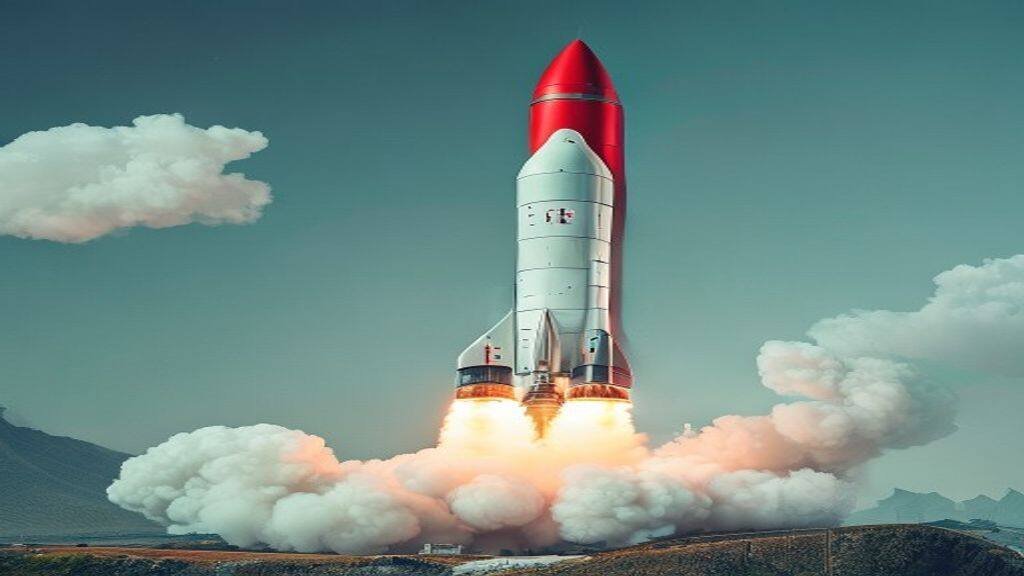
The global race for orbital dominance has long been defined by the shadow of SpaceX, whose Falcon 9 rockets revolutionized the industry by proving that hardware could be salvaged, refurbished, and flown again. For years, the international aerospace community watched as Elon Musk’s company turned high-cost spaceflight into a routine logistical exercise. However, a significant paradigm shift occurred this week as China, through a private aerospace firm, successfully executed a vertical takeoff and vertical landing (VTVL) test that marks a departure from the established Western blueprint. By recovering a reusable rocket using a distinct technical methodology, China has signaled that its domestic space program is entering a mature phase of commercial viability.
The Technical Breakthrough: Beyond Grid Fins
The test flight, conducted by Deep Blue Aerospace—a Beijing-based startup—involved their Nebula-1 rocket. While the industry is accustomed to seeing SpaceX utilize grid fins to steer its boosters during descent, the Chinese approach highlighted in this recent mission utilized a different set of flight dynamics. The recovery took place at the Inner Mongolia testing facility, where the rocket ascended to a targeted altitude before performing a controlled, precision-guided descent back to the landing pad.
What makes this achievement noteworthy is the propulsion control system. Unlike the standard hydraulic-based fin adjustments often seen on Western rockets, the Chinese engineering team utilized a high-frequency, closed-loop thrust vectoring control system that adjusted engine gimbaling with millisecond precision. This allowed the vehicle to compensate for atmospheric turbulence and fuel sloshing during the final phase of landing. By relying more heavily on sophisticated software-defined engine control rather than purely aerodynamic surfaces, the team demonstrated a “digital-first” approach to rocket recovery that could potentially reduce the weight penalties associated with large mechanical control surfaces.
Commercializing the Sky: The Rise of Private Chinese Aerospace
It is important to contextualize this milestone within the broader shift in China’s space strategy. Historically, China’s space program was entirely state-run, managed by the China Aerospace Science and Technology Corporation (CASC). However, over the past five years, the government has encouraged the rise of private space enterprises, offering them access to testing sites, supply chains, and talent pools previously reserved for military-industrial projects. This strategy mirrors the early days of NASA’s commercial crew programs, but with a more rapid, iterative development cycle.
Deep Blue Aerospace, along with competitors like LandSpace and Galactic Energy, are no longer just building rockets; they are building a business model. The successful recovery of the Nebula-1 is the first critical step toward establishing a launch service that can compete on price with the global market. Reusability is the “holy grail” of this business model, as it drastically slashes the cost per kilogram of payload delivered to Low Earth Orbit (LEO). By successfully demonstrating this technology, China is effectively lowering the barrier to entry for its own satellite internet constellations and commercial space stations, which are currently in development.
The Challenges of Atmospheric Re-entry and Precision
While the test was a success, it is vital to understand that a low-altitude “hop” is fundamentally different from a return from orbital velocity. When a rocket returns from space, it must shed thousands of miles per hour of speed, dealing with extreme heat and the ionization of the atmosphere. The Chinese engineers are currently in the phase of perfecting the “landing dance”—the precise ignition of the engines to slow the vehicle down to a near-zero velocity at the moment of touchdown.
The recent test demonstrated a high degree of stability during the final seconds of the landing sequence. Observers noted that the rocket remained vertical with minimal oscillation, a testament to the advanced flight control algorithms developed by the team. This level of precision is essential for future missions, where the rocket will need to land on autonomous drone ships in the ocean or on specific landing pads located in remote inland regions. The integration of high-resolution sensors and real-time mapping of the landing site during the descent phase suggests that China is moving toward a highly automated, AI-driven recovery system that could eventually remove the need for human intervention entirely during the final landing phase.
Implications for Global Aerospace Dynamics
The success of the Nebula-1 recovery sends a clear message to the international community: the monopolization of reusable rocket technology is effectively over. For years, the lack of a viable alternative to the Falcon 9 created a bottleneck in the global launch market. With China now entering the fray with its own reusable architecture, the cost of space access is likely to drop even further as competition intensifies. This is a net positive for scientific research, telecommunications, and climate monitoring, as the price of deploying hardware into orbit becomes increasingly affordable for smaller nations and private enterprises.
Furthermore, this development forces a re-evaluation of current international space policy. As China’s reusable launch capabilities grow, the frequency of launches from Chinese facilities is expected to increase dramatically. This necessitates a more robust framework for space traffic management and orbital debris mitigation. The world is moving toward a future where “reusable” is the standard, not the exception, and China’s unique approach to achieving this goal provides a new set of data points for engineers and policymakers worldwide to study.
Outlook
Looking ahead, the focus for the Chinese aerospace sector will shift from proof-of-concept to reliability. The next twelve months will likely see Deep Blue Aerospace and its peers attempting to fly, land, and re-fly the same hardware within a short window—the true benchmark of a reusable system. While SpaceX remains the leader in terms of flight cadence and operational history, the gap is closing. China’s ability to innovate within the VTVL domain proves that there are multiple pathways to achieving sustainable spaceflight, and the next decade of space exploration will be characterized by a high-stakes, technology-driven rivalry that will ultimately accelerate the human presence in the stars.
Original reporting: source.

![Nvidia CEO Jensen Huang tells Trump ‘we’re not going to let [an AI slowdown] happen’](https://in24tech.com/wp-content/uploads/2026/09/nvidia-ceo-jensen-huang-tells-trump-were-not-going-to-let-an-ai-slowdown-happen-80x60.jpg "Nvidia CEO Jensen Huang tells Trump ‘we’re not going to let [an AI slowdown] happen’")