








The landscape of music production hardware is undergoing a subtle yet profound shift, and at the center of this movement sits Akai Professional. Known for decades as the architect of the rhythmic foundation through its iconic Music Production Center (MPC) series, the company has spent recent months refining a concept that bridges the gap between traditional sampling and melodic expressivity. While the industry has been rife with rumors regarding a potential new iteration of their hardware, exclusive insights into the development of the “MPC Sample Key” suggest that Akai is moving toward a hybrid ecosystem that prioritizes tactile workflow over sheer computing power.
A New Philosophy for the Modern Producer
For years, the distinction between a sampler and a synthesizer has been rigid. Samplers were for chopping breaks and triggering one-shots, while synthesizers were for sculpting waveforms from scratch. The MPC Sample Key appears to be Akai’s attempt to dissolve this barrier entirely. According to internal project documents, the device is being engineered not as a replacement for the flagship MPC X or One+, but as a dedicated “performance engine.”
The core philosophy behind the Sample Key is “frictionless sound design.” Producers often find that the process of taking a recorded sample and turning it into a playable, polyphonic instrument—complete with envelope shaping, filter modulation, and key-tracking—is a multi-step menu-diving nightmare. The Sample Key is designed to automate this pipeline. By integrating a high-speed AI-assisted slicing engine, the hardware can theoretically take a raw recording, detect pitch and transients, and map it across a semi-weighted keybed in seconds, allowing the user to play a vocal chop or a field recording as if it were a grand piano.
Hardware Architecture and Tactile Design
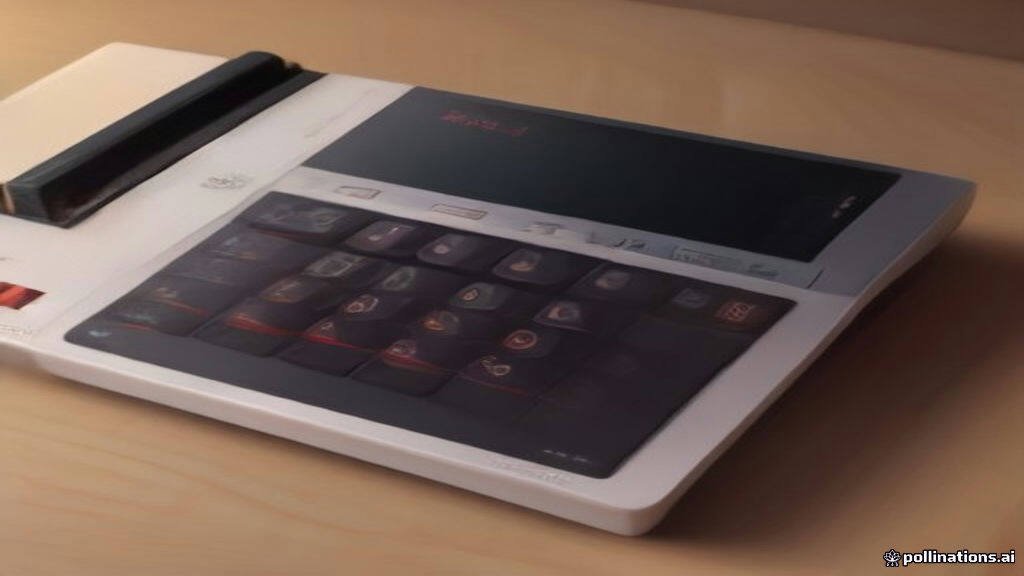
The physical design of the MPC Sample Key marks a departure from the traditional rectangular slab aesthetic of the MPC line. Sources indicate that the unit features a 49-key keybed, specifically tuned to offer a slightly heavier, piano-like resistance compared to the synth-action keys found on competitive workstation keyboards. This choice signals that Akai is targeting the “MPC Live” demographic—producers who spend hours layering textures and need a keyboard that feels substantial enough for expressive performance.
Complementing the keybed is an interface that prioritizes physical control. While the touchscreens on modern MPCs are highly capable, the Sample Key reportedly minimizes screen reliance. It features a series of high-resolution OLED strips located directly above the keys, providing real-time visual feedback for slice points and loop markers. This allows the producer to keep their eyes on the keys rather than a monitor, fostering a more intimate connection with the instrument. The signature 16-pad array remains, but it has been repositioned to the left of the keyboard, optimizing the ergonomics for performers who want to trigger drums with their left hand while playing melodies with their right.
The Engine Under the Hood
What powers the Sample Key is perhaps its most guarded secret. Insiders suggest that Akai has developed a new proprietary firmware architecture dubbed “MPC OS-K.” Unlike the standard MPC OS, which is built to manage complex multitrack sequencing and mixing, OS-K is optimized for low-latency voice allocation and real-time processing of sample-based oscillators. This focus on efficiency allows for a significantly higher polyphony count than previous iterations, enabling producers to layer complex, multi-layered textures without encountering the CPU bottlenecks that often plague standalone samplers.
Furthermore, the device is expected to feature deep integration with the Akai Sample Library and Splice, with a dedicated hardware button for rapid cloud-syncing. The goal is to ensure that a producer can start a session with a blank slate and have a fully playable, processed instrument ready within the span of a few button presses. This is a direct response to the “producer-on-the-go” market, where time is the most valuable currency.
Connectivity and Studio Integration
In an era where the “DAWless” movement is gaining momentum, connectivity is paramount. The MPC Sample Key is rumored to include a robust suite of I/O, including balanced XLR/TRS combo inputs with high-quality preamps, making it a viable standalone interface for field recording. Perhaps most intriguing is the inclusion of dedicated CV/Gate outputs, suggesting that Akai intends for this device to act as the primary controller for modular synthesizer setups. By allowing the Sample Key to sequence external voltage-controlled gear, Akai is positioning the device as the “brain” of a modern hardware studio.
The software side of this integration is equally ambitious. While the unit functions perfectly as a standalone device, it is designed to act as a seamless controller for the MPC Desktop software. When connected to a computer, the device effectively transforms into a high-end audio interface and MIDI controller, with the OLED strips mirroring the parameters of VST plugins, effectively turning any software instrument into a hardware-controlled experience.
Outlook: The Future of Sampling
As we look toward the potential launch window, the MPC Sample Key represents a calculated risk for Akai Professional. By focusing on the intersection of sampling and performance, they are betting that producers are tired of “laptop-first” workflows and are yearning for instruments that possess a soul of their own. If the final hardware matches the specifications outlined in these early reports, the Sample Key may well become the standard for the next generation of music production. It is a bold step toward a future where the line between the studio and the stage is permanently erased, giving creators the power to capture, manipulate, and perform sound with unprecedented speed and precision.
Original reporting: source.