














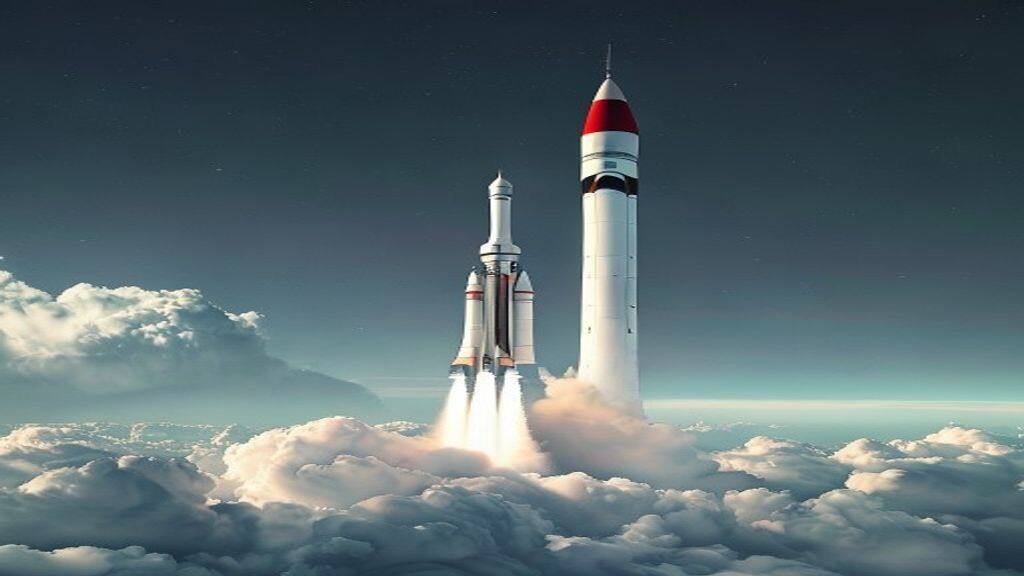
The space industry recently witnessed a moment that felt pulled directly from the pages of science fiction. As SpaceX concluded its latest test flight of the Starship vehicle—the 13th in the ongoing development campaign—the atmosphere at Starbase, Texas, shifted from cautious optimism to a sense of inevitable progress. While the mission achieved its primary objectives with clinical precision, the industry’s collective gaze has already pivoted toward the next frontier of this program: the bold attempt to catch the Super Heavy booster using the massive “Mechazilla” launch tower arms. This maneuver, once considered a radical engineering fantasy, now appears to be the logical next step in the rapid reusability paradigm that Elon Musk’s company has pioneered.
Evaluating the Success of Flight 13
To understand why the prospect of a tower catch is dominating the conversation, one must first appreciate the stability shown during the most recent flight. Starship’s 13th outing was not merely about reaching space; it was a stress test for the vehicle’s updated thermal protection system and its sophisticated flight control algorithms. Throughout the ascent, the Raptor engines demonstrated improved reliability, maintaining consistent thrust profiles even under the intense vibration of atmospheric departure. The vehicle’s ability to perform a complex, high-altitude flip maneuver before descending toward a simulated landing site in the Indian Ocean showcased a level of maturity that previous iterations lacked.
From a technical review perspective, the data gathered during this mission is invaluable. Engineers were able to verify that the ship’s flaps—critical for managing energy during reentry—responded with higher fidelity to aerodynamic inputs. By successfully navigating the “hot” phase of atmospheric reentry, SpaceX has effectively validated the structural integrity of the stainless steel airframe. This flight served as the ultimate proof-of-concept for the vehicle’s maneuverability, setting the stage for the company to move from “testing for survival” to “testing for recovery.”
The Mechanics of the Mechazilla Catch
The concept of catching a rocket booster mid-air is arguably one of the most audacious engineering challenges in aerospace history. The Starship launch tower, colloquially known as Mechazilla, is equipped with two massive mechanical arms—the “chopsticks.” The operational plan involves the Super Heavy booster returning to the launch site, firing its engines to negate its downward velocity until it hovers momentarily in front of the tower. At that precise nanosecond, the arms must clamp onto the booster’s grid fins, suspending the massive structure in mid-air.
This approach offers several distinct advantages over traditional landing legs. By eliminating landing legs from the booster itself, SpaceX saves a significant amount of “dry mass.” This weight savings translates directly into increased payload capacity, allowing Starship to carry more fuel, cargo, or passengers to orbit. Furthermore, a tower catch allows for immediate inspection and refurbishment. By bypassing the need for a landing pad and the logistical complexity of transporting a fallen booster, SpaceX can theoretically turn the vehicle around for another flight in record time. It is a philosophy of industrial efficiency applied to the most volatile environment on Earth.
Risk Assessment and Engineering Hurdles
Despite the excitement, the transition to a tower catch is fraught with significant risks. The margin for error is razor-thin. If the booster arrives at the tower with even a slight lateral drift, or if the timing of the mechanical arms is off by a fraction of a second, the result could be catastrophic for the launch infrastructure. The tower itself is the most expensive piece of hardware at Starbase; losing it would set the Starship program back by months, if not years.
The guidance, navigation, and control (GNC) systems required for such a maneuver must perform at a level of precision that exceeds current autonomous docking capabilities. The booster must contend with shifting wind patterns, residual propellant sloshing, and the intense heat radiating from the engines as they throttle down for the final burn. SpaceX’s reliance on “iterative testing”—the willingness to potentially lose a vehicle to learn what went wrong—is being pushed to its absolute limit here. While the company has mastered Falcon 9 landings on autonomous drone ships, the precision required to land within the confines of a steel tower is a quantum leap in difficulty.
The Road Ahead for Starbase
As the teams at SpaceX prepare for the next flight, the focus has shifted toward refining the software loops that manage the final descent. Ground crews are currently performing stress tests on the tower’s mechanical systems, ensuring that the hydraulics and sensors are calibrated for the high-impact stresses of a successful capture. The regulatory environment also plays a role, with the FAA closely monitoring the safety protocols for high-altitude maneuvers over the Gulf of Mexico and the Texas coastline.
The successful execution of a tower catch would mark a turning point for the entire aerospace sector. It would effectively normalize the idea that space vehicles should be treated like aircraft—landing, refueling, and relaunching with minimal intervention. If SpaceX succeeds, it will force competitors to accelerate their own reusable rocket programs, potentially ushering in a new era of cheaper, more frequent access to space.
Outlook
The trajectory of the Starship program is now unmistakably clear. Having proven that the hardware can survive the rigors of flight, SpaceX is aggressively moving to solve the final puzzle of its reusability strategy. While the upcoming tower catch attempt is undeniably risky, the company’s track record suggests that they are well-prepared for the challenge. If the next flight results in a successful capture, it will not just be a win for SpaceX; it will be a historic milestone that fundamentally changes how humanity approaches the logistics of leaving our planet. All eyes will be on the Texas horizon as the countdown for the next mission begins.
Original reporting: source.