














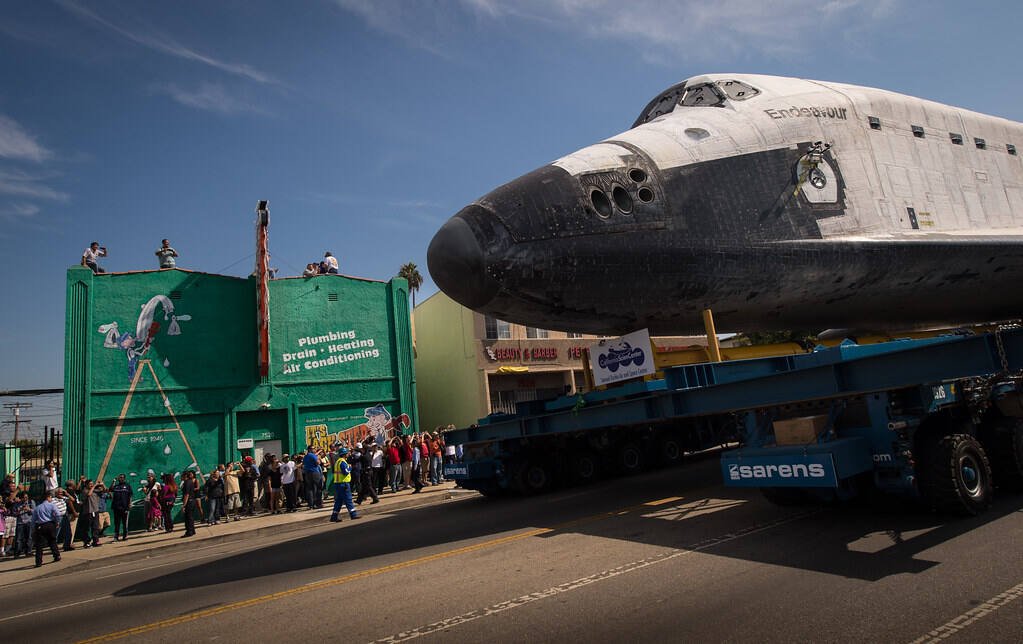
For decades, the Space Shuttle program stood as the pinnacle of human engineering, representing a bridge between the atmosphere of Earth and the vast, silent vacuum of the cosmos. Among the fleet, Space Shuttle Endeavour holds a special place in the hearts of space enthusiasts and engineers alike. After years of meticulous planning, complex structural engineering, and anticipation, the California Science Center is preparing to unveil the orbiter in a vertical, flight-ready configuration. Later this year, visitors will finally be able to witness this marvel of technology in a display format that has never been attempted before in a museum setting.
A Legacy Forged in Resilience
Endeavour was born out of necessity. Following the tragic loss of the Space Shuttle Challenger in 1986, NASA sought to replace the orbiter and continue the mission of orbital exploration. Built from spare components intended for Discovery and Atlantis, Endeavour incorporated the latest technological advancements available at the time. It was the “newest” of the fleet, featuring improved avionics, updated plumbing, and enhanced guidance systems that made it a workhorse for the International Space Station (ISS) assembly.
Over its 25 missions, Endeavour traveled over 122 million miles. It was the shuttle that captured and repaired the Hubble Space Telescope, performed the first mission to attach the first American component to the ISS, and conducted critical scientific research in microgravity. By the time it was retired in 2011, it had served as a testament to the grit of the American space program. Now, as it transitions from a retired vessel to a permanent public monument, the focus shifts from its operational history to its role as an educational tool for future generations of engineers and scientists.
The Engineering Challenge of Vertical Display
While many museums house retired spacecraft, the California Science Center’s Samuel Oschin Air and Space Center is doing something truly unprecedented. Most orbiters are displayed horizontally, resting on their landing gear. However, the team in Los Angeles decided that to truly honor the majesty of the Endeavour, it needed to be displayed in its “launch configuration”—standing vertically, attached to two solid rocket boosters and an external fuel tank.
This is not merely a cosmetic choice; it is an immense structural engineering undertaking. The external fuel tank, known as ET-94, is the last flight-qualified tank of its kind. Supporting the weight of the 170,000-pound orbiter while it is mounted to the boosters required the development of a sophisticated “stacking” process. Engineers had to design a custom seismic isolation system to protect the historic hardware from Southern California’s earthquake risks. The sheer scale of this project has turned the construction site itself into a masterclass in modern technology and structural mechanics.
Technology Behind the Preservation
Maintaining a space shuttle for public viewing is a complex task that goes beyond simple cleaning. The orbiter is covered in over 20,000 thermal protection tiles, each designed to withstand the searing heat of atmospheric reentry. These tiles are notoriously fragile and prone to damage from vibration and environmental factors. The museum’s conservation team has had to employ specialized material science techniques to stabilize these components without altering their historical integrity.
Furthermore, the internal avionics and flight deck equipment require a controlled environment. While the shuttle is no longer “powered” in the traditional sense, the museum has integrated digital interfaces that allow visitors to interact with the history of the ship’s systems. By utilizing augmented reality (AR) and localized interactive displays, the museum aims to bridge the gap between the analog hardware of the 1990s and the digital expectations of modern gadget enthusiasts. This blend of authentic hardware and digital storytelling ensures that the Endeavour remains a relevant piece of “technology” rather than just a static relic.
The Impact on STEM Education
The display of the Endeavour is not intended to be a mere walk-through museum exhibit; it is designed as a catalyst for STEM (Science, Technology, Engineering, and Mathematics) engagement. By positioning the shuttle in its vertical launch pose, the California Science Center creates an immersive environment that forces visitors to reckon with the sheer power required to breach Earth’s gravity. For students and tech-savvy visitors, seeing the rocket boosters and the orbiter together provides a tangible sense of scale that photos and videos simply cannot replicate.
The surrounding exhibit space will feature interactive components that explain the propulsion systems, the life support gadgets that kept astronauts alive, and the computing power that guided the shuttle through the complexities of orbital mechanics. This focus on the “how” and “why” of the technology ensures that the Endeavour continues to inspire the next generation of aerospace innovators.
Outlook: A New Era for Space History
As we approach the grand opening later this year, the excitement surrounding the Endeavour’s final “launch” is palpable. This project represents the intersection of historical preservation and cutting-edge exhibition technology. By successfully mounting the last of the shuttle fleet in a vertical orientation, the California Science Center has set a new global standard for how we treat the artifacts of the Space Age. While the shuttle program itself has long since concluded, the Endeavour stands ready to serve a new mission: one of education, inspiration, and the continued exploration of what is possible when human ingenuity meets the stars.
Original reporting: source.