














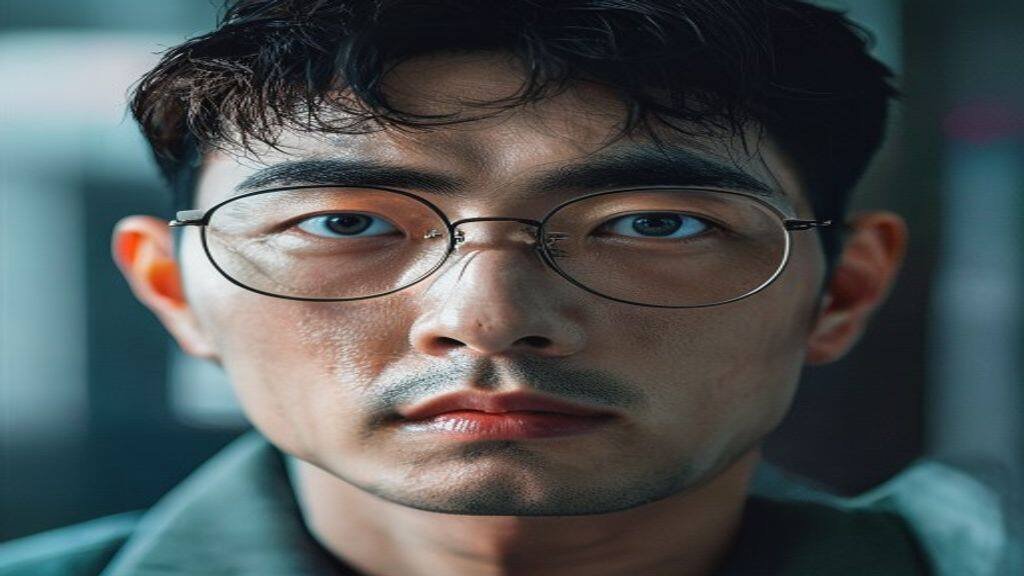
The Download: AI-Driven Matchmaking and the Future of Ocular Restoration
In this week’s edition of The Download on in24tech.com, we explore the intersection of cutting-edge technology and human biology. From the sophisticated algorithms reshaping South Korea’s dating landscape to the revolutionary strides in restorative ophthalmology, we examine how artificial intelligence is moving beyond simple data processing to fundamentally alter the human experience.
The Algorithmic Heart: South Korea’s Digital Matchmaking Revolution
South Korea, a nation known for its hyper-competitive tech landscape and rapidly evolving social structures, is currently witnessing a fascinating shift in how its most eligible bachelors navigate the dating world. As the country grapples with demographic challenges and shifting cultural norms, artificial intelligence has stepped in as the ultimate wingman. Traditional matchmaking, once the domain of family intermediaries or informal social networks, is being superseded by highly personalized, AI-driven platforms.
These modern applications do not merely rely on basic user-input criteria like age or location. Instead, they leverage deep-learning models to analyze behavioral patterns, communication styles, and even nuanced personality traits derived from social media interactions. By processing vast datasets of user preferences, these systems can predict compatibility with a degree of accuracy that human matchmakers—and even the users themselves—often struggle to achieve. For the “hottest bachelors” in Seoul, this means a curated dating experience that optimizes for long-term potential rather than superficial engagement.
However, the rise of AI in matchmaking has sparked a broader debate regarding agency and the nature of attraction. Critics argue that relying on algorithms to filter potential partners may reinforce existing biases or create “echo chambers” of personality types. Yet, proponents suggest that in a society where professional burnout is high and leisure time is scarce, these tools provide a necessary efficiency. By automating the initial vetting process, AI allows individuals to focus their energy on genuine connections, potentially addressing the country’s declining marriage rates through the power of data-backed compatibility.
Restoring Vision: The Convergence of AI and Ocular Science
While AI is busy connecting hearts, it is simultaneously working to restore one of the most vital human senses: sight. The field of ophthalmology is undergoing a transformation as researchers push the boundaries of what was once considered impossible: the successful transplantation and integration of artificial and biological ocular components. This frontier is no longer just about surgical precision; it is about the integration of neural interfaces with machine-learning algorithms to interpret visual data.
Advancing eye transplants—whether they involve complex corneal grafts or the experimental development of bionic retinas—require an unprecedented level of computational support. AI is currently being utilized to map the intricate vascular and neural networks of the eye during pre-operative planning. Surgeons now use AI-generated 3D models to simulate the transplantation process, identifying potential complications before a single incision is made. This digital twinning of the patient’s anatomy allows for a level of customization that significantly reduces the risk of rejection and improves post-operative recovery times.
The true breakthrough, however, lies in the “smart” integration phase. For patients receiving prosthetic visual aids, AI serves as the translator between the hardware and the brain. Advanced processors, powered by localized neural networks, can now interpret light and movement in real-time, sending refined signals to the optic nerve. This process is complex, involving the filtering of noise and the enhancement of contrast, tasks that only a few years ago were impossible to perform in the millisecond latency required for fluid human vision.
The Ethical Dimensions of AI Integration
As we integrate artificial intelligence into the most personal aspects of our lives—from our romantic relationships to our biological integrity—the ethical considerations become increasingly urgent. In the context of South Korean matchmaking, the data privacy of high-profile individuals is a significant concern, as these platforms amass intimate details about user behavior and preferences. When an algorithm knows your “type” better than you do, the potential for manipulation by developers or third-party advertisers is substantial.
Similarly, in the medical field, the reliance on AI for vision restoration necessitates a robust framework for oversight. As these devices become more autonomous, questions regarding liability and the “black box” nature of deep-learning algorithms must be addressed. Can a patient fully consent to a procedure when the underlying logic of the AI’s visual processing is not fully transparent to the clinical team? These are the questions that will define the next decade of technological integration.
Outlook: A Future Defined by Intelligence
Looking ahead, the convergence of AI with social and biological systems is set to accelerate. We are moving toward a future where the distinction between “natural” and “technological” intervention becomes increasingly porous. Whether it is refining our search for partners through predictive analytics or overcoming physiological limitations through neural-prosthetic interfaces, artificial intelligence is proving to be a versatile tool for human enhancement. The challenge for the coming years will be to ensure that as these technologies become more capable, they remain aligned with human values, transparency, and, above all, the preservation of the individual’s autonomy in an increasingly automated world.
Original reporting: source.