













For decades, the legacy of Ridley Scott’s 1982 masterpiece Blade Runner has loomed large over the science fiction genre. From the rain-slicked neon of the original to Denis Villeneuve’s visually arresting 2017 sequel, the franchise has consistently pushed the boundaries of world-building and philosophical inquiry. Now, as the industry gathers for the annual spectacle of San Diego Comic-Con (SDCC), the veil has finally been lifted on the next chapter: Blade Runner 2099. While details have been shrouded in secrecy since the project’s inception, a new teaser has provided our first substantive look at the aesthetic, tone, and narrative scope of this upcoming Prime Video series, signaling a bold expansion into the future of the replicant-filled landscape.
A Shift in Medium: From Cinema to Episodic Storytelling
Transitioning a property as visually dense and thematically complex as Blade Runner from the silver screen to a television format is a daunting task. However, the SDCC presentation underscored a commitment to maintaining the high production values that fans have come to expect. Unlike the previous films, which focused on the singular, noir-inspired journeys of Deckard and K, Blade Runner 2099 promises to utilize the extended runtime of a series to delve deeper into the systemic decay of Los Angeles and beyond. The teaser highlights a world that feels both familiar and evolved, suggesting that the series will serve as both a spiritual successor to the films and a standalone expansion of the lore.
The decision to set the show 50 years after the events of Blade Runner 2049 is a strategic one. It allows the writers to step out from the immediate shadow of the central characters while maintaining the established “Blade Runner” universe rules. By moving further into the future, the show creators have the freedom to explore how the fallout of the “Blackout” and the subsequent sociopolitical shifts have reshaped human-replicant relations. The footage shown at SDCC suggests a society that has reached a breaking point, with technology and biology becoming increasingly indistinguishable.
Visual Language and the Aesthetic of Decay
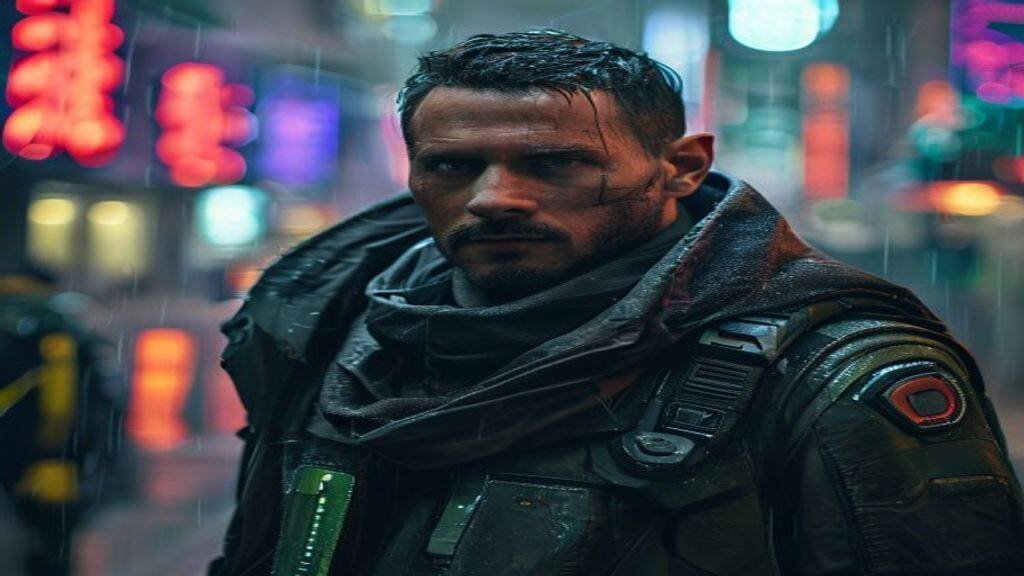
One cannot discuss Blade Runner without addressing its visual identity. The SDCC teaser leans heavily into the “tech-noir” aesthetic, showcasing massive, towering structures that dwarf the human experience. The color palette remains dominated by deep blues, vibrant neon pinks, and the sickly yellow smog that has become synonymous with the franchise’s depiction of a dying Earth. However, there is a subtle shift in the lighting and architecture; the structures appear more claustrophobic, reflecting a world that is even more overpopulated and resource-depleted than the 2049 iteration.
The cinematography teased in the presentation emphasizes the contrast between the high-tech interiors of the corporate elite and the crumbling, organic mess of the streets below. It is a visual dichotomy that serves as a metaphor for the show’s core themes: the struggle between the creators and the created, and the value of a soul in a world dominated by synthetic manufacturing. The use of practical effects blended with state-of-the-art digital augmentation ensures that the world feels tangible, avoiding the “clean” look that often plagues modern sci-fi television.
Narrative Ambitions: Expanding the Scope
While the teaser is intentionally vague regarding specific plot points, it makes one thing clear: the scope of the story has expanded. We are no longer limited to the confines of a single city. The snippets shown suggest a narrative that will touch upon the global reach of the Wallace Corporation and the lingering mystery of what it truly means to be “human.” The casting, which includes high-caliber talent capable of delivering the nuanced, melancholy performances required for this universe, hints at a character-driven drama rather than a mindless action romp.
The inclusion of new technology and perhaps a new generation of replicants suggests that the series will grapple with the next step in evolutionary biology. If 2049 was about the birth of a miracle, 2099 appears to be about the consequences of that miracle. The teaser hints at a world where replicants are no longer just laborers or runaways, but perhaps a growing population fighting for their own political agency. This shift in power dynamics provides a fertile ground for a complex, multi-season arc that could redefine the franchise’s legacy.
The Challenges Ahead
Despite the excitement generated at SDCC, the series faces the monumental task of justifying its existence to a fanbase that is notoriously protective of the source material. The original 1982 film is often considered “un-sequelizable,” yet 2049 proved that the universe could be expanded with grace. The challenge for 2099 will be to avoid falling into the trap of repetition. It must find a way to offer a fresh perspective without relying too heavily on nostalgia or established iconography like the spinners or the constant rainfall.
Furthermore, the pacing of a television series often struggles to capture the deliberate, meditative rhythm of the films. The directors involved will need to balance the need for episodic cliffhangers with the slow-burn philosophical investigation that defines the Blade Runner brand. If they can maintain the intelligence and atmospheric weight of the predecessors while embracing the narrative freedom of the long-form format, the series could very well stand as a landmark achievement in modern television science fiction.
Outlook
The first look at Blade Runner 2099 suggests a production that is deeply respectful of its heritage while possessing the ambition to chart its own course. By leaning into the series’ iconic visual language and expanding the thematic questions regarding identity and ethics, Prime Video appears to be positioning the show as a flagship entry in their science fiction portfolio. While it will be some time before we can fully judge the narrative success of the project, the SDCC teaser serves as a compelling invitation to return to the rain-soaked streets of a future that remains as hauntingly beautiful as it is terrifying. Fans of the genre should watch this space closely; if the teaser is any indication, the future of the replicant saga is in capable hands.
Original reporting: source.