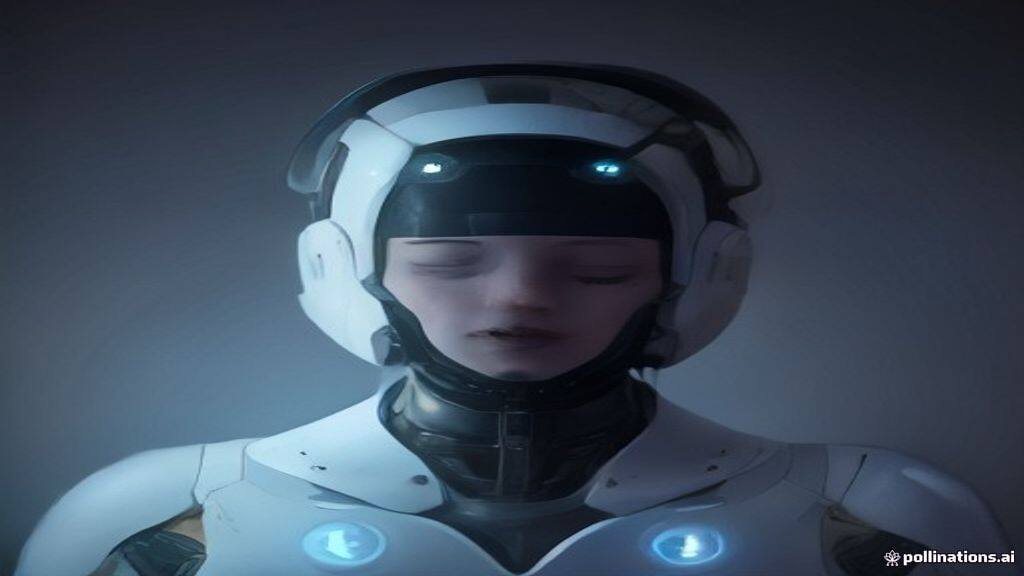
For the past two years, the narrative surrounding artificial intelligence was defined by a breathless, gold-rush optimism. Venture capitalists poured billions into large language models, tech giants raced to integrate generative AI into every facet of our digital lives, and the public was promised a utopia of productivity and automated creativity. However, as we move through the current cycle, the tone in Silicon Valley and beyond has shifted dramatically. The conversation has moved away from “how much faster can we build?” to “are we building our own destruction?” This pivot toward a “doomer” outlook has permeated executive boardrooms, academic research circles, and even the halls of government, leaving the industry at a precarious crossroads.
The Roots of the Existential Pivot
The sudden turn toward existential anxiety—often referred to as the “AI doomer” discourse—did not emerge in a vacuum. It was propelled by the unprecedented speed at which models like GPT-4 and Claude 3 demonstrated capabilities that seemed to leapfrog previous benchmarks. When researchers began observing “emergent properties”—skills that models developed without being explicitly trained for them—the excitement quickly curdled into apprehension. If a machine can learn to write code, reason through complex logic, or manipulate human psychology, what happens when it becomes significantly more capable than the humans who built it?
This fear is no longer relegated to science fiction writers or fringe philosophers. It has been codified by industry titans. When leaders from OpenAI, Google DeepMind, and Anthropic signed a brief statement warning that “mitigating the risk of extinction from AI should be a global priority alongside other societal-scale risks such as pandemics and nuclear war,” the industry effectively signaled that the era of unbridled experimentation was over. This declaration forced the public to confront a reality where the creators themselves appear to be losing confidence in their ability to control the outcomes of their own creations.
The Great Regulatory Schism
As the industry descends into this pessimistic headspace, a significant rift has formed regarding how to handle the perceived risks. On one side, we have the proponents of “AI Safety,” who advocate for strict oversight, mandatory model audits, and perhaps even a pause on training the most powerful systems. They argue that we are currently in a race to the bottom, where competitive pressures force companies to ignore safety protocols in favor of market dominance. To them, the danger is not just a malfunctioning chatbot, but a systemic shift in power that could disenfranchise humanity.
Conversely, a growing contingent of open-source advocates and “techno-optimists” views this doomer turn as a strategic maneuver. They argue that the calls for heavy regulation are a form of “regulatory capture,” where established giants attempt to pull up the ladder behind them. By making the cost of compliance and safety testing prohibitively high, these companies could effectively kill off smaller competitors and open-source projects that democratize AI. This camp believes that the focus on existential threats is a distraction from tangible, present-day issues like algorithmic bias, data privacy, and the environmental impact of massive server farms.
The Psychological Toll on Innovation
Beyond the policy debates, the existential dread surrounding AI is fundamentally changing the culture of tech development. For decades, the mantra was “move fast and break things.” Today, that ethos is being replaced by “move cautiously and document everything.” While this is undoubtedly a positive development for security and ethics, it also introduces a friction that may stifle the very ingenuity that made the AI boom so exciting. Engineers are now spending as much time on “alignment research”—the process of ensuring AI goals match human values—as they are on actual capability development.
This shift has led to a noticeable burnout among top-tier researchers. The pressure to build world-changing technology while simultaneously worrying that the work might lead to a catastrophe is a heavy burden. We are seeing an exodus of talent from major labs as scientists seek roles in academia or smaller startups where the stakes feel lower and the focus is on practical, immediate applications rather than the quest for Artificial General Intelligence (AGI).
What Comes After the Hype Cycle?
As the initial fervor dies down and the doomer discourse settles into the background noise of the industry, we are entering a phase of “sober AI.” The focus is shifting toward integration, reliability, and specific use cases. The industry is realizing that a model that can hallucinate with extreme confidence is not a product; it is a liability. Consequently, we are seeing a move toward smaller, specialized models that are easier to monitor and control than the monolithic, general-purpose engines that dominated the news cycle in 2023.
The doomer turn has successfully achieved one thing: it has ended the era of innocence in artificial intelligence. Whether or not an existential threat is truly on the horizon, the industry can no longer operate as if it is building toys. The future of AI will be defined by a delicate balancing act—trying to harvest the benefits of machine intelligence while building the guardrails necessary to ensure that our tools remain exactly that: tools, and not masters. The next few years will test whether the industry can mature into a responsible sector or if it will continue to be paralyzed by the very fears it helped to manifest.
Original reporting: source.