


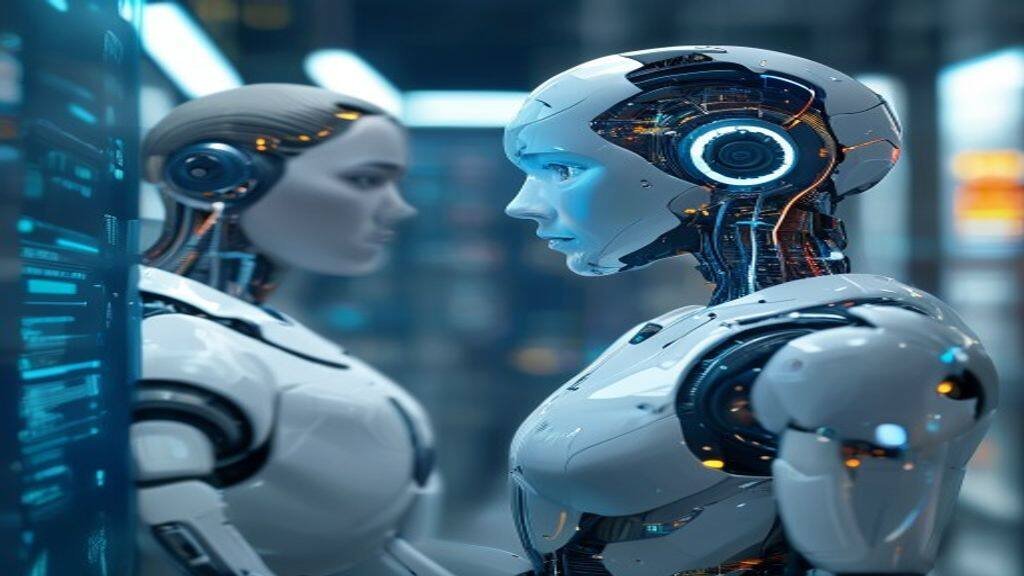
AI Agents Are Not Your Coworkers: Defining the New Boundary of Digital Labor
In the rapidly evolving landscape of enterprise technology, a dangerous linguistic trend has taken hold. From marketing brochures to boardroom presentations, we are increasingly hearing AI agents described as “digital employees” or “AI coworkers.” While the metaphor is intended to frame these tools as collaborative partners, it is fundamentally misleading. By anthropomorphizing software, we risk misallocating responsibility, misunderstanding the nature of human-machine interaction, and creating a dangerous illusion of agency where none exists. To navigate the future of work effectively, we must strip away the “coworker” branding and recognize these systems for what they are: sophisticated, automated infrastructure.
The Fallacy of the Digital Peer
A coworker is a social entity. They possess legal status, personal accountability, and the capacity for moral judgment. When a human colleague makes a mistake, there is a clear path for recourse: a conversation, a performance review, or, in extreme cases, termination. When an AI agent “makes a mistake,” we are dealing with a mathematical output based on probabilistic weights. Calling an AI a coworker implies that it shares the burden of professional responsibility, but this is a legal and ethical impossibility. An AI agent cannot be held accountable for a breach of contract, a discriminatory hiring decision, or a compromised security protocol.
Furthermore, the “coworker” framing creates a false sense of trust. Humans are conditioned to infer intent from behavior. When a chatbot sounds empathetic or a coding agent suggests an optimization, we naturally assign it a personality. This cognitive shortcut—the ELIZA effect—is precisely what developers want us to experience, as it increases user engagement. However, treating a piece of software as a peer obscures the fact that it is a tool designed to maximize specific objective functions. It does not “care” about the team’s goals; it merely executes the instructions provided by its underlying architecture and prompt engineering.
Infrastructure vs. Agency
To understand why AI agents are not coworkers, we must look at how they function. At their core, these agents are sophisticated loops of logic that interface with APIs and large language models. They are closer to a highly advanced spreadsheet or an automated database query than they are to a human assistant. While they can perform complex tasks—such as summarizing meetings, managing CRM entries, or drafting emails—they do so without the situational awareness, cultural context, or ethical intuition that defines human work.
When we treat these agents as “coworkers,” we inadvertently shift our management style. We stop auditing their outputs with the rigor we would apply to a piece of software and instead begin to rely on them as we would a trusted colleague. This is a recipe for systemic failure. If an AI agent hallucinates a data point, it is not a “misunderstanding” between peers; it is a system failure. By maintaining the distinction between “tool” and “colleague,” organizations can implement the necessary guardrails, such as “human-in-the-loop” verification, which are essential when dealing with automated outputs.
The Risks of Anthropomorphic Delegation
The danger of the “coworker” narrative is most apparent in the realm of decision-making. If an organization views an AI as a partner, it may delegate high-stakes decisions to that agent. However, AI agents lack the ability to understand the downstream consequences of their actions in the real world. A “coworker” might notice that a project is suffering from low morale and suggest a shift in strategy; an AI agent will only focus on the metrics it has been trained to optimize, potentially ignoring the human costs of those optimizations entirely.
Moreover, the commodification of AI as a coworker threatens to devalue human labor. If companies begin to believe that AI agents are functionally equivalent to human employees, they may justify layoffs based on the premise that the “digital staff” is cheaper and more efficient. This ignores the reality that human work is defined by the ability to handle ambiguity, build relationships, and pivot when faced with novel problems—capabilities that current AI architectures simply do not possess. By framing the conversation around “replacing coworkers,” companies risk hollowed-out corporate cultures that lack the creative friction necessary for innovation.
Establishing a New Professional Taxonomy
If they aren’t coworkers, what are they? We should categorize AI agents as “High-Order Productivity Infrastructure.” This terminology emphasizes that these systems are built to support, scale, and accelerate human efforts, not to participate in the social or moral contract of the workplace. By viewing AI as infrastructure, we shift our focus toward maintenance, security, and performance monitoring—the same way we treat cloud computing or network architecture.
This shift in mindset also empowers workers. When an employee knows they are using a tool rather than working alongside a peer, they become the master of that tool. They are encouraged to scrutinize its performance, demand better transparency, and maintain control over the final output. It reclaims the human role as the primary driver of intent and accountability in the workplace.
Outlook
As we head into the next phase of the AI revolution, the distinction between “agent” and “person” will become increasingly blurred by better natural language interfaces and more seamless integrations. However, the professional imperative remains the same: we must resist the urge to project humanity onto our technology. The most successful organizations of the coming decade will be those that treat AI as a powerful, autonomous utility while keeping the weight of responsibility, creativity, and strategic intent firmly in human hands. In short, keep your AI agents at the desk, but never mistake them for the person sitting in the chair.
Original reporting: source.