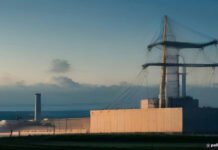









The relentless expansion of artificial intelligence, driven by the insatiable demand for large language models and generative AI, has hit a physical bottleneck that no amount of software optimization can solve: the electrical grid. As massive data centers sprout across the globe to house the high-performance computing clusters required to train the next generation of neural networks, the local power infrastructure is struggling to keep pace. With lead times for utility-grade grid connections stretching into years, tech giants and colocation providers are increasingly turning to a creative, albeit unconventional, solution: repurposing aerospace technology to keep the servers humming.
The Power Crisis at the Heart of the AI Revolution
The modern AI data center is an architectural marvel of density. Where legacy data centers might have operated at a few kilowatts per rack, modern facilities housing NVIDIA H100 or B200 GPU clusters are pushing into the range of 50 to 100 kilowatts per rack. This exponential increase in power density has placed an unprecedented strain on utility providers. In major tech hubs like Northern Virginia, Dublin, and Singapore, the grid is essentially tapped out, forcing utilities to delay new connections until significant infrastructure upgrades can be completed.
For AI companies, time is the most valuable commodity. A delay of two years in bringing a new data center online can mean missing the window of competitive advantage in the AI arms race. Consequently, data center operators are moving toward “behind-the-meter” power generation. By generating their own electricity on-site, these companies can bypass the bottlenecks of the public grid, ensuring that their expensive hardware remains operational even when the utility company cannot provide the necessary megawatts.
Jet Engines: From the Runway to the Server Room
The use of gas turbines for industrial power is not new, but the specific application of surplus jet engines is a recent trend born of necessity. Known in the industry as “aero-derivative” turbines, these engines are essentially modified versions of the power plants that propel commercial airliners. When a jet engine reaches its service life limit in aviation—often determined by flight cycles rather than mechanical failure—it is typically retired from the skies. However, these engines still possess thousands of hours of life for stationary applications.
Data center operators are acquiring these retired engines and mounting them inside modular enclosures. These units act as high-efficiency generators that can be deployed rapidly. Unlike massive, purpose-built natural gas power plants that require years of permitting and construction, modular jet-engine generators can be installed in a matter of months. They offer the rapid start-up times required for load following—the ability to quickly ramp up power production to meet the fluctuating demands of AI training workloads.
Efficiency and the Sustainability Paradox
Critics of this trend point to the carbon footprint of burning natural gas to power AI, noting that it contradicts the sustainability goals many tech companies have publicly committed to. However, proponents argue that these aero-derivative turbines are significantly more efficient than traditional reciprocating diesel generators, which have long been the standard for data center backup power. By utilizing natural gas, these engines produce fewer particulate emissions and, when integrated with carbon capture or renewable natural gas (RNG) initiatives, can offer a cleaner profile than the coal-heavy grids currently powering many regions.
Furthermore, these engines can be configured for “combined heat and power” (CHP) setups. In this configuration, the waste heat generated by the turbine—which would otherwise be lost—is captured and used to provide heating for the facility or to drive absorption chillers for cooling. This circular approach to energy management is becoming essential as data centers face tighter regulations regarding their environmental impact and water usage.
The Future of Decentralized Infrastructure
The shift toward on-site jet-engine power generation signals a broader move toward the decentralization of critical infrastructure. As artificial intelligence becomes the backbone of the global economy, the reliance on a single, centralized grid is increasingly viewed as a systemic risk. By adopting these modular, high-output power solutions, AI providers are effectively becoming their own utility companies. This autonomy provides a buffer against grid instability and allows for the rapid deployment of computing capacity in regions that were previously deemed unsuitable due to inadequate electrical infrastructure.
However, this transition is not without its hurdles. The logistics of maintaining a fleet of jet-engine generators require a specialized workforce—a stark contrast to the IT-centric skill sets usually found in data center management. Operators must now contend with the complexities of fuel supply chains, emissions monitoring, and the mechanical maintenance of high-performance turbines. As the industry matures, we are likely to see the emergence of specialized energy-as-a-service providers that manage these power plants on behalf of the tech giants, bridging the gap between aerospace engineering and high-performance computing.
Outlook
As we look toward the next decade, the intersection of aerospace technology and AI infrastructure will likely define the physical landscape of the internet. While utility companies scramble to modernize the grid, the deployment of jet-engine power plants will serve as a critical stopgap, enabling the rapid scaling of AI. Ultimately, the industry must transition toward cleaner, long-term energy sources like small modular reactors (SMRs) or hydrogen-based turbines. For now, however, the roar of repurposed jet engines will be the hidden soundtrack to the AI revolution, powering the algorithms that are reshaping our world.
Original reporting: source.