













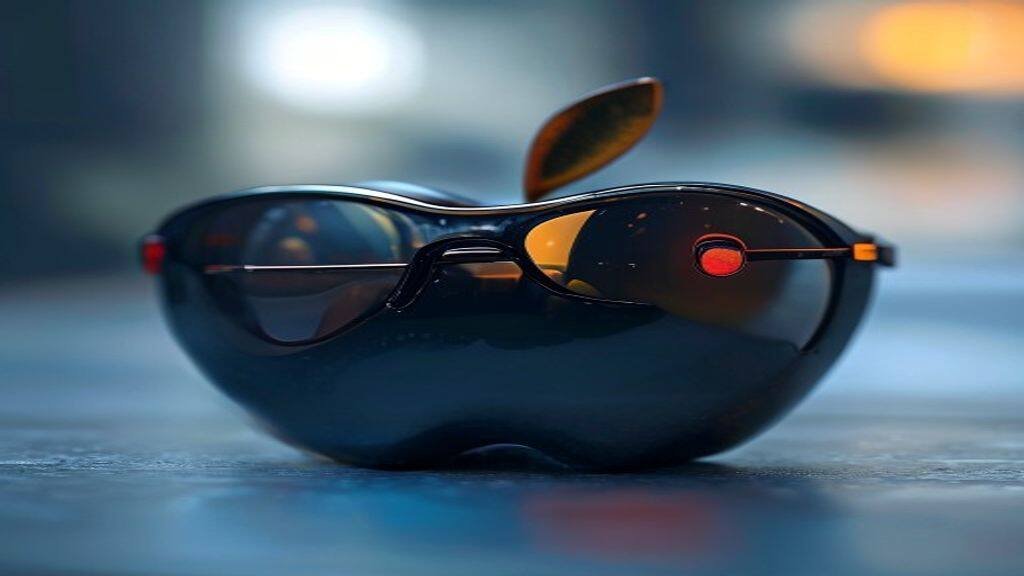
The history of wearable technology is littered with the ghosts of ambitious hardware projects, but perhaps none cast a longer shadow than Google Glass. When it debuted over a decade ago, the device promised a seamless integration of digital information into our field of view. Instead, it became a lightning rod for privacy concerns, earning wearers the derisive moniker “Glassholes” and eventually retreating into the enterprise sector. Today, as rumors swirl regarding Apple’s long-term roadmap for augmented reality (AR) eyewear, the tech industry is forced to confront the same haunting question: Can a tech giant build smart glasses that feel like a natural extension of the human experience without turning every public space into a surveillance zone?
The Architectural Challenge of Privacy by Design
For Apple, the challenge is fundamentally different from that of its competitors. While startups and smaller hardware firms often prioritize feature density to justify their existence, Apple’s brand equity relies heavily on the promise of privacy as a core product feature. However, smart glasses present a unique engineering paradox. To be truly useful, AR glasses require outward-facing cameras, depth sensors, and microphones to map the environment and understand the user’s context. These are the exact components that trigger deep societal anxiety.
To succeed, Apple would likely need to move beyond simple software toggles. We might expect a hardware-level approach to privacy, similar to the physical mute switches on iPhones or the dedicated security chips in MacBooks. For instance, a physical shutter or an integrated light indicator—wired directly to the camera’s power supply—could provide a visual signal to bystanders. If the light isn’t on, the camera is physically disconnected. By making privacy a verifiable hardware state rather than a promise buried in a software update, Apple could theoretically mitigate the “creeper factor” that doomed earlier iterations of smart eyewear.
Data Minimization and On-Device Processing
The most significant threat posed by smart glasses is not necessarily the act of recording, but the destination of that data. If Apple’s glasses were to stream video feeds to the cloud for processing, they would effectively become mobile surveillance hubs. The privacy risk here is exponential; facial recognition databases or behavioral profiling could be generated in real-time, stripping away the anonymity that society currently enjoys in public spaces.
The path forward likely involves a radical commitment to on-device processing. Apple has already laid the groundwork for this with its Neural Engine architecture, which handles sensitive tasks like FaceID and voice recognition locally. For smart glasses to be viable, the device would need to process spatial mapping, object recognition, and interaction logic entirely within the headset. If no image data ever leaves the local hardware, the risk of mass surveillance or data breaches is significantly lowered. The technical hurdle here is immense, as it requires packing desktop-class processing power into a frame light enough to wear for eight hours a day without thermal discomfort.
Social Norms and the “Polite” Interface
Technology often outpaces social etiquette, and smart glasses are the ultimate test of this friction. Even if Apple builds a privacy-hardened device, the mere presence of a camera on one’s face changes the dynamic of human interaction. We are accustomed to smartphones, which require a deliberate gesture to capture a photo. A pair of glasses, however, turns the act of looking into an act of recording. This ambiguity creates a permanent state of social unease.
To navigate this, Apple may need to lean into human-centric design. This could involve software interfaces that obscure the user’s focus or eye-tracking tech that signals to others what the user is interacting with. Furthermore, the company may need to lead a cultural shift, similar to how they normalized the “AirPods look.” If the glasses are marketed as a tool for communication and accessibility—rather than a tool for capturing the world—the public may eventually reach a détente. However, this relies on Apple maintaining a rigid stance against third-party apps that might seek to exploit the glasses’ sensors for invasive purposes.
The Regulatory and Legal Minefield
Even with the most robust encryption and local processing, Apple will face a regulatory environment that is increasingly hostile to Big Tech. Legislators in the EU and the United States are already tightening the screws on data collection, and smart glasses would almost certainly be subject to strict new frameworks. Apple might find itself in the position of having to work with regulators to define “privacy zones” or “no-recording” geofencing, where the glasses automatically disable certain features in sensitive areas like hospitals, courthouses, or private homes.
This creates a complicated user experience. If a product’s functionality is constantly being neutered by geofencing or strict privacy laws, its value proposition begins to erode. Balancing the utility of an AR assistant with the rigid constraints of privacy law is the tightrope walk that will define the next decade of gadget development. Apple has the capital and the influence to set the standard here, but they will be operating in a climate where public trust in Silicon Valley is at an all-time low.
Outlook: A Cautious Future
Can Apple make smart glasses that aren’t a privacy threat? The answer is not a simple yes or no, but rather a question of trade-offs. It is technically possible to build a device that respects individual privacy through local processing and physical hardware indicators. However, the social implications of living in a world where everyone is potentially recording everything are far harder to engineer away. Apple will likely approach this with the extreme caution that characterizes their product launches, perhaps starting with limited, non-camera-based AR features before slowly introducing more invasive capabilities. The success of smart glasses will ultimately depend on whether Apple can convince the public that the convenience of the digital layer is worth the compromise of our collective anonymity.
Original reporting: source.