














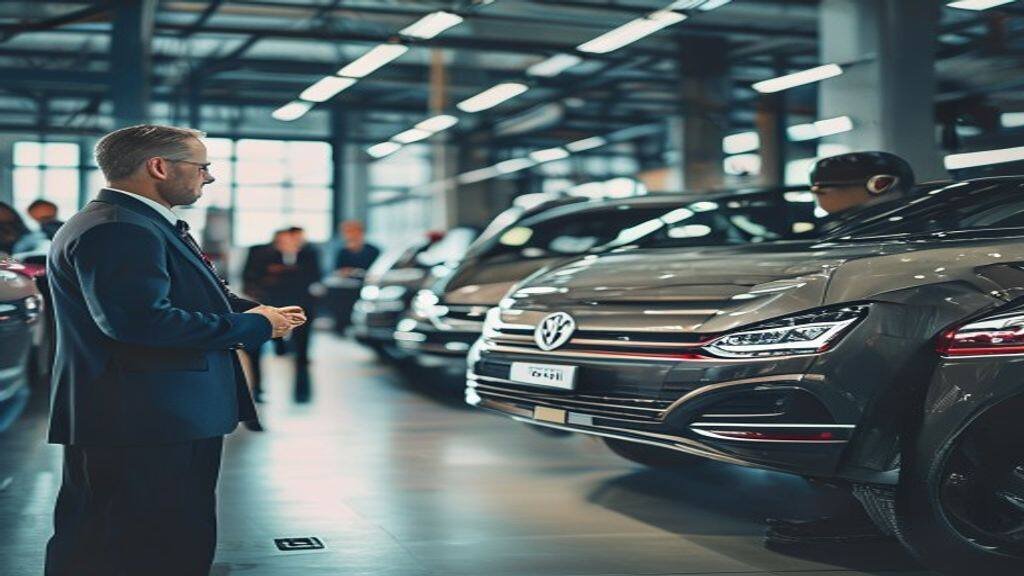
The Volkswagen Group, a titan of the global automotive industry and a cornerstone of the German economy, finds itself at a critical crossroads. As the company navigates the turbulent transition toward electric mobility and faces intensified competition from agile international rivals, its leadership has proposed a sweeping plan to streamline operations. However, this strategy has met with fierce resistance from powerful labor unions, setting the stage for a high-stakes standoff that could define the future of European manufacturing. At the heart of the disagreement lies a fundamental tension between the necessity of corporate agility and the preservation of long-standing social protections.
The Rationale Behind the Restructuring
For Volkswagen, the current economic landscape is unforgiving. Executives point to a combination of rising energy costs, sluggish demand in key markets like China, and the immense capital expenditure required to pivot toward battery-electric vehicle (BEV) production. To remain competitive, the Group has argued that it must significantly reduce its fixed costs. This involves more than just trimming budgets; it necessitates a fundamental rethink of how the company operates across its domestic German plants.
The proposed streamlining plan, which has been leaked in segments to the press, suggests a departure from the traditional model of high-volume, labor-intensive production. Leadership argues that the company is currently overstaffed relative to its output efficiency, particularly when compared to newer, leaner competitors who do not carry the legacy overhead of a century-old manufacturer. By consolidating administrative functions, optimizing supply chains, and potentially scaling back production capacity at underperforming facilities, VW believes it can protect its long-term viability. For the Board, this is not a choice but an existential imperative.
The Union Perspective: Protecting the Social Contract
On the other side of the negotiating table, labor representatives—led by the influential IG Metall union—view the proposal as a direct threat to the “Volkswagen Way.” In Germany, the company’s works council wields significant power, often acting as a co-decision-maker in strategic shifts. The unions argue that the current crisis is not a result of labor costs, but rather a failure of management to anticipate market trends and execute a coherent electric vehicle strategy.
The unions are particularly concerned about the potential for forced layoffs and the closure of production sites, both of which would shatter historical job security agreements that have been in place for decades. From their perspective, the workforce is the company’s greatest asset, not a liability to be liquidated for short-term stock price gains. They contend that cutting staff will damage morale, erode the quality of craftsmanship that defines the VW brand, and ultimately lead to a “hollowing out” of the company’s engineering prowess. Instead of cuts, the unions are pushing for increased investment in internal training programs to help employees transition from internal combustion engine assembly to the specialized requirements of EV manufacturing.
The Conflict Over “German Standort”
The disagreement transcends simple labor-management politics; it highlights a broader concern regarding the “Standort Deutschland,” or the viability of Germany as an industrial base. Volkswagen is not merely a car company; it is an ecosystem that supports thousands of smaller suppliers and service providers. If VW begins to scale back its domestic operations, the economic ripple effects could be devastating for the broader German economy.
The government in Berlin is watching closely, caught between the need for a robust national industry and the desire to remain a neutral arbiter. While the state of Lower Saxony holds a significant stake in Volkswagen and typically sides with labor interests, the current fiscal climate makes it difficult to ignore the logic of cost-cutting. This creates a volatile political environment where every announcement from the automaker is scrutinized for its potential impact on national employment statistics and the broader transition to green energy.
Bridging the Divide: Is Compromise Possible?
History suggests that Volkswagen and its unions have a unique capacity to find common ground, even when the rhetoric is at its most heated. The “co-determination” model—where employees have a seat at the highest levels of corporate governance—forces both sides to engage in prolonged, often grueling negotiations. The goal for both parties is likely to avoid the nuclear option of widespread strikes, which would paralyze production and cause irreparable damage to the brand’s reputation during this sensitive transition phase.
Potential solutions being floated include early retirement packages, voluntary severance schemes, and the conversion of existing plants into “centers of excellence” for battery technology or software development. These measures would allow the company to reduce its headcount without the social stigma and legal challenges associated with mass redundancies. However, such programs are expensive, and the company’s ability to fund them while simultaneously investing in new technology remains a point of contention.
Outlook
The coming months will be defining for the Volkswagen Group. As the company moves toward its fiscal year-end, the pressure to demonstrate a clear path to profitability will intensify. If management and labor fail to reach a consensus, we are likely to see a period of industrial unrest that could stall the company’s electric rollout and cede further ground to global competitors. Conversely, a successful negotiation could provide a blueprint for how legacy automakers can transform themselves into modern, lean, and sustainable entities without abandoning their social commitments. The eyes of the global automotive sector remain fixed on Wolfsburg, waiting to see if this historic partnership can survive the pressures of the modern age.
Original reporting: source.