



















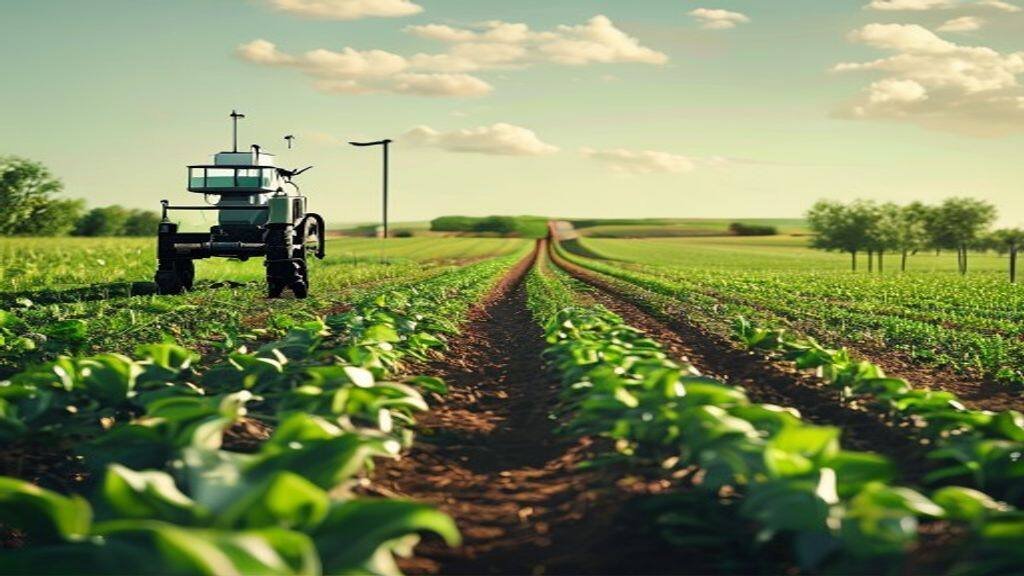
In the quiet corners of Silicon Valley and the vast, sun-drenched fields of the American Midwest, a technological collision is underway. Artificial Intelligence, the darling of modern innovation, has set its sights on the oldest industry in human history: agriculture. The promise is intoxicating—autonomous tractors, precision fertilizer application, and predictive harvest modeling that could feed a growing global population while slashing chemical waste. Yet, as the industry stands on the precipice of this digital revolution, a stark reality has emerged: the machines are ready, but the data that fuels them is in shambles.
The Paradox of the Modern Farm
For the past decade, the agricultural sector has been inundated with “smart” hardware. Farmers have been encouraged to install IoT sensors in their soil, GPS-guided systems on their combines, and high-resolution cameras on their drones. On paper, these farms are data-rich environments. However, in practice, this information exists in a state of chaotic fragmentation. Much of the data is siloed within proprietary platforms that refuse to communicate with one another. A John Deere tractor might collect granular soil moisture metrics, while a separate irrigation system manages water flow, and a third-party software platform tracks weather patterns. When these systems cannot “talk” to each other, the intelligence remains locked in disparate buckets, preventing the holistic analysis required for true AI application.
Furthermore, the quality of this data is often abysmal. Agricultural environments are notoriously hostile to sensitive electronics. Dust, humidity, fluctuating temperatures, and the sheer physical vibration of heavy machinery can corrupt sensor readings. Without rigorous data cleaning and normalization protocols, AI models—which are notoriously sensitive to “garbage in, garbage out” scenarios—struggle to produce reliable insights. For an AI to accurately predict a crop disease outbreak, it needs years of clean, labeled, and consistent historical data. Currently, most farmers are sitting on a mountain of noise, not a goldmine of information.
The Technical Hurdle: Lack of Standardization
The primary barrier to agricultural AI is not the sophistication of the algorithms, but the lack of an industry-wide data standard. In fields like healthcare or finance, data architecture is heavily regulated and standardized, allowing different systems to interoperate seamlessly. Agriculture has no such mandate. Instead, it is a Wild West of proprietary file formats and closed-loop ecosystems. When a farmer decides to switch equipment brands or software providers, they often find their historical data inaccessible or incompatible with their new setup.
This lack of interoperability forces AI developers to spend the vast majority of their time on “data engineering”—the tedious process of scrubbing and formatting data—rather than on actual model development. This creates a high barrier to entry for startups and keeps the cost of agricultural AI solutions prohibitively expensive for the average family farm. Until the industry agrees on common protocols for data exchange—a digital “Esperanto” for farming—the potential for large-scale AI deployment will remain bottlenecked.
The Human Element and Data Sovereignty
Beyond the technical challenges, there is a profound issue of trust. Farmers are understandably protective of their data. For a multi-generational grower, field data is a proprietary trade secret; it contains the history of their yields, their soil health, and their specific operational efficiencies. If a tech giant collects this data to train an AI model, who owns the resulting insights? Does the farmer benefit, or does the corporation simply use that data to sell the farmer more expensive chemicals or seeds?
This anxiety over data sovereignty has led to a reluctance to share information, which further starves the AI models of the massive, diverse datasets they need to learn. To bridge this gap, the industry needs to establish clear, transparent frameworks for data ownership. Farmers must be viewed as partners in the AI ecosystem rather than mere data sources. When growers feel confident that their data is being used to improve their own profitability rather than being commodified by third parties, the flow of high-quality data will likely increase.
Bridging the Gap: Moving Toward Structured Intelligence
To overcome these hurdles, the agricultural sector is beginning to explore decentralized data architectures and edge computing. By processing data locally on the farm rather than sending raw, messy streams to the cloud, farmers can maintain control while generating actionable insights in real-time. Additionally, there is a growing movement toward “Data Cooperatives,” where farmers pool their anonymized data to train models that benefit the entire community, effectively creating a public good that rivals the capabilities of proprietary systems.
The transition from “smart farming” to “AI-driven agriculture” will require a massive cultural shift. It necessitates moving away from hardware-first thinking and toward a data-first philosophy. This means investing in data infrastructure, training a new generation of agronomists who are also data scientists, and prioritizing the creation of open-source standards that allow for seamless integration across all farm equipment.
Outlook
The future of agriculture is undeniably digital, but the path to that future is currently overgrown with obstacles. The potential for AI to revolutionize food security is immense, yet it remains tethered by the inadequacy of our current data practices. Over the next decade, the winners in the agricultural tech space will not necessarily be those with the most powerful algorithms, but those who successfully solve the data plumbing problem. As the industry moves toward standardized, interoperable, and farmer-centric data systems, we will likely see the current “noise” transform into the precise, actionable intelligence needed to nourish a hungry planet.
Original reporting: source.