



















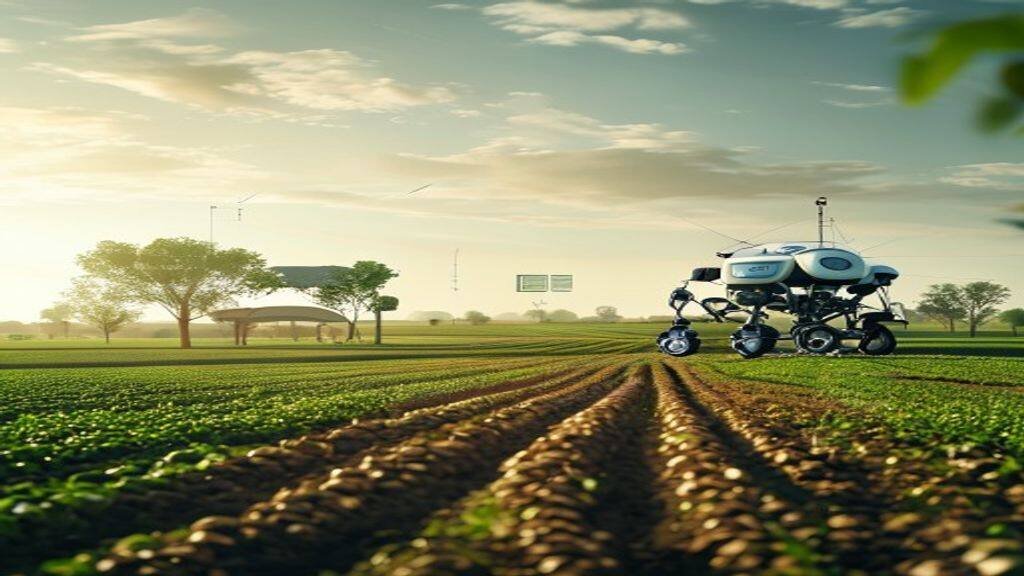
The promise of artificial intelligence in agriculture has long been heralded as the “Fourth Agricultural Revolution.” From autonomous tractors navigating rows with centimeter-level precision to predictive analytics that foresee crop diseases before a single leaf yellows, the theoretical potential for AI to bolster global food security is immense. However, as the industry stands on the precipice of this technological leap, a stark reality has emerged: while the machinery and the algorithms are ready to perform, the foundational data upon which they rely is fundamentally broken. Agriculture is ready for AI, but its data is trapped in a state of chaos.
The Data Silo Problem
In the modern digital economy, data is often referred to as the “new oil.” In agriculture, however, that oil is currently sitting in thousands of disconnected, leaking barrels. For years, equipment manufacturers, software startups, and independent agronomy firms have built proprietary platforms to capture farm data. A farmer might use a John Deere tractor for planting, a Climate FieldView system for monitoring, and a separate irrigation software for water management. While each of these tools is sophisticated in its own right, they rarely speak the same language.
This lack of interoperability creates a “silo” effect. AI models thrive on massive, diverse, and standardized datasets. To train an algorithm to optimize fertilizer application, the model needs to correlate soil sensor readings, historical yield data, weather patterns, and chemical input logs. When this information is locked inside walled gardens—where data cannot be easily exported, cleaned, or merged—the AI is effectively starved of the context it needs to make intelligent decisions. Without a unified data standard, the industry is forcing AI to operate with one hand tied behind its back.
The Challenge of Unstructured and Noisy Environments
Unlike the clean, controlled environments of software engineering or financial modeling, the farm is a chaotic, unstructured ecosystem. Data collection in agriculture is fraught with “noise.” A sensor buried in a field might provide a reading, but is that reading accurate, or was it skewed by a recent heavy rainstorm or a burrowing rodent? How do you reconcile a high-resolution satellite image with a low-resolution ground sensor reading?
Furthermore, much of the data generated on farms is still analog or inconsistent. While large-scale commercial operations have embraced telematics, many mid-sized farms still rely on paper records or disconnected spreadsheets. AI requires “clean” data to learn effectively; “garbage in, garbage out” is a rule that applies even more harshly in agricultural physics. Transforming messy, field-level observations into high-quality training sets requires a monumental effort in data curation that the industry has yet to fully fund or organize.
The Human Element: Trust and Ownership
Beyond the technical hurdles lies the complex question of data ownership. Farmers are naturally protective of their information. Data is a reflection of their land’s potential and their business efficiency. There is a palpable fear that if a farmer shares their data with a large AI provider, that entity might use the insights to manipulate commodity prices, influence insurance premiums, or squeeze the farmer’s margins.
For AI to be truly transformative, there must be a robust, transparent framework for data governance. Farmers need to know that their data is being used to improve their specific yields rather than being aggregated to serve the interests of corporate stakeholders. Until there is a reliable “data infrastructure” that protects the privacy of the producer while allowing for the anonymized aggregation required for machine learning, adoption will remain fragmented. Trust is the invisible currency of the agricultural AI transition.
Bridging the Gap: The Path to Standardization
Solving the data crisis will require a collaborative approach that transcends individual company interests. We are beginning to see the rise of industry consortia and open-source initiatives aimed at creating common data schemas for agriculture. These efforts are designed to ensure that a data packet from a sensor in Brazil can be read and interpreted by an AI model developed in a lab in Silicon Valley or Amsterdam.
Moreover, the rise of “Edge AI”—where processing happens on the tractor or the drone rather than in the cloud—may help alleviate some of the data transfer issues. By processing information locally, farmers can gain immediate value from their data without needing to upload everything to a centralized, proprietary server. However, this still leaves the underlying problem of standardized data formats unresolved.
Outlook
The integration of AI into agriculture is not a matter of “if,” but “when.” The technical capability of our current neural networks is more than sufficient to revolutionize how we grow food. The next phase of the industry’s evolution will not be defined by who builds the best robot, but by who builds the most reliable data architecture. The companies that succeed will be those that prioritize data interoperability, invest in cleaning the industry’s messy data legacy, and earn the trust of the farmers holding the keys to the information. If the industry can solve the data crisis, the AI-driven farm will finally move from a vision of the future to a productive reality.
Original reporting: source.