


In the rapidly shifting landscape of artificial intelligence hardware, the hegemony of Nvidia has long seemed unassailable. For years, the Santa Clara giant has dictated the pace of innovation, with its H100 and Blackwell architectures serving as the backbone of the global AI boom. However, a disruptive force has emerged from the shadows to challenge this dominance. Etched, a specialized semiconductor startup, has recently sent shockwaves through the venture capital ecosystem by securing a valuation of $5 billion, bolstered by an eye-popping $1 billion in pre-orders for its flagship AI chip. This development marks a pivotal moment in the “post-GPU” era, signaling that the industry is finally ready to move beyond general-purpose processors in favor of highly specialized silicon.
The Shift from Generalization to Specialization
To understand the significance of Etched’s rise, one must first understand the limitations of the current hardware paradigm. Nvidia’s GPUs are marvels of engineering, designed to handle a vast array of parallel processing tasks, from high-end gaming and 3D rendering to complex scientific simulations. When the generative AI explosion occurred, Nvidia’s architecture proved uniquely adaptable to the massive matrix multiplications required by Large Language Models (LLMs). Yet, this adaptability comes at a cost: efficiency. Because GPUs are built to be “jacks-of-all-trades,” they carry a significant amount of overhead that is unnecessary for the specific mathematical operations that drive models like GPT-4 or Llama 3.
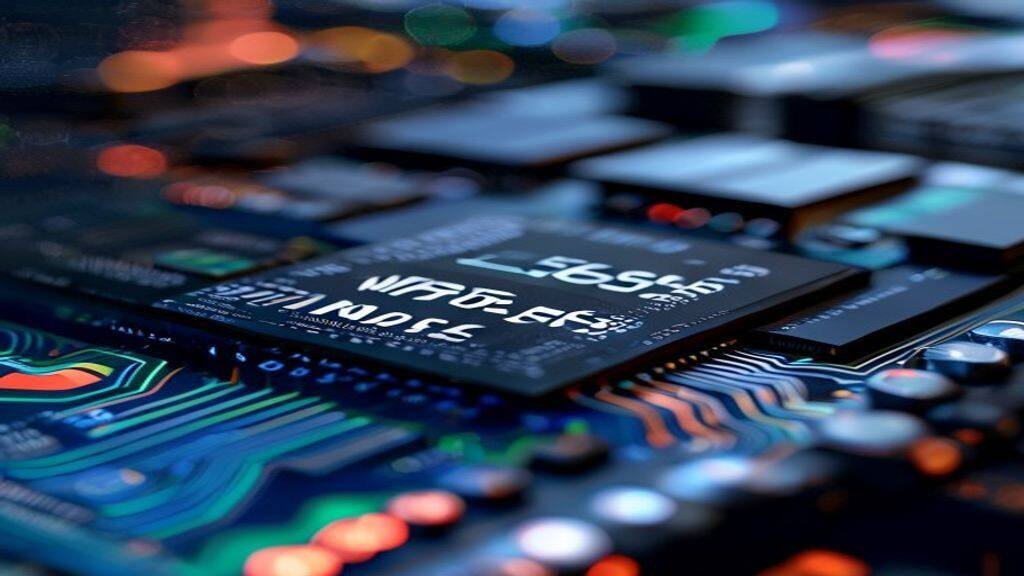
Etched is taking a radically different approach. Rather than building a programmable chip, the company is developing an Application-Specific Integrated Circuit (ASIC) designed exclusively for the Transformer architecture—the underlying technology behind almost every major AI model currently in existence. By stripping away the circuitry required for non-AI tasks, Etched claims its chip, dubbed “Sohu,” can achieve performance metrics that dwarf current industry standards. In the world of semiconductor design, this is the equivalent of abandoning a versatile Swiss Army knife in favor of a laser-guided surgical scalpel.
The “Sohu” Advantage: Speed and Efficiency
The core value proposition of the Sohu chip lies in its hardware-level optimization for Transformers. Because the chip is “hard-wired” to execute the specific operations—such as attention mechanisms and feed-forward networks—that define LLMs, it eliminates the latency inherent in software-driven instruction sets. Industry analysts suggest that this architecture could provide a speed advantage of up to an order of magnitude over traditional GPUs, while simultaneously consuming a fraction of the power.
Energy efficiency has become the primary bottleneck for the AI industry. As data centers balloon in size, the electricity requirements for training and inference are hitting physical and economic limits. A chip that can perform the same inference task with 10% or 20% of the energy consumption of a current-gen GPU is not just a technological improvement; it is a massive cost-saving mechanism. This efficiency is precisely why major enterprise clients and cloud providers have flocked to place $1 billion in pre-orders, signaling a hunger for hardware that can lower the “Total Cost of Ownership” (TCO) for massive AI infrastructure.
The $5 Billion Valuation and Market Sentiment
The $5 billion valuation of Etched represents a significant bet by investors that the future of AI will be fragmented. For a long time, the narrative was that Nvidia would remain the sole provider of “picks and shovels” for the AI gold rush. However, the sheer scale of the investment flowing into Etched suggests that the market is beginning to view AI chips as a commodity that can be optimized into oblivion. When a startup can command a multi-billion dollar valuation before its hardware has even reached mass-market availability, it reflects a deep-seated industry desire to decouple from the Nvidia ecosystem.
This sentiment is shared by many in the venture capital world, who have grown wary of the “Nvidia tax”—the high premium paid for chips that are often in short supply. By backing Etched, firms are essentially hedging against the possibility that general-purpose GPUs will eventually become too expensive and energy-inefficient to support the next generation of hyper-scale AI models. If Etched can successfully deliver on its performance promises, it will prove that the future of computing lies in silicon that is tailored to the specific software it runs.
Challenges on the Horizon
Despite the optimism, the road ahead for Etched is fraught with technical and strategic hurdles. Designing a chip is easy; manufacturing it at scale is a monumental challenge. The company will need to navigate the complexities of supply chains, utilize cutting-edge manufacturing processes like TSMC’s 3nm nodes, and ensure software compatibility. Furthermore, the AI field moves with blistering speed. If a new architecture replaces the Transformer—much like the Transformer replaced RNNs and CNNs—a chip built solely for the Transformer could theoretically become obsolete overnight.
Moreover, Nvidia is not standing still. The company has its own research teams exploring specialized inference chips and continues to iterate on its architectures at a pace that few can match. To survive, Etched must prove that its hardware is not only faster today but also resilient enough to withstand the unpredictable evolution of AI research.
Outlook: A More Specialized Future
The success of Etched serves as a bellwether for the hardware industry. We are moving toward a future where “one size fits all” is no longer the standard for high-performance computing. As AI models become more deeply integrated into the global economy, the demand for specialized silicon will only intensify. Whether Etched becomes the primary challenger to Nvidia or simply the first of many successful specialized chip designers, one thing is certain: the era of the monolithic GPU is facing its most significant challenge yet. The coming years will be defined by a battle between the flexibility of general-purpose chips and the brutal efficiency of specialized hardware, and the winners will be the ones who can best balance performance, power, and adaptability.
Original reporting: source.