




















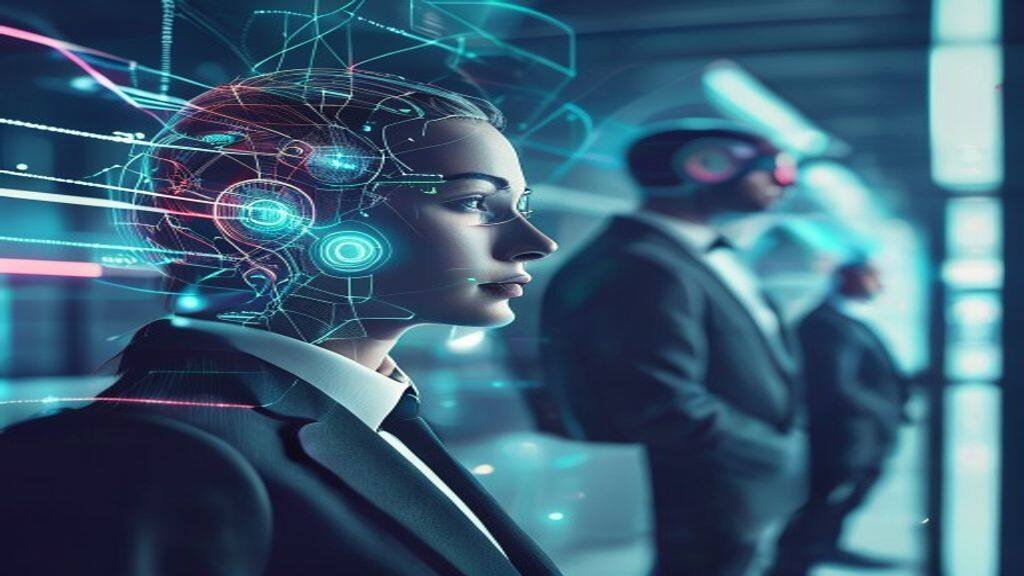
In the fast-paced corridors of modern industry, the definition of a “colleague” is undergoing a profound metamorphosis. As we navigate the latter half of the decade, the integration of artificial intelligence is no longer restricted to background data processing or simple automation scripts. Instead, we are witnessing the rise of the AI “coworker”—a digital entity capable of reasoning, collaborating, and executing complex workflows alongside human teams. Simultaneously, the physical infrastructure that supports this digital evolution is reaching for the heavens, with stratospheric internet initiatives promising to bridge the global connectivity gap. Together, these two trends represent the next great leap in our technological narrative.
The Evolution of the Digital Teammate
For years, the discourse surrounding AI in the workplace focused heavily on displacement—the fear that algorithms would render human labor obsolete. However, the current reality at the leading edge of tech firms is far more nuanced. We are seeing the deployment of “agentic AI,” systems that move beyond passive chatbots to become proactive contributors. These digital coworkers are being integrated into project management software, coding environments, and creative suites, where they act as force multipliers.
Unlike legacy software that requires rigid inputs, these new AI agents understand context, intent, and historical project data. They can draft documentation, debug lines of code in real-time, and even facilitate cross-departmental communication by synthesizing data from disparate platforms. The shift here is from “tool” to “teammate.” A human project manager might now delegate the task of resource allocation to an AI, which analyzes market trends and internal capacity to suggest the most efficient path forward. The human retains the final authority, but the AI handles the heavy lifting of synthesis and strategy formulation.
This transition necessitates a new form of digital literacy. As AI coworkers become standardized, the value of the human worker is migrating toward high-level oversight, ethical judgment, and complex problem-solving. We are essentially building a hybrid workforce where the speed and scale of machine intelligence complement the nuance and empathy of human cognition.
Stratospheric Connectivity: Bridging the Digital Divide
While AI promises to revolutionize how we work, the efficiency of this digital transformation is entirely dependent on the quality of our connectivity. Enter the era of stratospheric internet—a sophisticated approach to telecommunications that utilizes high-altitude platforms (HAPs) and advanced satellite constellations to deliver high-speed, low-latency internet to the most remote corners of the planet.
Traditional terrestrial infrastructure, such as fiber optic cables, is notoriously difficult and expensive to deploy in mountainous, rural, or oceanic regions. Stratospheric platforms, which operate in the layer of the atmosphere between 60,000 and 70,000 feet, provide a unique solution. By maintaining a semi-permanent presence above the weather, these platforms can act as “floating cell towers,” covering thousands of square miles with high-bandwidth signals. When coupled with the rapid expansion of Low Earth Orbit (LEO) satellite networks, we are approaching a point where “dead zones” will become a relic of the past.
This is not merely about streaming high-definition video in remote locations. It is about democratization. When a small business owner in a developing nation gains access to the same cloud-based AI tools as a professional in Silicon Valley, the competitive landscape shifts. Stratospheric internet provides the backbone for a global, hyper-connected workforce, ensuring that the AI revolution is not an exclusive privilege of the urbanized world.
The Synergy of Intelligence and Infrastructure
The intersection of AI coworkers and ubiquitous connectivity is where the most significant economic growth is likely to occur. Consider the manufacturing or logistics sectors: with AI agents monitoring supply chains and stratospheric internet providing real-time data feeds from remote sensor arrays, companies can achieve a level of operational agility that was previously impossible. Problems can be predicted and mitigated before they manifest, and global teams can collaborate on complex engineering tasks as if they were sitting in the same office.
However, this convergence also introduces significant regulatory and security challenges. As AI agents take on more autonomous roles, the question of accountability becomes paramount. Who is responsible for a decision made by an AI coworker that leads to a financial loss? Furthermore, as we become dependent on stratospheric infrastructure, the resilience of these systems against cyber threats and solar weather events becomes a matter of national and global security.
An Outlook for the Future
Looking ahead, the next five years will likely be defined by the maturation of these two pillars. We expect to see more refined “human-in-the-loop” protocols, where the interaction between human and AI coworkers becomes seamless and intuitive. Simultaneously, the race for stratospheric dominance will likely lead to a decrease in costs for satellite and HAP-based internet, making high-speed connectivity a standard utility rather than a luxury.
The goal for the industry now must be to ensure that these advancements are inclusive and secure. By prioritizing interoperability and robust cybersecurity frameworks, we can harness the power of AI coworkers and global connectivity to foster a new era of human productivity—one that transcends geographical barriers and elevates the standard of work for everyone, regardless of their location on the map.
Original reporting: source.