














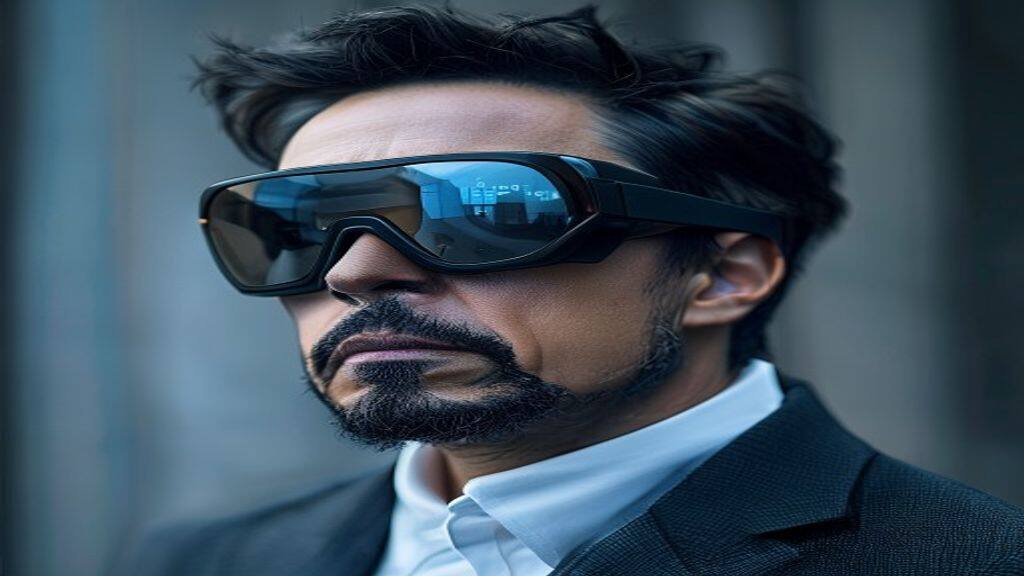
For decades, the concept of wearable computing has been tethered to a singular, often clunky vision: a bulky headset that isolates the user from their surroundings, or a pair of glasses weighed down by protruding lenses and intrusive camera modules. We have been conditioned to believe that for smart eyewear to be “smart,” it must be invasive. However, a new wave of camera-free smart glasses is challenging this narrative, proving that the most advanced technology is often the kind that disappears into the background. By stripping away the lenses and the sensors that make people recoil, these devices have finally achieved what science fiction promised: a seamless, heads-up interface that makes the wearer feel less like a cyborg and more like a visionary.
The Philosophy of Invisible Tech
The primary friction point for the adoption of smart glasses has never been the software; it has been the social stigma associated with cameras. The “Glasshole” era of the early 2010s taught the industry a harsh lesson: people do not want to be recorded without their knowledge. By removing the camera entirely, manufacturers have pivoted toward a new philosophy—ambient computing. These devices focus on audio, haptic feedback, and subtle heads-up displays that prioritize the user’s immediate environment rather than digitizing it for capture.
When I first donned a pair of these camera-free glasses, the immediate sensation was one of relief. There is no heavy front-loading of hardware, no blinking LED indicators, and no social anxiety regarding privacy. Instead, the frame houses micro-speakers, bone-conduction transducers, and a minimalist projection system. The weight distribution is balanced, mimicking a standard pair of premium frames. It is a masterclass in industrial design that proves technology does not need to be loud to be impactful.
Transforming the Daily Workflow
Living with these glasses for a week, I began to understand why they draw the inevitable “Tony Stark” comparisons. In the Marvel Cinematic Universe, Stark’s interface isn’t just about flashy visuals; it’s about the democratization of information. When I am walking through a busy city center, I don’t need to pull out my smartphone to check a notification or get a turn-by-turn navigation prompt. These glasses feed that information directly into my peripheral vision or via spatial audio.
The utility here is profound. During a meeting, I can receive subtle text cues that keep me on track without looking down at a screen. When commuting, I can listen to a podcast while maintaining total situational awareness of the ambient noise around me. It is a “heads-up” lifestyle in the most literal sense. By removing the camera, the developers have forced themselves to build a better software experience. They cannot rely on computer vision to dazzle the user; they must rely on excellent UI design, clever notification management, and deep integration with existing digital ecosystems.
The Engineering Challenges of Minimalism
Developing a device that hides its technology is significantly harder than building one that flaunts it. Without a camera to track hand gestures or map a room, the glasses must rely on high-precision inertial measurement units (IMUs), Bluetooth connectivity, and sophisticated power management. Cramming a battery, a processor, and a display driver into the temples of a frame that looks like something from a high-end optician requires extreme miniaturization.
Thermal management is another hurdle. Because these frames sit directly against the skin, they cannot run hot. The engineering teams behind these products have had to move toward highly efficient, low-power chipsets that handle data processing on the connected smartphone rather than the glasses themselves. This “tethered intelligence” approach is the secret sauce. By offloading the heavy lifting to the phone in my pocket, the glasses remain cool, light, and comfortable for all-day wear.
Privacy as a Premium Feature
In an era where data harvesting is the default business model, the camera-free nature of these glasses acts as a powerful marketing and ethical differentiator. There is an inherent trust built into a device that physically cannot record video. It allows the wearer to enter sensitive environments—corporate boardrooms, schools, or private social gatherings—without the looming threat of surveillance. This isn’t just a design choice; it is a fundamental shift in how we define wearable privacy.
Furthermore, the absence of a camera reduces the legal and ethical liability for the manufacturer. It simplifies the product roadmap, as there are fewer regulatory hurdles to clear. For the consumer, it means the glasses are an accessory, not a surveillance tool. This distinction is vital for mainstream adoption, as it moves the technology from the realm of “gadget for enthusiasts” to “tool for the general public.”
Outlook: The Future of the Face-Computer
As we look toward the next few years, it is clear that the industry is splitting into two distinct paths: the bulky, camera-laden headsets for mixed reality and gaming, and the slim, camera-free frames for everyday assistance. The latter is arguably more important for the long-term integration of digital intelligence into our daily lives. As display technology continues to shrink and battery density improves, these frames will only become thinner and more capable.
We are approaching a tipping point where the distinction between “smart” glasses and “regular” glasses will vanish entirely. When that day comes, we won’t be talking about “wearables” anymore; we will simply be talking about how we interact with the world. The journey to the future of computing isn’t being paved by the loudest devices, but by the ones that know how to stay out of the way, leaving us free to look up, look forward, and keep our eyes on what truly matters.
Original reporting: source.