





















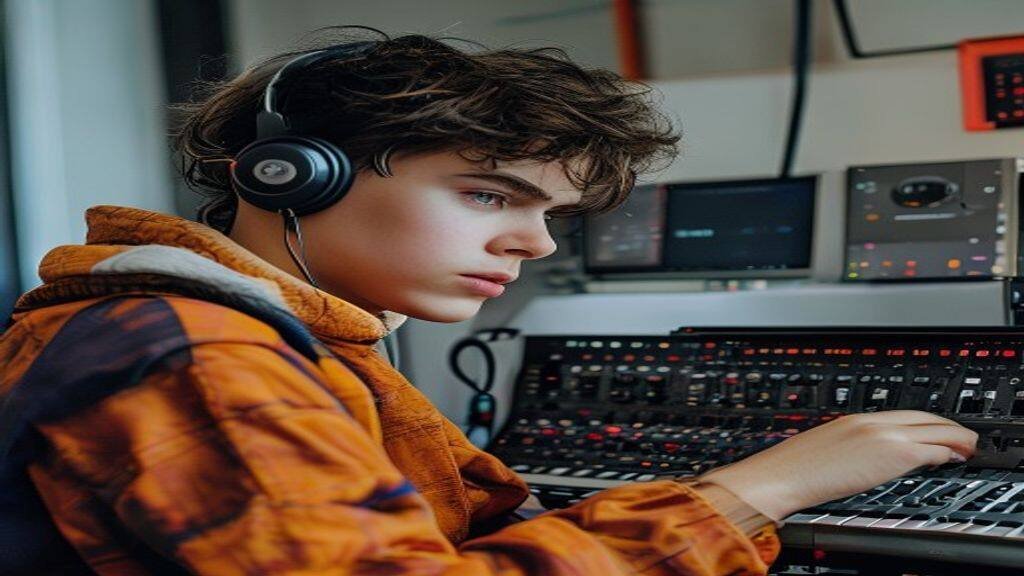
Since its release, Teenage Engineering’s EP-133 K.O. II has occupied a unique space in the crowded world of portable music production. It promised the tactile joy of a professional sampler combined with the approachable, playful aesthetic the Swedish company is known for. However, early adopters were quick to point out that while the hardware was a triumph of industrial design, the software felt somewhat incomplete. Today, Teenage Engineering is addressing those concerns head-on with a substantial firmware update that expands the capabilities of the K.O. II, transforming it from a fun sketchpad into a significantly more robust studio tool.
The Evolution of the EP-133
The latest firmware update is not merely a collection of minor bug fixes; it represents a fundamental shift in how the EP-133 handles audio and data. For many users, the most glaring omission at launch was the lack of direct USB audio support. In an era where mobile music production relies heavily on seamless integration with tablets, smartphones, and laptops, the inability to stream audio directly into a DAW via USB-C felt like a missed opportunity. Teenage Engineering has rectified this, allowing the K.O. II to function as a high-quality audio interface. This change enables producers to record their patterns directly into software like Ableton Live, Logic Pro, or GarageBand with pristine digital clarity, bypassing the need for external audio interfaces.
Beyond the connectivity improvements, the update introduces a long-requested “lo-fi” mode. The EP-133 was always capable of gritty sampling, but this dedicated feature allows users to dial in the specific character of vintage hardware. By emulating the limited bit-depth and sample rates of 90s-era samplers, the lo-fi mode adds a layer of harmonic distortion and aliasing artifacts that many beat-makers crave. It is a nod to the golden age of hip-hop production, where the limitations of memory and processing power forced artists to be creative with their sound design.
Workflow Enhancements and Looping Logic
For those who use the K.O. II for live performance, the update brings critical refinements to the sequencer. One of the primary complaints regarding the initial interface was the difficulty of managing long samples and complex loops. The new firmware introduces improved loop manipulation tools, making it easier to slice, stretch, and rearrange audio on the fly. By refining how the device handles time-stretching, Teenage Engineering has ensured that samples remain in sync with the project tempo even when significant pitch adjustments are applied.
Additionally, the update includes a more intuitive sample management system. Users can now more easily organize their folders, preview samples without triggering them in a pattern, and manage the internal memory capacity with greater precision. While the K.O. II remains a device defined by its immediacy, these workflow tweaks reduce the “menu diving” that often plagues hardware samplers, allowing the user to stay focused on the creative process rather than the file system.
Connectivity and MIDI Integration
The integration of USB audio is accompanied by a host of MIDI-related improvements. The EP-133 now offers more granular control over external MIDI devices, allowing it to act as a more capable “brain” for a hardware setup. Users can now map specific parameters to external controllers with greater ease, enabling hands-on manipulation of filters, envelopes, and effects that were previously locked behind the device’s front panel. For the modular synth community, this update also improves the stability of clock synchronization, ensuring that the K.O. II stays perfectly in time with Eurorack systems and other external sequencers.
Furthermore, the update addresses the latency issues that some users reported when using the device in conjunction with other digital gear. By optimizing the internal signal path, Teenage Engineering has managed to tighten the response time of the pads, making the K.O. II feel more responsive during high-tempo drumming sessions. This focus on performance reliability is a welcome move, as it suggests the company is listening to the feedback of power users who rely on the device for professional live sets.
A New Standard for Portable Production
The decision to push such a significant firmware update underscores Teenage Engineering’s commitment to the longevity of its products. In an industry where hardware is often abandoned in favor of newer iterations, providing substantial feature additions for free is a commendable practice. The K.O. II was already a visually striking piece of hardware, but with these software improvements, it now possesses the sonic versatility to compete with much more expensive production units. The combination of lo-fi character, digital connectivity, and refined sequencing makes it a formidable tool for both bedroom producers and traveling musicians.
Ultimately, this update repositioning the EP-133 as a centerpiece of the modern mobile studio. By bridging the gap between hardware tactile feedback and digital software flexibility, Teenage Engineering has successfully navigated the difficult balance of simplicity and depth. As the device continues to mature, it is becoming increasingly clear that the K.O. II is not just a passing trend in gadget design, but a serious instrument that invites deep exploration. Whether you are looking for a gritty, nostalgic sound palette or a reliable interface for your digital workspace, the latest iteration of the EP-133 offers a compelling value proposition that is hard to ignore in today’s competitive market.
Outlook
Looking ahead, the success of this update signals a bright future for the EP-133 platform. If Teenage Engineering continues to iterate at this pace, we can expect further expansions in the device’s effects library and perhaps even more advanced sampling capabilities. As the community continues to push the boundaries of what this small sampler can do, the K.O. II is poised to remain a staple of the electronic music scene for years to come. For potential buyers who were previously on the fence, the current state of the device makes it an easier recommendation than ever before.
Original reporting: source.