




















The quest to bridge the global digital divide has long relied on terrestrial fiber-optic cables and traditional satellite constellations. However, a revolutionary new approach is taking flight—literally. Emerging technology surrounding high-altitude, solar-powered platforms is promising to redefine how we deliver high-speed internet to the most remote corners of the globe. By operating in the stratosphere, these autonomous vehicles act as “pseudo-satellites,” offering a unique blend of low latency and high bandwidth that traditional infrastructure struggles to provide. As we integrate sophisticated Artificial Intelligence into their flight control and signal management systems, these platforms are becoming more than just aerial relay stations; they are becoming intelligent, self-optimizing nodes in a global network.
The Stratospheric Advantage: Bridging the Connectivity Gap
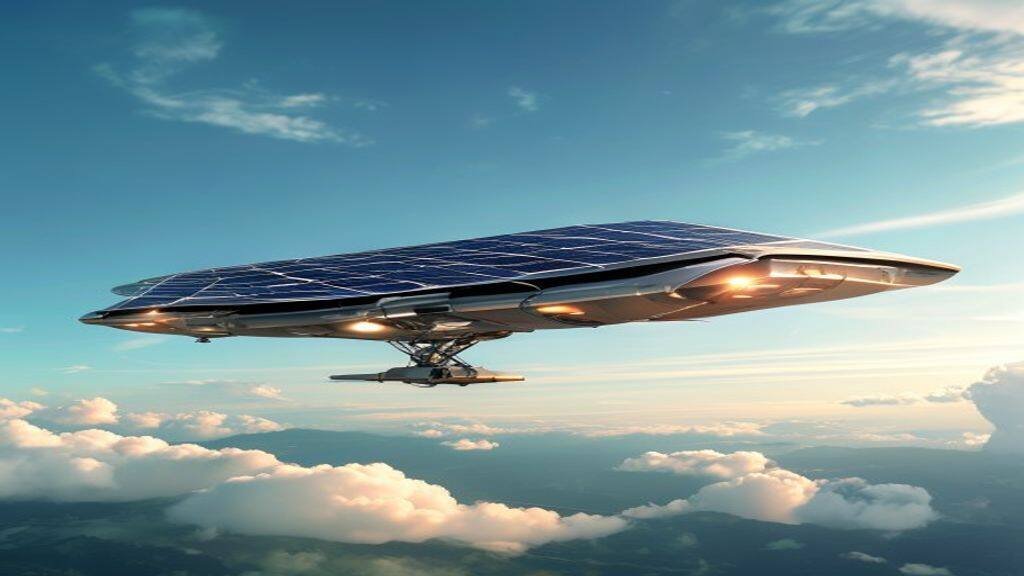
For decades, the challenge of providing internet to rural, mountainous, or oceanic regions has been primarily economic. Laying undersea cables or building cell towers in sparse environments is prohibitively expensive. While Low Earth Orbit (LEO) satellite constellations have made significant strides, they still face limitations regarding signal propagation and the massive energy requirements for ground equipment. High-Altitude Platform Stations (HAPS)—the formal industry term for these solar-powered flyers—operate at approximately 60,000 to 70,000 feet, well above commercial air traffic and weather systems.
By positioning themselves at this altitude, these platforms maintain a much smaller “footprint” than satellites. Because they are significantly closer to the Earth’s surface, the latency—the time it takes for data to travel from the user to the network—is drastically reduced. This makes them ideal for modern applications that demand real-time responsiveness, such as remote surgery, precision industrial robotics, and high-frequency financial trading, which are currently hampered by the lag inherent in space-based satellite communication.
The Role of Artificial Intelligence in Flight Autonomy
The true “secret sauce” behind these solar-powered platforms is the integration of advanced Artificial Intelligence. Operating in the stratosphere is an engineering nightmare; the air is thin, and the weather patterns at those altitudes can be volatile. To stay aloft for months at a time, these platforms must be entirely autonomous. AI algorithms are now being used to analyze real-time meteorological data, allowing the craft to “surf” wind currents to conserve energy.
Beyond flight dynamics, AI is essential for signal management. A flying platform moving through the sky needs to constantly adjust its beamforming arrays to track users on the ground. AI-driven predictive modeling allows the system to anticipate changes in user demand. For instance, if a platform detects a surge in internet traffic in a specific rural town due to a local event, it can dynamically reallocate its bandwidth resources to ensure that the increased load does not result in a degraded user experience. This level of self-optimization turns the platform into a living component of the network, rather than a static relay.
Energy Efficiency and Sustainable Connectivity
Sustainability is a core pillar of the HAPS movement. These platforms are typically equipped with high-efficiency photovoltaic cells that harvest solar energy during the daylight hours. This energy is stored in lightweight, high-density batteries that power the craft and its communication payloads throughout the night. The challenge has always been the weight-to-power ratio, but recent breakthroughs in material science, paired with AI-optimized power management, have made longer missions possible.
The AI component plays a critical role here as well. By constantly monitoring the health of the battery systems and the efficiency of the solar arrays, the onboard AI can adjust the platform’s flight path to maximize solar exposure. If a storm front approaches, the AI can proactively navigate the craft to calmer, sunnier skies, ensuring that the internet connection remains stable. This autonomous decision-making reduces the need for expensive ground-based human intervention, lowering the operational costs of the entire network.
Overcoming Regulatory and Technical Hurdles
Despite the promise, the path to commercial viability is not without obstacles. Airspace integration remains a primary concern for civil aviation authorities. Flying a fleet of autonomous, solar-powered gliders requires strict coordination with air traffic control to ensure they do not interfere with commercial flight paths. Furthermore, the signal interference between these platforms and existing cellular networks must be carefully managed.
Engineers are currently working on multi-layered network architectures where AI acts as the mediator. These systems use machine learning to scan radio frequencies in real-time, identifying “white spaces” or underutilized spectrum that can be used to beam internet access without creating interference for local telecommunications providers. This sophisticated spectrum management is only possible through the high-speed processing capabilities of modern onboard AI hardware.
Outlook: A Connected Future
As we look toward the next decade, the convergence of solar-powered flight and artificial intelligence is set to fundamentally change the internet landscape. These platforms will likely serve as the “missing link” in global connectivity, filling the gaps where fiber cannot reach and where satellites are too slow. By treating the stratosphere as a vital layer of the digital infrastructure, we are moving toward a world where location no longer dictates access to information. While there is still work to be done in terms of international regulatory harmony, the technology is moving fast. Soon, the internet may not come from a cable in the ground or a star in the sky, but from a silent, sun-powered sentinel drifting gracefully in the upper atmosphere.
Original reporting: source.