














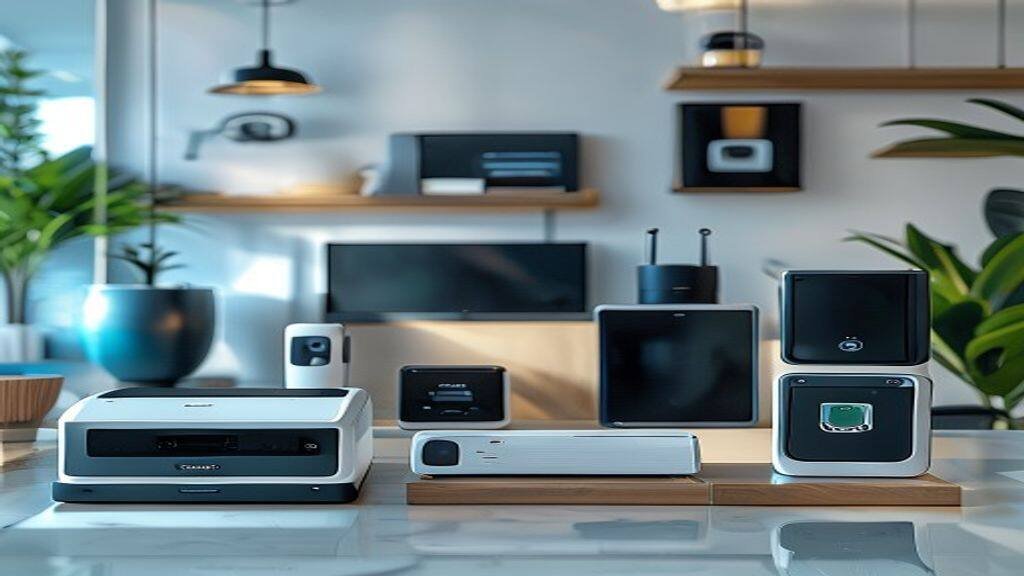
The transition from a standard living space to a truly “smart” home can feel overwhelming. With thousands of devices hitting the market every year—ranging from internet-connected salt shakers to overly complex security arrays—it is easy to lose sight of what actually provides tangible value. After years of testing hardware for in24tech.com, I have reached a point where I no longer view smart home technology as a novelty, but as an essential infrastructure. If I were to move into a new house tomorrow, these are the five gadgets I would install before unpacking a single box.
1. The Smart Mesh Wi-Fi System
Before you invest in a single smart bulb or camera, you must address the foundation: your network. Many users blame their smart devices for being “glitchy” or “unresponsive,” when in reality, the culprit is a weak or congested Wi-Fi signal. A high-quality mesh system is non-negotiable because it creates a unified, blanket coverage area that handles dozens of simultaneous connections without breaking a sweat.
Unlike traditional routers that struggle to penetrate thick walls or carry signals to the garage, mesh systems use multiple nodes that communicate with each other to optimize traffic. In a modern home where your thermostat, doorbell, and refrigerator are all competing for bandwidth, a robust mesh network ensures that your commands are executed instantly. It is the invisible backbone of the smart home experience.
2. Hardwired Smart Video Doorbell
Security is the primary driver for many smart home adopters, and the video doorbell is the most effective deterrent and notification tool available. I specifically advocate for hardwired versions over battery-operated models whenever possible. While battery-powered units are convenient for renters, the reliability of a wired connection means you never have to worry about a “dead” device when you need it most.
Beyond the obvious security benefits of seeing who is at your door, modern video doorbells have become sophisticated package managers. With advanced person and package detection, these devices provide peace of mind in an era of porch piracy. They act as the primary interface between your home and the outside world, allowing you to screen visitors or communicate with delivery drivers without ever needing to physically approach the door.
3. Automated Smart Thermostat
If you are looking for the intersection of convenience and fiscal responsibility, the smart thermostat is your best friend. Unlike a programmable thermostat—which operates on a rigid, often ignored schedule—a smart thermostat learns your habits. It knows when you leave for work, when you head to bed, and how long it takes to heat or cool your home to your preferred temperature.
The true value of these devices lies in their energy-saving algorithms. By utilizing geofencing and motion sensors, a smart thermostat ensures you aren’t paying to climate-control an empty house. Over the course of a year, the energy savings often pay for the cost of the device itself. It is one of the few pieces of smart technology that actively puts money back into your pocket while increasing your daily comfort.
4. Smart Lighting Bridges and Dimmers
Lighting sets the mood for an entire home, and smart lighting is perhaps the most transformative upgrade you can make. While smart bulbs are popular, the real “pro” move is integrating smart dimmers or a centralized bridge system. These solutions allow you to control groups of lights simultaneously, create “scenes” for different times of day, and automate your lighting to mimic natural circadian rhythms.
The non-negotiable aspect here is the ability to automate lighting based on activity rather than just a clock. Lights that fade on slowly in the morning or turn off automatically when a room is vacant add a layer of sophistication that standard switches simply cannot replicate. Furthermore, having the ability to turn off every light in the house with a single voice command or a “goodnight” routine is a convenience that quickly becomes indispensable.
5. Smart Leak Detection Sensors
While most smart home gadgets focus on convenience, this final pick is about disaster prevention. Water damage is one of the most common and expensive issues a homeowner can face. Smart leak sensors, placed near water heaters, under sinks, and behind washing machines, provide an early warning system that can save you thousands of dollars in restoration costs.
These sensors are small, often battery-powered, and incredibly easy to deploy. When they detect moisture, they send an immediate push notification to your smartphone. Some advanced systems can even be paired with an automatic shut-off valve, which will cut the water supply to your home the moment a leak is detected. It is the ultimate “set it and forget it” device that offers immense peace of mind.
The Future of the Connected Home
As we look toward the future, the integration of these devices is becoming more seamless thanks to standards like Matter. This protocol aims to eliminate the “silo” effect, ensuring that your smart thermostat, lights, and sensors communicate effortlessly regardless of the brand. As interoperability improves, the barrier to entry will drop, and smart home technology will move from being a hobbyist’s pursuit to a standard expectation for modern living. By focusing on these five foundational areas, you are not just buying gadgets; you are investing in a more efficient, secure, and responsive living environment.
Original reporting: source.