














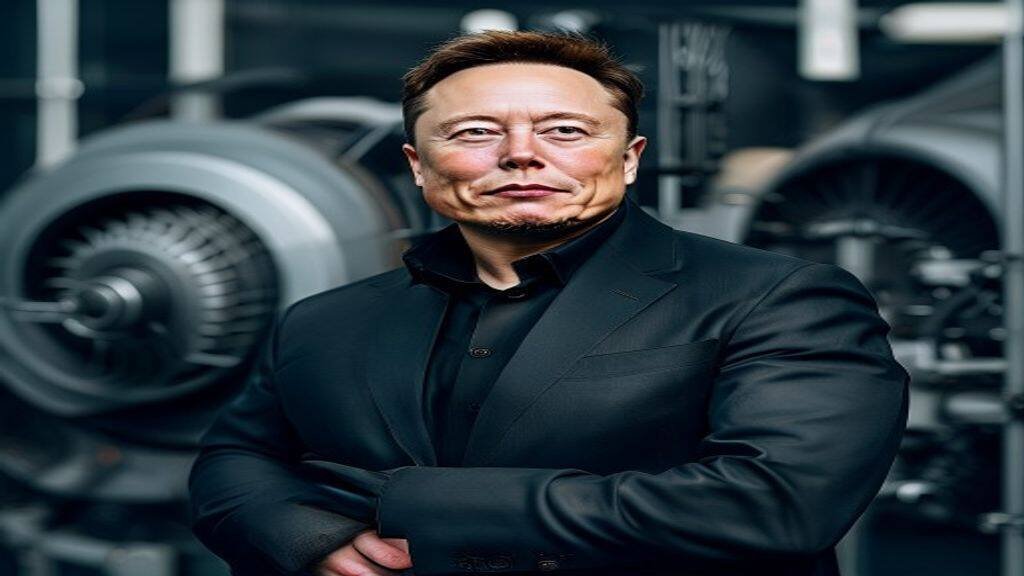
In a move that has sent ripples through the industrial technology sector and piqued the interest of energy analysts worldwide, Elon Musk’s ventures have expanded into the realm of heavy power machinery. While the billionaire is primarily known for electric vehicles, space exploration, and artificial intelligence, the quiet acquisition of a specialized gas turbine manufacturer marks a strategic pivot toward solving one of the most pressing bottlenecks in modern technology: reliable, high-density power generation. This move suggests that Musk is looking beyond battery storage to address the massive energy demands of his expanding infrastructure empire.
The Strategic Rationale Behind the Acquisition
For years, the narrative surrounding Elon Musk’s energy portfolio has been dominated by lithium-ion battery storage and solar arrays. However, as data centers for artificial intelligence training and the energy-hungry operations of his various companies continue to scale, the limitations of relying solely on intermittent renewable sources have become apparent. Gas turbines offer a unique value proposition: they provide high-density, dispatchable power that can be ramped up or down with relative speed, making them an ideal partner for a grid that is increasingly dependent on volatile renewable energy sources.
By acquiring a gas turbine company, Musk is essentially bringing the “prime mover” of the industrial age into his fold. This is not necessarily a retreat from sustainability, but rather an evolution in how he approaches energy efficiency. Modern gas turbines are increasingly being engineered to run on cleaner fuels, such as hydrogen or carbon-neutral synthetic gases. By controlling the design and manufacturing of these turbines, Musk’s engineers can likely apply the same iterative, software-driven optimization techniques that transformed the Tesla powertrain to the world of combustion-based power.
Engineering Synergy and the “Tesla-fication” of Turbines
One of the most intriguing aspects of this acquisition is the potential for cross-pollination between the turbine company and Musk’s existing hardware divisions. Gas turbines are essentially complex thermal machines that rely on precise fluid dynamics, material science, and high-speed rotational mechanics—disciplines that are already central to SpaceX’s rocket engine development and Tesla’s electric motor production.
Industry experts speculate that the existing engineering teams within Musk’s orbit will likely scrutinize the turbine’s control systems. Current industrial turbines often rely on legacy software architecture that hasn’t seen the level of rapid iteration found in the consumer tech or EV spaces. By implementing a more aggressive, software-centric approach to turbine management, Musk could potentially increase the efficiency, longevity, and responsiveness of these machines. This “Tesla-fication” of industrial power generation could lead to turbines that are more compact, easier to maintain, and capable of operating at higher temperatures, thereby increasing their thermal efficiency.
Addressing the AI Energy Crisis
The timing of this acquisition is hardly coincidental. The global explosion of generative AI has created an unprecedented demand for electricity. Large-scale data centers, such as those required to train massive language models, require consistent, 24/7 baseload power that current battery technology struggles to provide at scale. As Musk continues to develop his own AI initiatives, such as Grok and the compute clusters for Tesla’s autonomous driving programs, the need for a dedicated, high-capacity power source becomes a competitive advantage.
Owning a gas turbine manufacturer allows for the vertical integration of energy production. Instead of relying on aging municipal grids or third-party utility providers, Musk could theoretically deploy custom-built, modular power plants directly adjacent to his data centers. This would not only reduce transmission losses but also insulate his operations from the fluctuations and potential outages of the public grid. It is a classic move from the Musk playbook: when the existing market solutions are deemed insufficient or too slow, build the solution in-house.
The Future of Industrial Power
Critics of the move might argue that investing in gas turbine technology contradicts the green energy narrative. However, the nuance lies in the transition. If these turbines are designed to be “fuel-agnostic,” they can serve as a bridge technology. In the short term, they might run on natural gas, but as hydrogen infrastructure matures, these same turbines could be retrofitted to run on zero-carbon fuel. This makes them a hedge against the uncertainty of the global energy transition.
Furthermore, the manufacturing capabilities brought on by this acquisition could have secondary benefits for other ventures. The ability to cast high-temperature alloys or machine complex turbine blades at scale is a capability that has applications in aerospace, geothermal energy, and even advanced heat-pump technology. In the hands of a company known for aggressive vertical integration, this technology is unlikely to remain static.
Outlook
The acquisition of a gas turbine company is a clear signal that Elon Musk is preparing for a future where energy demand will far outstrip current supply capacity. By securing his own source of high-density, dispatchable power, he is insulating his AI and manufacturing operations from global energy instability. While the immediate impact may be localized to his own data centers and factories, the long-term potential for this technology to be optimized and deployed elsewhere could change the way industrial power is generated. As the industry watches closely, the next step will be to see how quickly Musk’s team can disrupt a sector that has historically been defined by slow, incremental progress.
Original reporting: source.