














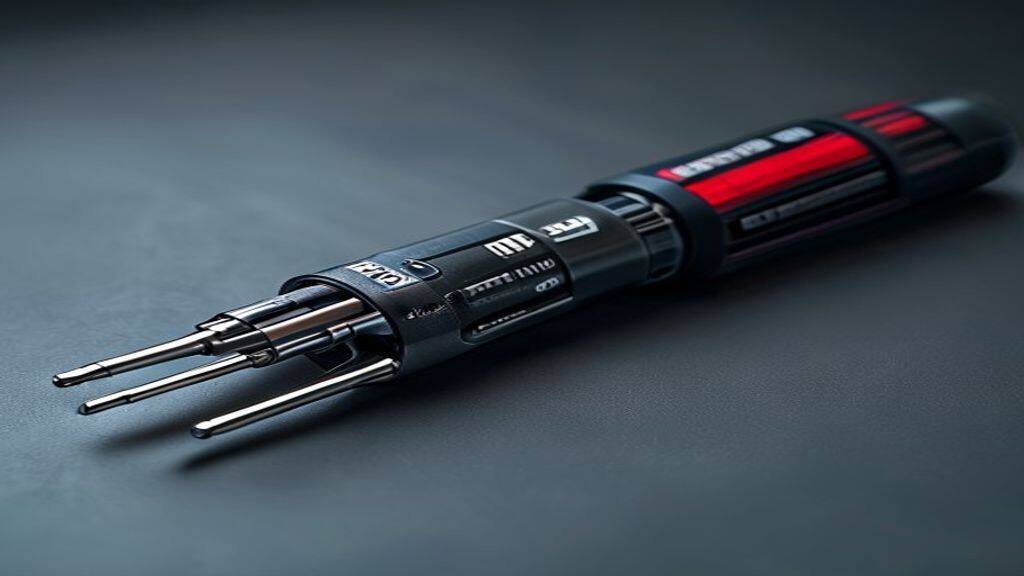
In the world of home improvement and DIY technology, the humble screwdriver has remained largely unchanged for decades. However, the intersection of modern aesthetics and precision engineering has birthed a new category of “lifestyle tools” that prioritize both functionality and desk-ready design. Leading this charge is Hoto, a brand that has consistently impressed enthusiasts with its minimalist, Xiaomi-ecosystem-adjacent hardware. Currently, the company’s flagship electric screwdriver, the PixelDrive, has seen a significant price reduction, dropping to $60—a figure that matches its historical low and positions it as a compelling contender for anyone looking to upgrade their toolkit.
The Evolution of the Electric Screwdriver
For years, electric screwdrivers were divided into two distinct camps: the bulky, high-torque power drills meant for heavy construction, and the inexpensive, flimsy battery-operated gadgets that often lacked the torque to turn a stubborn screw. The Hoto PixelDrive attempts to bridge this gap by focusing on the “urban professional” demographic. It is designed not for building a deck, but for assembling furniture, tweaking electronics, and handling the small-to-medium tasks that populate modern life.
What sets the PixelDrive apart is its commitment to a refined user experience. Instead of a utilitarian, yellow-and-black industrial aesthetic, Hoto has opted for a sleek, matte-finish cylinder that feels more like a premium computer peripheral than a piece of hardware. This design philosophy extends to its internal mechanics, which prioritize consistent power output and battery longevity over raw, unrefined force.
Engineering Under the Hood
At the core of the PixelDrive is a brushless motor, a feature that is becoming increasingly standard in high-end portable tools. The benefit of a brushless motor in a compact screwdriver is twofold: it provides significantly higher efficiency, allowing for a longer battery life per charge, and it offers better heat management during prolonged use. For a device of this size, the ability to maintain consistent torque without overheating is a notable engineering achievement.
One of the most praised features of the PixelDrive is its torque adjustment mechanism. Unlike many competitors that force users to navigate complex menus or digital screens, the PixelDrive utilizes a tactile, physical dial. This allows the user to quickly switch between torque settings, preventing the common mistake of “stripping” a screw head by applying too much force. The tool also includes a shadowless LED ring light around the bit holder, which eliminates the frustration of trying to drive a screw in dim lighting conditions—a common hurdle when working inside computer cases or under desks.
The Value Proposition at $60
The current price point of $60 is a strategic move for Hoto. In the crowded market of precision screwdrivers, the PixelDrive competes with high-end offerings from brands like Wiha and Wowstick. While those brands excel in extreme precision—often catering specifically to watchmakers or mobile phone repair technicians—the Hoto PixelDrive positions itself as a more versatile “all-rounder.”
When you consider the build quality, the USB-C charging capability, and the inclusion of a comprehensive bit set, the $60 price tag represents a high level of value. Many cheaper alternatives on the market rely on proprietary charging cables or disposable batteries, both of which are quickly becoming relics of the past. By standardizing on USB-C, Hoto ensures that the tool fits seamlessly into a modern tech setup, where a single cable can charge a laptop, a smartphone, and now, a power tool.
Ergonomics and Daily Utility
The tactile sensation of using the PixelDrive is where the product truly shines. The device is weighted to feel substantial without being heavy, which reduces wrist fatigue during repetitive tasks. The grip is coated in a high-quality, slip-resistant material that maintains its integrity even after exposure to common household oils or dust. For those who live in apartments or small spaces, the tool’s compact footprint is a major advantage, as it can easily be stored in a drawer rather than requiring a dedicated, bulky toolbox.
Furthermore, the inclusion of a “manual override” mode is a thoughtful touch. If the battery happens to die mid-task, the tool locks into place, allowing it to function as a standard manual screwdriver. This redundancy is often overlooked by manufacturers who focus solely on the electronic aspect, but it is a critical feature for reliability in real-world scenarios.
Outlook: The Future of Household Tooling
As the “smart home” and DIY culture continue to merge, we can expect to see more tools that borrow design cues from consumer electronics. The Hoto PixelDrive is a bellwether for this trend. By offering a product that is as aesthetically pleasing as it is functional, Hoto has successfully lowered the barrier to entry for novice DIYers while providing enough performance to satisfy more experienced users.
Looking ahead, the challenge for Hoto will be maintaining this balance of price and quality as they expand their product line. However, if the PixelDrive is any indication, the company is well-positioned to lead the market in accessible, high-design hardware. For those waiting for the right moment to invest in a reliable, modern electric screwdriver, the current $60 price point offers an excellent entry opportunity that is unlikely to be surpassed in the near future.
Original reporting: source.