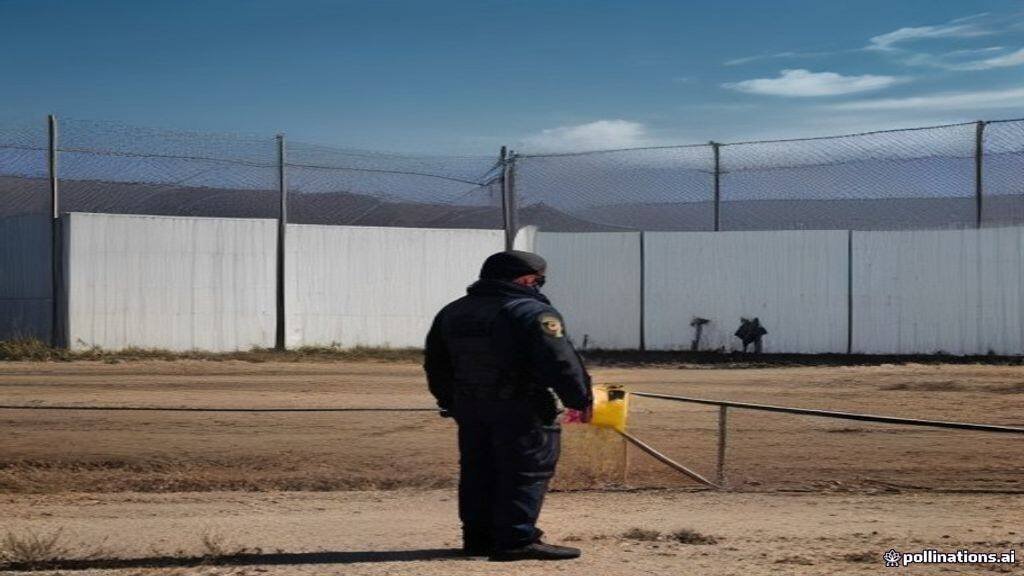
For decades, the concept of a “border wall” conjured images of steel bollards, concrete barriers, and razor wire. However, in the high-desert terrain of the United States-Mexico border, a new, invisible architecture is taking shape. Known as the “virtual wall,” this sprawling network of artificial intelligence-driven surveillance technology—comprising autonomous towers, thermal cameras, and seismic sensors—is intended to augment physical barriers. Yet, a growing body of investigative reporting suggests that this digital infrastructure is not merely a tool for observation; it is becoming a catalyst for tragedy, pushing migrants into increasingly lethal environments and raising profound ethical questions about the role of AI in border enforcement.
The Architecture of the Virtual Wall
The virtual wall is the product of years of investment by the Department of Homeland Security and its sub-agency, Customs and Border Protection (CBP). The system relies on a sophisticated array of “Integrated Fixed Towers” (IFTs) and mobile surveillance units. These towers are equipped with high-definition cameras, radar systems, and, increasingly, machine learning algorithms designed to detect “anomalous” movement. When the AI identifies a human silhouette in the brush, it alerts operators in remote command centers, who then dispatch agents to intercept the individuals.
The proponents of this technology argue that it is a force multiplier, allowing a limited number of agents to monitor vast, rugged stretches of territory that would otherwise be impassable or ignored. By digitizing the border, the government claims it can improve response times and enhance national security. However, technology experts and human rights advocates argue that the system is fundamentally flawed in its application. Unlike a physical wall, which serves as a deterrent, the virtual wall functions as a tracking mechanism that alters the behavior of those attempting to cross.
The “Funnel Effect” and Algorithmic Displacement
The most alarming consequence of this high-tech surveillance is a phenomenon known as “funneling.” When authorities deploy AI sensors to monitor primary transit corridors, migrants do not simply stop crossing; they adapt. They move deeper into the most dangerous, remote, and inhospitable regions—areas where the terrain is treacherous and the environmental conditions are extreme. Journalists and humanitarian groups have documented that as surveillance intensity increases in accessible areas, the rate of deaths in the “backcountry” rises proportionally.
This is where the intersection of AI and human life becomes particularly dark. The algorithms powering these towers are trained to prioritize the detection of human movement, but they lack the capacity to account for the humanitarian fallout of their operation. By effectively “herding” migrants away from monitored paths and into the path of heatstroke, dehydration, and exposure, the virtual wall acts as a digital force that maximizes the physical danger faced by vulnerable populations. The technology turns the hostile geography of the border into a weapon, with the AI acting as the guide that forces migrants into the deadliest corners of the desert.
The Accountability Gap
One of the central challenges in investigating the virtual wall is the lack of transparency surrounding the algorithms themselves. These systems are often developed by private defense contractors under proprietary contracts, meaning the public—and even some oversight bodies—have limited insight into how these machines are programmed to distinguish between a migrant, a smuggler, or a local resident. When a death occurs in a sector monitored by these systems, there is rarely a direct link established between the surveillance dispatch and the resulting fatality.
Furthermore, the reliance on AI creates a “responsibility vacuum.” If a machine identifies a group of migrants and triggers a multi-hour pursuit, leading those individuals to flee into a box canyon or across a dangerous river, who is held accountable? The agent who followed the prompt? The contractor who designed the detection software? Or the policy makers who prioritized digital surveillance over humanitarian infrastructure? Currently, the legal and ethical frameworks required to answer these questions are virtually non-existent, leaving families of the deceased with little recourse and the government with a convenient layer of technical abstraction.
Data Privacy and the Militarization of AI
Beyond the immediate risk of death, the virtual wall represents a massive expansion of biometric and behavioral data collection. The sensors do not just detect movement; they collect vast amounts of information on anyone who happens to be in the vicinity of the border. This includes indigenous communities, landowners, and journalists. The normalization of pervasive, AI-driven surveillance in these regions sets a dangerous precedent for the use of similar technologies in domestic policing. When the border becomes a laboratory for high-stakes AI surveillance, the tools developed there often migrate into urban centers, eroding privacy and civil liberties under the guise of “national security.”
Outlook: A Digital Crossroads
As the United States continues to pour billions of dollars into the “virtual wall,” the gap between technological capability and humanitarian responsibility is widening. The future of border management appears tethered to an increasingly autonomous surveillance apparatus that prioritizes detection over preservation of life. Moving forward, the conversation must shift from whether this technology works from a security perspective to whether it is morally acceptable for AI to be used in a way that inherently increases the risk of mortality for human beings. Without rigorous independent audits, strict ethical guidelines, and a pivot toward humanitarian-centric policy, the virtual wall is destined to remain a site of both technological innovation and profound human tragedy.
Original reporting: source.