














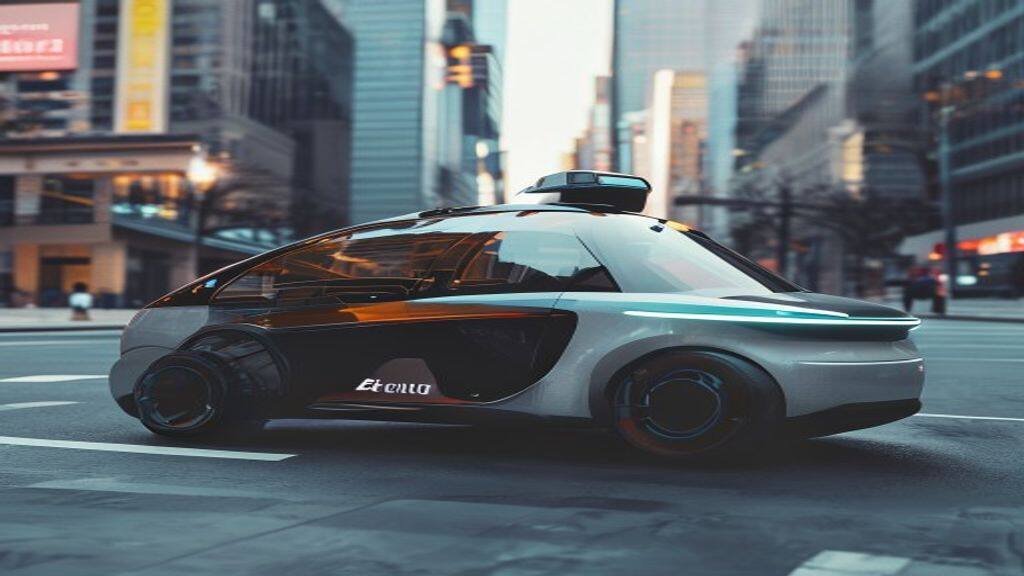
The autonomous vehicle sector has long existed in a state of perpetual “almost there.” For the better part of a decade, the promise of a fleet of robotaxis—driverless vehicles that ferry passengers through urban centers at the tap of a smartphone—has been the holy grail of mobility tech. However, as the industry enters the latter half of 2024, the narrative has shifted from starry-eyed optimism to a cold, hard ultimatum. Regulatory bodies, public sentiment, and the harsh realities of unit economics have converged to form a crossroads: robotaxi companies must now prove their long-term viability, or face a future of stagnation.
The Regulatory Tightening
For years, companies like Waymo, Cruise, and Zoox operated under a “move fast and break things” philosophy that was largely tolerated by local governments eager to position their cities as hubs of innovation. That era has effectively ended. Following a series of high-profile incidents involving stalled vehicles blocking emergency responders and software glitches that led to collisions, the regulatory environment has hardened significantly.
The National Highway Traffic Safety Administration (NHTSA) and various state-level departments of motor vehicles are no longer content with passive oversight. They are now demanding granular data transparency and standardized safety reporting. The “ultimatum” facing these companies is clear: compliance is no longer a suggestion. If autonomous fleet operators cannot demonstrate a statistical safety margin that significantly exceeds that of human drivers—while simultaneously maintaining the trust of the municipalities in which they operate—they will face permanent operational caps or outright revocation of their testing permits.
The Economics of the Driverless Mile
Beyond the regulatory landscape, the most pressing issue for the robotaxi industry remains the fundamental math of the business model. Early projections suggested that removing the human driver would slash costs to the point where robotaxis would be cheaper than public transit. In practice, the cost of the hardware—LiDAR, high-end compute units, and redundant sensor arrays—remains prohibitively high.
Furthermore, the “human in the loop” problem persists. Even in the most advanced fleets, remote human assistance is required to navigate edge cases—the bizarre, unpredictable scenarios that occur on city streets, such as construction zones with conflicting signage or erratic pedestrian behavior. As these companies scale, the cost of maintaining a remote operations center to monitor thousands of vehicles simultaneously is proving to be a massive financial burden. Investors are growing weary of the “burn rate” associated with this infrastructure. The ultimatum here is binary: either achieve true, unassisted autonomy at scale, or accept that the robotaxi will remain a boutique, loss-making experiment rather than a mass-transit revolution.
Infrastructure and the Urban Integration Challenge
The integration of robotaxis into existing urban infrastructure is proving to be more complex than simply teaching a car to stop at a red light. Cities are dynamic, living organisms. They involve double-parked delivery trucks, impromptu street festivals, and roadwork that changes by the hour. Robotaxis have struggled with the “contextual awareness” required to navigate these human-centric environments without causing traffic bottlenecks.
There is also the question of city planning. If robotaxis become ubiquitous, they could potentially reduce the need for parking structures, freeing up valuable real estate. However, if they are not managed correctly, they risk increasing congestion by “cruising” while waiting for passengers, a phenomenon known as “zombie miles.” Municipalities are now demanding that robotaxi operators integrate their data with city traffic management systems. If companies refuse to play ball as a part of the broader urban ecosystem, cities are increasingly prepared to prioritize public transit and micro-mobility over private, algorithmic fleets.
The Public Trust Deficit
Perhaps the most fragile element of the robotaxi equation is public perception. Trust is easy to lose and nearly impossible to regain. A single viral video of a robotaxi causing a multi-car pileup or interfering with an ambulance creates a disproportionate amount of negative sentiment compared to the thousands of successful trips that occur daily. This “negativity bias” means that the industry has to be perfect, while human drivers are allowed to be merely “good enough.”
To survive this ultimatum, companies are being forced to pivot their messaging. They are moving away from the “magic of AI” marketing and toward a focus on accessibility and safety for underserved populations. By framing the robotaxi as a tool for the elderly or those with mobility impairments, companies are attempting to build a social contract that protects them from the backlash of the general public. Whether this will be enough to shield them from the inevitable scrutiny of the next major accident remains to be seen.
An Outlook: The Path to Maturity
The robotaxi industry is currently graduating from its “infancy” phase into a period of forced maturity. The companies that survive the next twenty-four months will not necessarily be the ones with the most funding or the most advanced sensor suites, but rather those that demonstrate the highest degree of institutional reliability. We are likely to see a period of consolidation, where smaller players are absorbed by larger tech giants or automotive incumbents, leading to a leaner, more focused field of competitors. The robotaxi is not dead, but the era of unchecked experimentation is over. In the coming years, we will see if these machines can truly earn their place on our streets, or if they will remain a cautionary tale of over-promised, under-delivered technological ambition.
Original reporting: source.