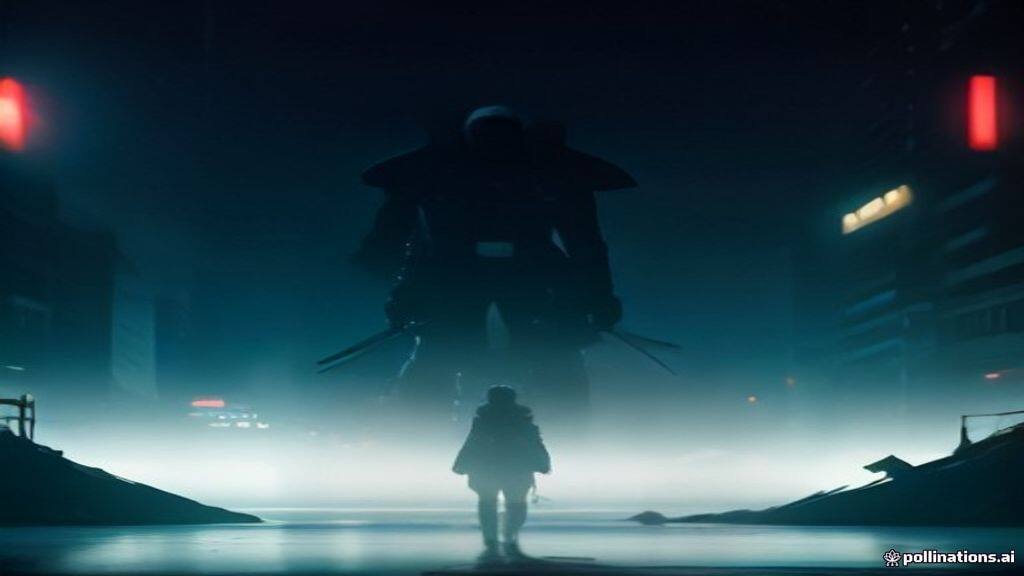
Return to the Neon Glow: Prime Video Unveils Blade Runner 2099 at NYCC
The legacy of Philip K. Dick’s dystopian vision has long cast a long shadow over science fiction, but few franchises manage to capture the melancholic, rain-slicked aesthetic of the future quite like Blade Runner. After years of speculation and quiet development, Amazon’s Prime Video finally pulled back the curtain at New York Comic Con (NYCC), treating fans to the first full-length trailer for Blade Runner 2099. As the latest entry in a cinematic lineage that spans decades, this limited series aims to bridge the gap between Ridley Scott’s 1982 masterpiece and Denis Villeneuve’s 2017 sequel, promising a deep dive into a world where the line between humanity and synthetic life has blurred into total obscurity.
A New Chapter in a Dystopian Legacy
The anticipation surrounding Blade Runner 2099 is rooted in the high bar set by its predecessors. Ridley Scott, who directed the original film, returns as an executive producer, signaling a commitment to maintaining the visual and thematic continuity that defines the franchise. The trailer premiered at NYCC to a packed room of enthusiasts, offering a glimpse into a Los Angeles that feels simultaneously familiar and evolutionarily distinct. While the 2017 sequel, Blade Runner 2049, focused on the aftermath of the “Blackout,” 2099 pushes the timeline forward, exploring the repercussions of humanity’s continued reliance on replicants in a world that is crumbling under the weight of its own technological overreach.
Visual storytelling has always been the hallmark of the series, and the footage showcased in New York suggests that the production team has leaned heavily into the high-contrast lighting and industrial decay that fans expect. From the sprawling, holographic-drenched urban sprawl to the intimate, claustrophobic interiors of detective offices, the series appears to be a love letter to the “tech-noir” genre. The trailer emphasizes that while the tech has advanced, the human condition—fraught with loneliness, existential dread, and the search for identity—remains the core narrative engine.
The Creative Force Behind the Neon Veil
A project of this magnitude requires a delicate balance between nostalgia and innovation. Showrunner Silka Luisa, known for her work on Shining Girls, has been tasked with expanding the lore without diluting the mystery that makes the franchise so compelling. During the NYCC presentation, the production team highlighted that the series will not merely be a procedural detective show, but a sprawling character study that questions what it truly means to be “real” when memories can be manufactured and lives can be programmed.
The casting choices have also sparked significant interest. While details on specific character arcs remain closely guarded, the footage reveals a gritty, lived-in performance style that mirrors the stoicism of Harrison Ford’s Rick Deckard or Ryan Gosling’s K. The inclusion of heavy hitters in the production design and musical scoring—aiming to evoke the synth-heavy, haunting atmosphere popularized by Vangelis—suggests that Prime Video is positioning this as a tentpole series, likely competing with the high-production value standards of modern prestige television.
Expanding the World Beyond Los Angeles
One of the most intriguing aspects teased in the NYCC trailer is the potential for the series to venture beyond the traditional confines of the Los Angeles cityscape. While the franchise is synonymous with the California urban sprawl, the brief glimpses of desolated landscapes and high-tech corporate enclaves hint at a broader geopolitical map. The narrative seems to suggest that the “Wallace Corporation” (or its successor entities) has expanded its reach, turning the world into a playground for synthetic labor, which in turn creates a vacuum for social unrest.
The trailer also hints at a shift in the power dynamics of the Blade Runners themselves. If the original films were about hunting down rogue androids, 2099 appears to focus on the institutional breakdown of the system tasked with policing them. The tension between the “creators” and the “created” is palpable, with imagery suggesting that the synthetic population is no longer hiding in the shadows but is perhaps beginning to organize in ways that threaten the very foundation of the society they were built to serve.
Technical Prowess and Aesthetic Fidelity
Technologically, the series looks to be pushing the boundaries of what is possible for episodic streaming. The use of practical effects blended with state-of-the-art digital environments creates a sense of tactile realism that is often missing in modern sci-fi. By maintaining the slow-burn pacing and philosophical inquiry of the previous films, the series avoids the trap of becoming an action-heavy blockbuster. Instead, it invites the audience to sit with the discomfort of a world that has traded its soul for efficiency.
The cinematography, characterized by long, lingering shots of rain-drenched streets and flickering neon signs, reinforces the idea that the city itself is a character. Every frame shown at NYCC felt meticulously composed, echoing the work of Roger Deakins in 2049, proving that the visual language of Blade Runner is in capable hands.
Outlook: The Road to 2099
As we look toward the series’ eventual release, the question remains whether Blade Runner 2099 can satisfy both the die-hard purists and a new generation of viewers. The trailer has certainly done its job in generating buzz, proving that the franchise still holds a potent grip on the collective imagination. If the show can successfully marry its philosophical questions with a compelling, character-driven mystery, it may well become the definitive sci-fi event of the coming year. For now, the neon lights of the future are glowing brighter than ever, and we are left waiting for the rain to fall.
Original reporting: source.