


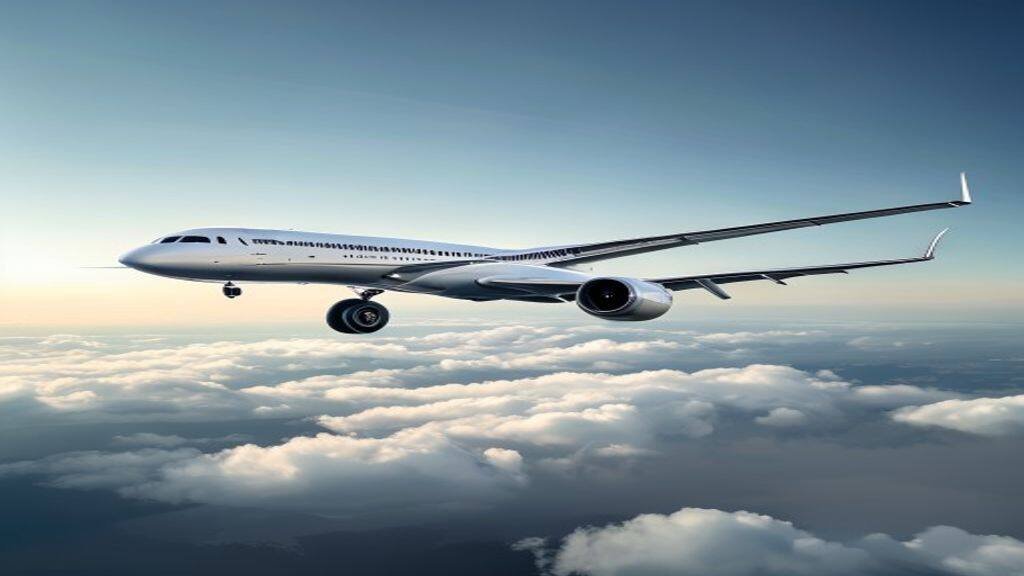
The Longest Leap: Analyzing the 24-Hour Nonstop Flight from Australia to France
In a milestone that reshapes our understanding of modern aviation capability, a new record-breaking flight has successfully connected the Australian continent to mainland France in a single, continuous journey. Lasting a staggering 24 hours, this mission serves as a technological stress test for both hardware and human endurance. As in24tech examines the implications of this flight, it becomes clear that we are witnessing the dawn of a new era in ultra-long-haul travel, where the barriers of geography are being systematically dismantled by engineering precision.
Engineering the Impossible: The Mechanics of Ultra-Long-Haul
The technical achievement behind a 24-hour nonstop flight is significantly more complex than simply adding more fuel to the tanks. To sustain a flight of this duration, engineers have had to optimize every variable of the aircraft’s performance. The primary challenge remains the weight-to-fuel ratio; the heavier the aircraft is at takeoff due to fuel, the more thrust—and therefore more fuel—is required to lift it. Modern carbon-fiber composites, which are significantly lighter than traditional aluminum alloys, have played a pivotal role in this endeavor. By reducing the airframe’s dead weight, manufacturers can allocate more capacity toward the fuel reserves necessary to traverse such immense distances without a mid-flight stop.
Furthermore, the propulsion systems utilized in these record-breaking sorties represent the pinnacle of current aerospace engine design. These engines are calibrated for extreme fuel efficiency during the cruise phase, which constitutes the majority of the 24-hour duration. Advanced sensors and real-time telemetry allow ground crews to monitor engine health with granular precision, ensuring that the aircraft can maintain optimal aerodynamic efficiency even as the atmospheric conditions change across hemispheres.
The Human Element: Physiology in the Stratosphere
While the aircraft is the star of the show, the human component remains the most delicate variable. Spending an entire day in a pressurized cabin at 35,000 feet presents unique challenges. On this record-setting flight, the focus was not just on getting from point A to point B, but on the physiological impact of prolonged confinement. Research conducted during this flight suggests that cabin humidity levels, lighting schedules, and air quality systems are no longer just luxury features—they are critical safety components.
To combat the effects of jet lag and physical fatigue, the flight utilized advanced circadian lighting systems, which mimic the natural progression of sunlight to help regulate the internal clocks of the crew and passengers. Additionally, the cabin pressure management systems were set to an altitude equivalent lower than traditional aircraft, which significantly reduces the symptoms of hypoxia and dehydration. This data is invaluable, as it provides a roadmap for how airlines can make ultra-long-haul travel sustainable for the average business or leisure traveler in the future.
Navigating the Global Skies: Logistics and Route Planning
Executing a 24-hour flight path requires more than just a powerful engine; it requires a global network of synchronization. The flight path between Australia and France traverses some of the most remote airspace on the planet. Navigating this route involves complex coordination with multiple international air traffic control agencies to ensure that weather patterns, wind currents, and emergency landing contingencies are accounted for in real-time.
Meteorological modeling has reached a level of sophistication where pilots can now map “jet stream highways” that provide significant tailwinds, effectively reducing fuel burn. By intelligently choosing altitudes based on shifting wind patterns, the aircraft can maximize its range far beyond what traditional, static flight planning would allow. This flight proved that with the right data-driven approach, we can turn the world’s most daunting travel corridors into routine, albeit impressive, logistical operations.
The Impact on the Global Aviation Market
For the aviation industry, this record is more than a trophy; it is a proof-of-concept that could disrupt the hub-and-spoke model that has dominated air travel for decades. Traditionally, long-distance travel necessitated a stopover in a major transit hub, such as Singapore or Dubai. By proving that point-to-point travel over 24 hours is commercially and technically viable, airlines are now looking at a future where travelers can bypass these bottlenecks entirely.
This shift has profound implications for airport infrastructure and airline business models. If passengers can fly directly from a regional capital to a distant international hub without a layover, the demand for short-haul “feeder” flights may decrease, while the demand for high-capacity, ultra-long-range aircraft will likely surge. Manufacturers are already pivoting their production lines to meet this demand, focusing on wide-body jets that offer the range of a freighter with the comfort of a high-end passenger cabin.
Outlook: The Future of Nonstop Connectivity
As we look to the horizon, the success of this 24-hour journey signals that we are rapidly approaching the physical limits of current hydrocarbon-based aviation. While we have successfully conquered the distance, the next challenge will be decarbonizing these ultra-long flights. The industry’s focus is now shifting toward the integration of Sustainable Aviation Fuels (SAF) and, eventually, hydrogen-based propulsion systems to ensure that our newfound ability to traverse the globe doesn’t come at an unsustainable environmental cost. For now, this record stands as a testament to human ingenuity, bridging the vast divide between Australia and Europe with the silent, unwavering precision of modern flight.
Original reporting: source.