














Welcome to this week’s edition of the Science and Tech Roundup on in24tech.com. As we navigate an era defined by rapid innovation, the intersection of deep-space exploration and terrestrial bio-engineering has never been more pronounced. This week, we are witnessing the dawn of an unprecedented astronomical project designed to map the heavens in high definition, alongside some rather unconventional developments in robotics that challenge our perceptions of how machines interact with the natural world. From the vast, silent reaches of the Chilean Andes to the specialized laboratories where biology meets circuitry, here is the latest on the stories shaping our technological future.
The Vera C. Rubin Observatory: Capturing the Universe’s Greatest Feature Film
In the high-altitude deserts of northern Chile, a massive engineering marvel is preparing to rewrite the textbooks on astrophysics. The Vera C. Rubin Observatory has officially commenced its ambitious ten-year survey, a project that researchers are affectionately calling the “cosmic movie.” Unlike traditional telescopes that capture static images of distant galaxies, the Rubin Observatory is designed to conduct a systematic, time-domain survey of the entire visible sky.
Equipped with the world’s largest digital camera—a staggering 3.2-gigapixel instrument—the observatory will photograph the same swaths of the night sky repeatedly over the next decade. By comparing these images, astronomers will be able to detect subtle changes that occur over time, such as the flickering of distant stars, the movement of asteroids through our solar system, and the explosive flares of supernovae. This “movie” will generate an immense volume of data, estimated at roughly 20 terabytes every single night. The primary goal is to unravel the mysteries of dark matter and dark energy, the invisible forces that govern the expansion of the universe. By creating a high-fidelity time-lapse of the cosmos, the scientific community hopes to gain a clearer picture of how our universe has evolved since the dawn of time.
Bio-Hybrid Robotics: When Cyborg Cockroaches Take the Plunge
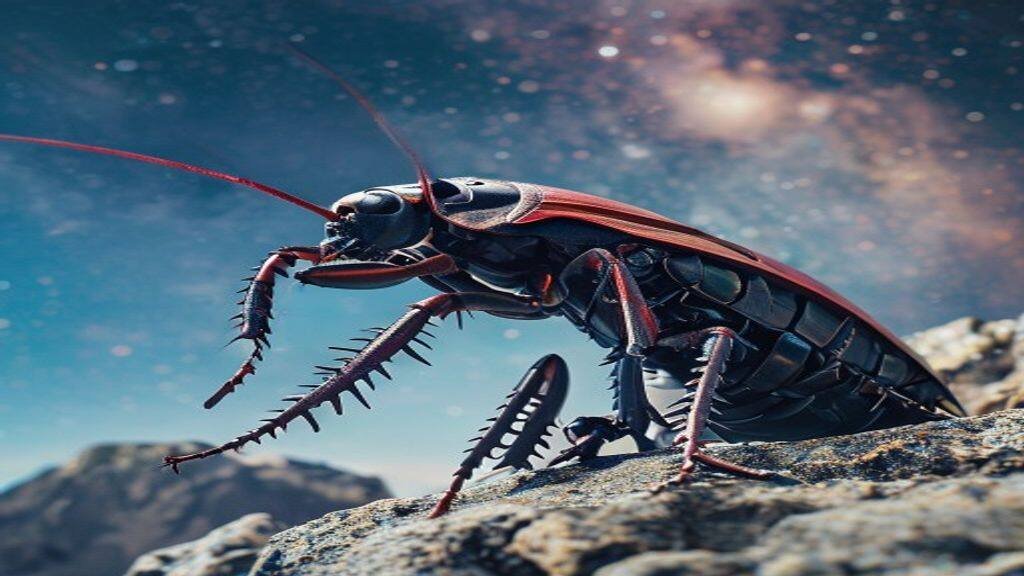
While astronomers look up, roboticists are looking down—specifically into the mechanics of insect movement. A recent study has pushed the boundaries of bio-hybrid robotics by successfully deploying “cyborg cockroaches” in aquatic environments. Researchers have long utilized the natural agility of Madagascar hissing cockroaches by outfitting them with tiny electronic backpacks that stimulate their antennae, allowing for remote navigation. However, these insects were historically limited to land-based operations.
The latest breakthrough involves a specialized, waterproof “suit” that protects the electronic components while allowing the cockroach to swim. By integrating a miniature power source and a wireless control system, scientists have enabled these bio-hybrids to navigate through water, potentially opening doors for search-and-rescue missions in hazardous, confined spaces. The ethics of using live insects in robotics remains a subject of intense debate, but proponents argue that the natural mobility and durability of these creatures far exceed what current synthetic materials can achieve in small-scale robotics. By leveraging the cockroach’s innate survival instincts and physical robustness, engineers are creating a new class of versatile, low-cost robots capable of traversing terrains that would stop traditional hardware in its tracks.
The Convergence of Big Data and Physical Hardware
What connects a multi-billion dollar telescope in Chile to a cockroach swimming in a lab? It is the underlying theme of data-driven physical exploration. Whether we are capturing light from a galaxy billions of light-years away or analyzing the movement of a tiny organism in a localized test tank, the common denominator is the need for sophisticated sensor integration. In the case of the Rubin Observatory, the challenge is processing the sheer volume of incoming light data to filter out “noise” and identify celestial anomalies. For the bio-hybrid roaches, the challenge is maintaining a stable connection and power delivery in a fluid medium that threatens to short-circuit delicate electronic interfaces.
These two stories highlight a broader trend in modern technology: we are moving away from monolithic, static solutions toward dynamic, adaptive systems. The “cosmic movie” is essentially a massive sensor network, while the cyborg cockroach is a decentralized, biological sensor node. Both represent a shift toward observing the world in motion rather than as a series of isolated snapshots. As our processing power increases, our ability to interpret this data in real-time allows us to turn raw information into actionable scientific knowledge, whether that knowledge helps us understand the birth of a star or the navigation of a subterranean pipe.
Looking Ahead: A Future of Integrated Complexity
As we look toward the horizon, the synergy between astronomical survey data and advanced robotics suggests a future where our reach—both into the deep cosmos and into the microscopic corners of our own planet—will be significantly extended. The Vera C. Rubin Observatory will likely dominate the astronomical discourse for the next decade, providing a bedrock of data that will fuel countless doctoral theses and scientific breakthroughs. Simultaneously, the evolution of bio-hybrid robotics will continue to blur the line between nature and machine, forcing us to ask difficult questions about the nature of autonomy and the integration of synthetic components into living organisms.
For technology enthusiasts and scientists alike, these stories serve as a reminder that innovation is rarely a linear path. It is a messy, fascinating blend of high-end optics, insect biology, and complex algorithms. As these projects mature, we expect to see even more radical applications of these technologies, perhaps eventually leading to a day where small-scale, autonomous bio-robots are tasked with monitoring the very environments that are currently being mapped by our most advanced orbital sensors. The future is not just about building better machines; it is about understanding how to integrate those machines into the intricate fabric of the natural and celestial worlds.
Original reporting: source.