














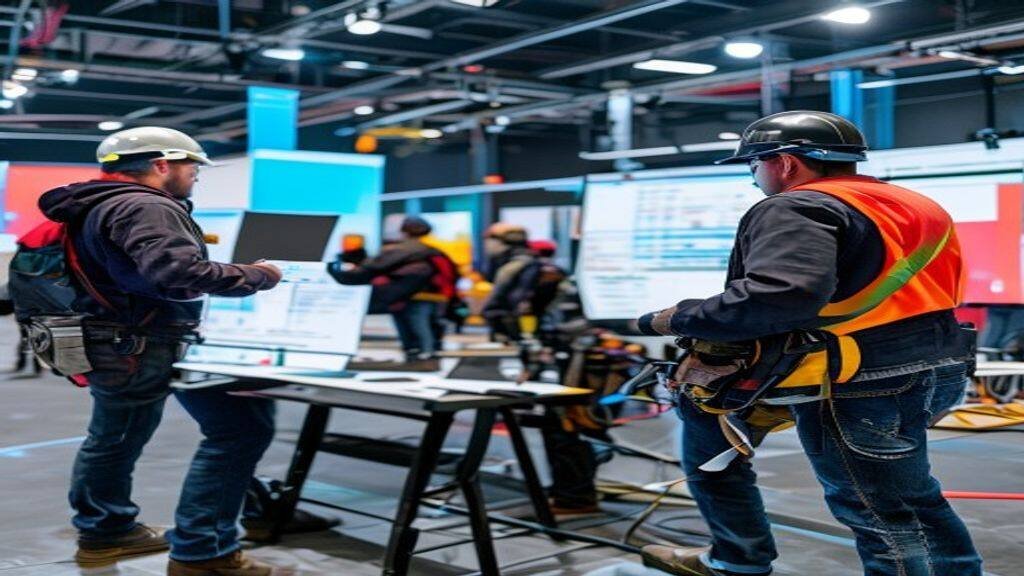
As the global startup ecosystem pivots from the “growth at all costs” era toward a mandate of sustainable profitability, the industry’s most prominent gathering, TechCrunch Disrupt, has officially unveiled the agenda for its highly anticipated “Builders Stage” at the 2026 conference. This year’s programming is heavily weighted toward the integration of Artificial Intelligence (AI) as a foundational tool for operational scaling, moving beyond the hype of generative models to focus on the pragmatic engineering and management strategies required to turn early-stage prototypes into billion-dollar enterprises.
Beyond the Hype: The Engineering of Scale
For years, the startup narrative was dominated by marketing-led growth and rapid user acquisition. However, the 2026 Builders Stage agenda suggests a definitive shift in priority. Sessions scheduled for the event emphasize “AI-augmented infrastructure,” a theme that addresses the growing pains of startups attempting to manage massive datasets without ballooning their headcount. Industry experts and CTOs from unicorn-status firms are slated to present on the implementation of autonomous DevOps, where AI agents handle routine system maintenance, security patching, and cloud resource optimization.
The core philosophy here is clear: scalability in 2026 is no longer just about hiring more engineers. It is about the “leveraged startup,” where a lean team utilizes AI-driven orchestration to perform the work that previously required a mid-sized department. The agenda highlights specific workshops on “AI-Native Architecture,” focusing on how to build software stacks that are inherently modular and capable of self-healing, reducing the technical debt that typically cripples startups during their Series B and C funding rounds.
AI-Driven Go-To-Market Strategies
Technical scalability is only half the battle; the Builders Stage will dedicate significant airtime to the transformation of sales and marketing departments through predictive analytics. The 2026 sessions will move past basic chatbots and move toward “Autonomous Market Intelligence.” Speakers from leading venture capital firms are expected to discuss how they are advising their portfolio companies to utilize predictive AI to identify market gaps and customer churn patterns in real-time.
A key highlight of the upcoming agenda is a panel titled “The Death of the Manual Funnel,” which explores how AI-integrated CRM systems can now handle lead qualification, personalized outreach, and contract negotiation support with minimal human intervention. By automating the top and middle of the sales funnel, founders are being encouraged to shift their human capital toward high-touch, long-term relationship building—the only area where AI currently struggles to replace the nuance of human interaction. This strategic pivot is intended to help startups achieve higher margins while maintaining the velocity of a much larger organization.
The Regulatory and Ethical Framework for Scaling
No conversation about scaling AI in 2026 would be complete without addressing the tightening regulatory landscape. The Builders Stage has allocated a dedicated track to “Compliance-as-Code,” a methodology that ensures startups remain compliant with global data privacy and AI safety regulations as they expand into new markets. This is a crucial addition, as many startups have historically neglected regulatory hurdles until they became existential threats.
The sessions will provide actionable frameworks for integrating compliance into the CI/CD pipeline. By automating the audit process and ensuring that AI training datasets are vetted for bias and copyright provenance from day one, builders can avoid the costly legal entanglements that have recently plagued high-growth AI companies. This proactive approach to governance is being presented not as a bottleneck, but as a competitive advantage that appeals to institutional investors who are increasingly risk-averse regarding AI-related liabilities.
Building Sustainable AI Talent Pipelines
Finally, the agenda tackles the human element of scaling: the talent gap. With the demand for AI-literate talent far outstripping supply, the Builders Stage will feature a deep dive into “The Augmentation Culture.” Rather than searching for the elusive “unicorn” engineer, the sessions will demonstrate how startups can upskill their existing workforce using internal AI training platforms. This strategy focuses on retaining institutional knowledge while simultaneously equipping non-technical staff with the tools to build their own internal apps and automation workflows, effectively democratizing technical development within the company.
By fostering a culture where every employee is an AI-powered builder, companies can scale their internal operations without the friction of traditional organizational silos. The agenda suggests that the most successful startups of the late 2020s will be those that effectively turn their entire workforce into a product-development engine, powered by secure, company-specific AI models.
Outlook: The New Blueprint for Success
The agenda for TechCrunch Disrupt 2026 signals that the “Wild West” days of AI adoption are effectively over. We are entering an era of professionalized, disciplined scaling where AI is the primary engine of efficiency. The companies that succeed in the coming years will be those that view AI not as a separate product feature, but as the invisible backbone of their entire operational architecture. As startups prepare to gather in 2026, the message from the Builders Stage is definitive: the future belongs to the lean, the automated, and the compliant.
Original reporting: source.