














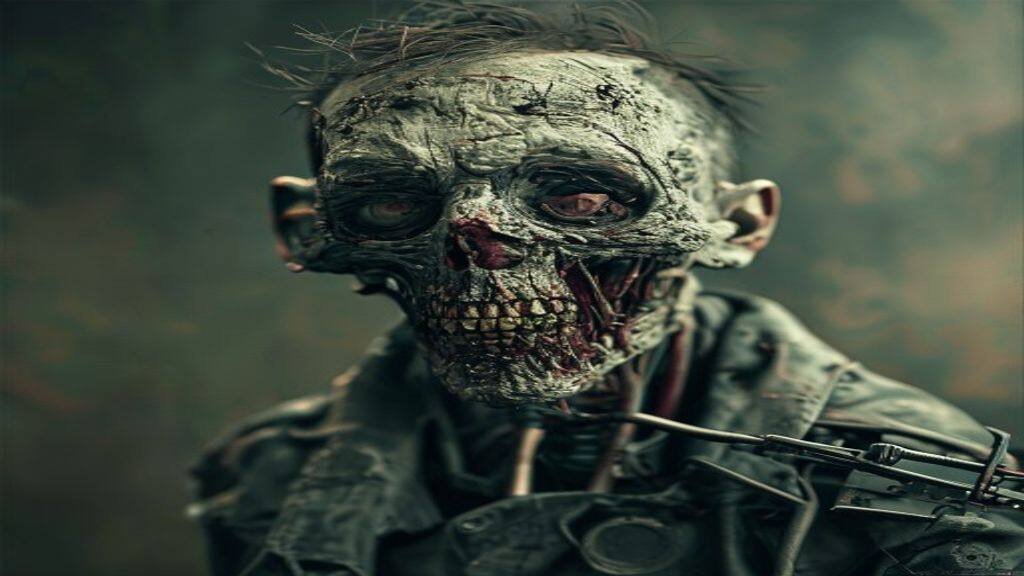
The intersection of artificial intelligence and cinematic storytelling has long been a subject of both fascination and trepidation. From the uncanny valley of digital avatars to the promise of infinite procedural content, the industry is currently undergoing a seismic shift. Recently, director Neill Blomkamp—known for his gritty, grounded approach to science fiction in films like District 9 and Elysium—dipped his toes into this experimental waters with a new project centered on zombie-themed artificial intelligence. However, rather than signaling a revolution in filmmaking, the reception suggests that we may be witnessing the birth of a new kind of creative stagnation: the “AI slop” era.
The Illusion of Innovation
When news broke that Neill Blomkamp was exploring AI-generated content, fans of his high-concept, visual-effects-heavy style were understandably intrigued. Blomkamp has always been an auteur who prioritizes texture and tactile realism, often blending low-fi aesthetics with high-concept sci-fi tropes. Yet, this recent foray into zombie-centric AI generation feels markedly different. Instead of the meticulous craft that defined his early career, the output feels hollow, derivative, and strangely familiar—a phenomenon often described by critics as “slop.”
The term “slop” in the context of generative AI refers to content that is technically functional but aesthetically and emotionally bankrupt. It is the digital equivalent of processed food: it looks like a film, it moves like a film, but it lacks the nutritional value of human intent. In the case of Blomkamp’s latest experiment, the AI-generated imagery and narrative fragments lean heavily on the very zombie tropes that have been exhausted by decades of cinema. Rather than pushing the medium forward, the project appears to be regurgitating visual data sets that have been scraped from existing horror films, resulting in a product that feels like a collage of everything we have seen before, just rendered with a slightly strange, algorithmic sheen.
The Technical Limitations of Algorithmic Horror
At the heart of the issue is the inherent limitation of current generative models. While these tools are excellent at pattern recognition and stylistic mimicry, they lack the capacity for subversion. Horror, particularly the zombie subgenre, relies on subtext, pacing, and the deliberate manipulation of tension. These are human variables. An AI, no matter how sophisticated, does not understand the “why” behind a jump scare or the social commentary inherent in a zombie uprising.
Blomkamp’s project highlights a growing trend where creators use AI as a shortcut rather than a tool. By relying on generative models to fill in the blanks, the production loses the “happy accidents” and the nuanced directorial choices that make a film feel alive. The resulting visuals are often plagued by the classic hallmarks of AI: inconsistent lighting, morphing textures, and a lack of weight in the character movements. When these flaws are applied to the grotesque nature of zombies, the result isn’t “uncanny” in a compelling way; it is simply distracting.
The Crisis of Originality
What makes this specific project so jarring for observers is the pedigree of the man behind the camera. Blomkamp is a filmmaker who built his reputation on distinct, singular visions. To see that same creative energy funneled into a project that feels like a generic output from a prompt-based tool is disheartening. It raises a broader question for the industry: if even the visionaries are defaulting to AI-generated “slop,” what hope is there for the preservation of original, human-led storytelling?
The problem isn’t necessarily the technology itself, but the application. When AI is used to enhance rotoscoping, assist in complex lighting simulations, or aid in pre-visualization, it can be a boon to the industry. However, when it is used to generate the “content” itself, it inevitably flattens the creative landscape. It creates a feedback loop where the AI learns from movies, then movies are made by AI, leading to a future where cinema becomes increasingly homogenous and devoid of the cultural friction that births true art.
Consumer Fatigue and the Future of Media
Audiences are becoming increasingly adept at spotting the “AI aesthetic.” There is a certain glossiness, a lack of grit, and a specific type of motion blur that signals to the viewer that they are looking at something synthesized rather than captured. For a director whose brand is built on “gritty realism,” leaning into this aesthetic feels like a betrayal of the very texture that made his earlier work so iconic. If the audience cannot connect with the characters on a human level because those characters are merely mathematical averages of past performances, the emotional core of the film evaporates.
As we move further into this decade, we are likely to see a bifurcation in the market. On one side, there will be the “AI-generated” content—cheap, fast, and ultimately forgettable. On the other, there will be a premium placed on work that is demonstrably human-made. Blomkamp’s project serves as a cautionary tale: technology is a powerful servant, but it makes for a terrible creative partner when it is allowed to dictate the vision.
Outlook
The experiment with AI-generated zombie content serves as a wake-up call for both creators and consumers. While the allure of automated production is strong, the current output suggests that we are still a long way from AI being capable of replacing the soul of a director. Moving forward, the industry must decide whether it values the efficiency of the algorithm or the messy, inefficient, and deeply human process of artistic creation. For now, the “slop” is merely a curiosity, but if it becomes the standard, the future of the silver screen may look much more artificial than we ever imagined.
Original reporting: source.