













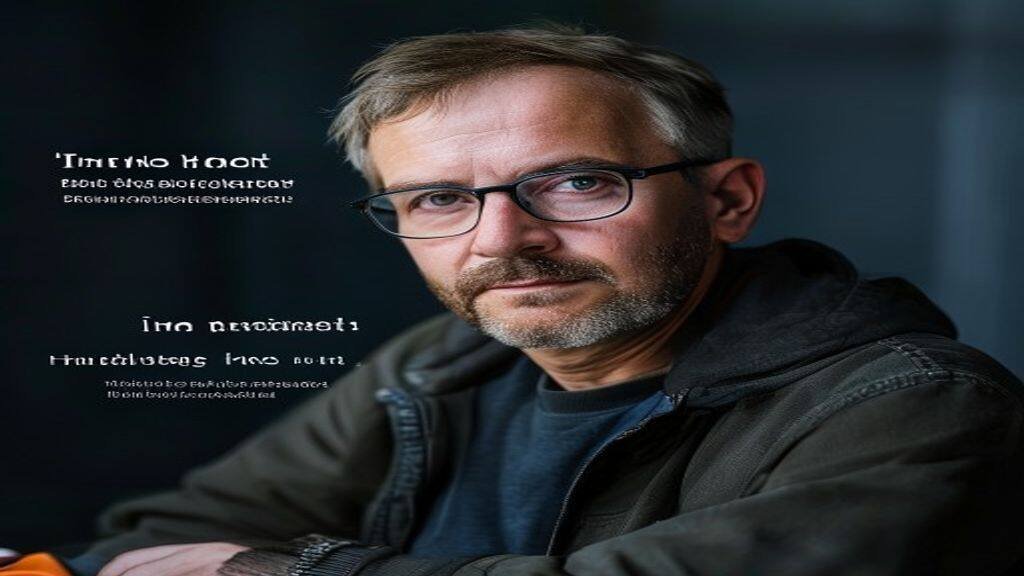
For over three decades, Linus Torvalds has been the undisputed architect of the digital infrastructure that powers the modern world. As the creator of both the Linux kernel and the Git version control system, his influence on software engineering is immeasurable. However, in a recent candid reflection on his evolving role within the open-source community, Torvalds offered a surprising admission: he no longer considers himself a “programmer” in the traditional sense. Instead, he has pivoted toward a role defined by high-level architectural oversight and maintenance, relying on a surprisingly minimalist toolkit to manage the most complex collaborative software project in human history.
The Evolution of the Kernel Maintainer
To understand why Torvalds has stepped back from the keyboard in the capacity of a feature developer, one must look at the sheer scale of the Linux kernel. With tens of millions of lines of code and thousands of contributors submitting patches daily, the bottleneck is no longer the ability to write C code; it is the ability to manage the flow of information and ensure the structural integrity of the project. Torvalds has spent years transitioning from the person who writes the code to the person who curates it.
In his own words, the transition from “programmer” to “maintainer” is a fundamental shift in mindset. A programmer is occupied with the intricacies of algorithms, memory management, and performance optimization. A maintainer, by contrast, is occupied with trust, communication, and architectural consistency. Torvalds argues that his value to the project is no longer in his ability to craft a clever function but in his ability to judge whether a contribution fits the overarching philosophy of Linux. This shift reflects a broader trend in senior engineering roles: the most critical technical work often happens at the social and design layers, not at the syntax layer.
The Minimalist Toolkit: Email and Git
Perhaps the most fascinating aspect of Torvalds’ workflow is its defiance of modern development trends. In an era dominated by sophisticated Integrated Development Environments (IDEs), AI-assisted coding tools, and complex project management suites, Torvalds has remained steadfastly loyal to two foundational pillars: email and Git.
His reliance on email—specifically through the use of mailing lists—is legendary. While many organizations have migrated to platforms like Slack, Jira, or GitHub Issues, Torvalds maintains that the asynchronous nature of email is superior for technical discourse. Email lacks the performative pressure of instant messaging; it forces contributors to write coherent, well-thought-out arguments that can be archived and referenced for years. For Torvalds, the mailing list is the “source of truth” that documents not just the code, but the rationale behind every architectural decision.
The second pillar, Git, is the tool he built specifically to solve the problems of distributed development. While Git has become the global standard for version control, Torvalds uses it primarily as a tool for verification. By leveraging Git’s cryptographic hashing and branching capabilities, he can perform deep audits of code submissions. For him, these tools are not merely utilities; they are the infrastructure of trust. By keeping his workspace sparse, he avoids the “feature bloat” that often plagues development environments, allowing him to focus entirely on the logic and safety of the submitted patches.
The Philosophy of “No”
A significant portion of Torvalds’ current work involves saying “no.” In technical circles, the role of a gatekeeper is often misunderstood as being obstructive, but Torvalds views it as a form of protection. Every line of code added to the kernel represents a long-term maintenance liability. By refusing to merge code that is poorly documented, unnecessarily complex, or outside the scope of the kernel’s goals, he preserves the project’s longevity.
He notes that his lack of “programming” in the creative sense allows him to maintain the objectivity required for this gatekeeping. If he were emotionally invested in writing new features, he might be more lenient toward his own code or the code of his close peers. By framing himself as a curator, he removes the ego from the equation. The code belongs to the project, not the author, and his job is to ensure that the project remains lean and performative for decades to come.
The Future of Open Source Stewardship
As we look toward the future, Torvalds’ approach offers a sobering lesson for the tech industry. We are currently living through a period of intense hype regarding AI-driven coding agents and automated software generation. While these technologies promise to increase output, they do not necessarily solve the problem of maintenance. As software grows more complex, the need for human curators—people who can understand the “why” and the “how” of a system—becomes more acute.
Linus Torvalds may no longer identify as a programmer, but in many ways, his work has become more vital than ever. By stripping away the distractions of modern tooling and focusing on the core principles of clear communication and rigorous code review, he has provided a roadmap for how to manage software at scale. Whether or not his model of email-based maintenance remains the standard for the next generation of developers, his legacy is a testament to the idea that sometimes, the most effective tool for managing complexity is simply the ability to say no to everything that doesn’t matter.
Original reporting: source.