













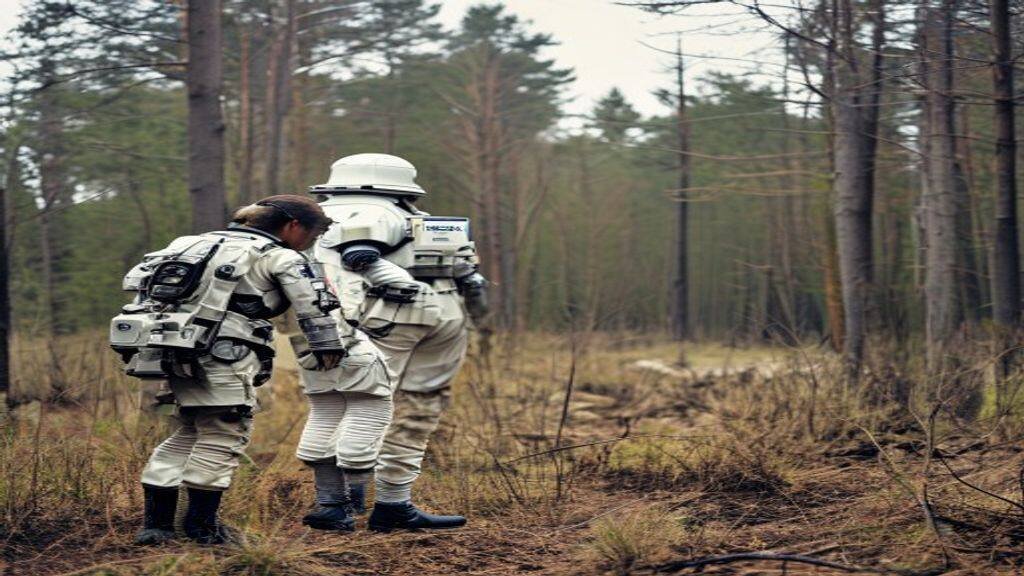
In a strategic administrative maneuver that underscores a shift in federal land management priorities, NASA has officially transferred custody of a significant tract of Maryland woodland to the U.S. Fish and Wildlife Service (USFWS). While the space agency is typically associated with high-tech hardware, orbital mechanics, and extraterrestrial exploration, its role as a steward of vast terrestrial landscapes is often overlooked. This latest transition represents a calculated effort to align environmental conservation mandates with the logistical realities of modern aerospace operations, ensuring that ecological preservation takes precedence over industrial maintenance in areas no longer vital to mission-critical activities.
The Evolution of NASA’s Real Estate Portfolio
For decades, NASA has maintained expansive land holdings surrounding its major installations to serve as buffer zones, security perimeters, and testing grounds. The Maryland woodland in question, situated near the Goddard Space Flight Center, has long served as a quiet neighbor to some of the world’s most advanced satellite technology and climate research facilities. These lands were originally acquired to provide the isolation required for sensitive testing, but as technology has advanced—moving toward more compact, digital-first modeling and smaller-scale hardware testing—the necessity for such massive acreage has diminished.
The decision to transfer this property is not merely a bureaucratic downsizing; it is a reflection of how tech-driven organizations are auditing their physical footprints. In an era where “smart” infrastructure and data-driven site management are becoming the norm, NASA has opted to offload the management of undeveloped ecosystems to a federal agency better equipped for the task. The USFWS, which specializes in habitat restoration and the protection of migratory species, is uniquely positioned to manage these woodlands with a level of scientific expertise that an aerospace agency simply does not prioritize in its core competency.
Synergy Between Tech Buffers and Biological Diversity
One might wonder why a technology-focused outlet would concern itself with a land transfer. The answer lies in the intersection of environmental technology and land-use data. As NASA pivots toward a more sustainable operational model, the integration of “green buffers” around high-tech facilities has become a blueprint for modern industrial planning. By handing over these woodlands to the USFWS, NASA ensures that the data collected on these sites—ranging from carbon sequestration metrics to local biodiversity health—remains protected under federal conservation standards.
This woodland serves as an essential corridor for local wildlife, and its transition to the USFWS implies a shift toward “passive” tech integration. Instead of industrial maintenance, the site will likely see the deployment of advanced sensor arrays and IoT-based environmental monitoring tools. These devices will allow the USFWS to keep a vigilant eye on the health of the forest, providing NASA with valuable environmental data that can be cross-referenced with satellite imagery. It is a symbiotic relationship: NASA provides the initial land and potential technical support, while the USFWS provides the biological governance required to keep the ecosystem thriving.
Technological Implications for Land Management
The transfer also highlights a broader trend in how federal agencies are utilizing GIS (Geographic Information Systems) and satellite-linked data to manage terrestrial assets. The Maryland site is expected to become a testbed for new conservation gadgets, including autonomous drones for forest canopy surveying and solar-powered acoustic sensors designed to monitor bird populations. As these gadgets become more sophisticated, the USFWS will be able to manage this woodland with unprecedented precision, minimizing human impact while maximizing ecological output.
Furthermore, the move signals a departure from the mid-20th-century model of land management, which often prioritized keeping land “locked away” behind fences. The modern approach, favored by agencies like NASA and the USFWS, is one of active, tech-enabled stewardship. By leveraging small-scale electronics and remote sensing, the land can be kept in a “wild” state while being monitored as closely as a server room. This shift allows NASA to focus its budget on the next generation of space exploration while ensuring that the land it once held remains a protected asset for the public good.
Balancing Mission Objectives with Environmental Responsibility
Critics of large federal land ownership often point to the “unused” nature of these buffer zones. However, the partnership between NASA and the USFWS effectively silences these concerns by demonstrating that land can be both a scientific resource and a natural sanctuary. For the tech community, the transfer is a lesson in resource optimization. Just as a software company might sunset an old, bloated application in favor of a lean, efficient service, NASA is sunsetting its responsibility for land maintenance in favor of a specialized agency that can handle the asset more effectively.
This handover is also a testament to the fact that high-tech research and wildlife conservation are not mutually exclusive. The Maryland woodland remains a critical component of the regional environmental network, and its future under the USFWS will be defined by the very same spirit of data collection and observation that defines NASA’s satellite missions. Whether it is tracking a rare species or monitoring soil quality, the tools of the trade remain rooted in the same high-tech hardware that powers NASA’s mission control centers.
Outlook: A Model for Future Federal Partnerships
Looking ahead, this transfer of ownership sets a significant precedent for how federal agencies can trade or transfer assets to better serve the public interest. As technology makes it easier to monitor and protect land from a distance, we can expect to see more of these “tech-enabled” handoffs between agencies. The Maryland woodland will likely serve as a flagship site for how the USFWS integrates NASA-derived data to enhance conservation efforts. For tech enthusiasts and environmentalists alike, this partnership represents a promising future where the best of our aerospace innovation is used to protect the very Earth we stand upon, ensuring that the legacy of these woodlands is one of both scientific progress and natural preservation.
Original reporting: source.