














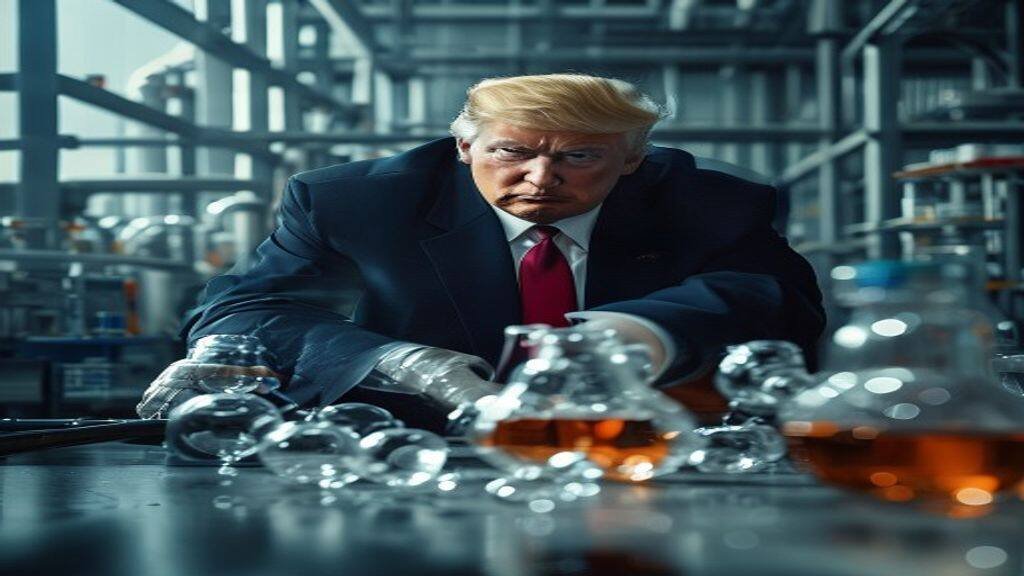
In the landscape of American industrial regulation, few frameworks have sparked as much debate as the Environmental Protection Agency’s (EPA) Risk Management Program (RMP). Designed in the wake of catastrophic industrial failures, this program serves as a critical safety net for communities situated near chemical facilities. However, recent discourse surrounding the Trump administration’s efforts to roll back these specific safety protocols has ignited a firestorm of controversy. As data suggests a parallel rise in chemical incidents across the United States, observers are left grappling with a fundamental question: at what point does regulatory streamlining cross the line into public endangerment?
The Evolution of the Risk Management Program
The RMP was originally conceived to ensure that facilities handling hazardous materials—ranging from ammonia and chlorine to volatile petrochemicals—operate with a high degree of transparency and rigorous preventative maintenance. Following the 2013 West Fertilizer Company explosion in Texas, which claimed 15 lives and devastated a small town, there was a broad consensus that the existing rules were insufficient. The subsequent 2017 amendments aimed to modernize these standards by requiring third-party audits, improved information sharing with local first responders, and a deeper analysis of safer technology alternatives.
When the Trump administration took office, the regulatory philosophy shifted toward a mandate of “deregulation for economic growth.” The EPA, under this directive, moved to rescind or delay many of the 2017 updates. The administration argued that these requirements placed an undue financial burden on small businesses and that existing oversight was already robust enough to manage operational risks. This pivot marked a significant departure from the post-West Fertilizer momentum, prioritizing industrial efficiency over the implementation of more stringent, preventative safety technologies.
Data Trends: A Correlation of Concern
For those tracking industrial safety, the statistics emerging from the last several years provide a sobering backdrop to the policy debate. Independent analyses conducted by environmental advocacy groups and data journalists have pointed to a notable increase in chemical “near-misses” and full-scale accidents. While the chemical industry often argues that these fluctuations are the result of better reporting mechanisms or seasonal industrial surges, critics contend that the weakening of oversight has fostered a culture of complacency.
One of the most contentious aspects of the rollback is the removal of the requirement for “root cause analysis” following accidents. Without a federal mandate to investigate exactly why a valve failed or why a containment system was overwhelmed, facilities are less likely to implement systemic changes that could prevent a repeat performance. Furthermore, by reducing the frequency of mandatory public meetings, the administration has arguably curtailed the ability of local communities to demand safer practices from the plants in their backyards. For a facility manager, the reduced cost of compliance is a clear win; for a resident living downwind, the reduction in oversight feels like a gamble with their health and safety.
The Conflict Between Economic Efficiency and Public Safety
The core of the dispute lies in how one defines “risk.” Proponents of the rollback assert that the chemical industry is a cornerstone of the American economy and that excessive red tape prevents firms from innovating or expanding. They argue that market forces, combined with existing OSHA (Occupational Safety and Health Administration) and state-level requirements, are sufficient to deter negligence. In their view, the 2017 RMP updates were an example of bureaucratic overreach that offered diminishing returns on safety while creating significant administrative bloat.
Conversely, public health experts and community organizers argue that market forces are a poor substitute for federal safety standards. They point out that chemical facilities are often located in low-income or marginalized neighborhoods, creating an environmental justice crisis. When safety rules are softened, it is these vulnerable populations who bear the brunt of the fallout from chemical leaks, fires, and explosions. The technical complexity of these facilities means that a single mistake can have cascading effects, and the potential for catastrophic loss—both in human life and environmental degradation—far outweighs the cost of installing updated sensors or conducting regular safety audits.
The Path Forward: Balancing Industry and Accountability
As the legal and political tug-of-war over these regulations continues, the industrial sector remains in a state of uncertainty. Many larger corporations have continued to follow higher safety standards as a matter of internal policy and liability protection, but smaller facilities—the ones most likely to be affected by the regulatory changes—are often the least equipped to handle a major accident. The absence of a uniform, stringent federal standard creates a fragmented landscape where safety is essentially dictated by a company’s corporate culture rather than a baseline requirement of operation.
Looking ahead, the debate over the RMP is likely to serve as a bellwether for future environmental and industrial policies. The tension between the desire for a streamlined, deregulated economy and the necessity of protecting the public from industrial hazards shows no sign of abating. Moving forward, the focus may need to shift toward a middle ground: one that provides clear, actionable safety mandates that are not overly burdensome for small businesses, but that also restore the transparency and accountability measures that were lost. Whether the government can craft such a compromise remains to be seen, but as chemical incidents continue to make headlines, the demand for a more robust safety framework is only likely to grow louder.
Original reporting: source.