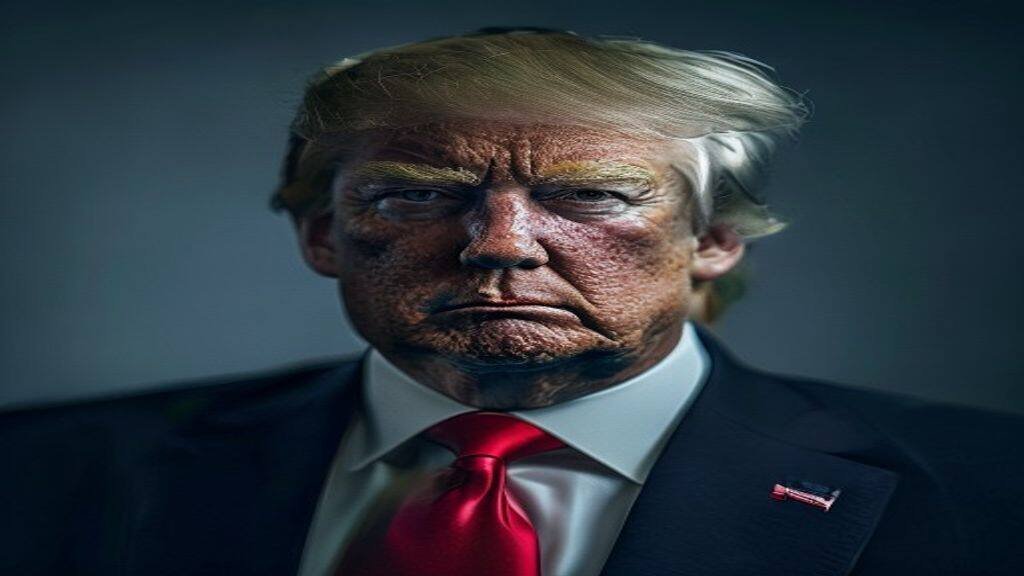
In a development that has sent ripples through the corridors of Washington D.C. and Silicon Valley alike, the inaugural tenure of Donald Trump’s appointed “AI Czar” has come to a swift and unexpected conclusion. The position, designed to spearhead the administration’s strategy regarding the rapid evolution of artificial intelligence, was meant to be the cornerstone of a new regulatory and innovation framework. Instead, the sudden resignation has left industry observers questioning the stability of the White House’s technological agenda and the complexities inherent in governing a field that is moving faster than the bureaucracy meant to oversee it.
The Ambition Behind the AI Czar Role
When the position of AI Czar was first announced, it was framed as a necessary evolution of the executive branch’s response to the generative AI boom. The mandate was broad and ambitious: to harmonize the competing interests of national security, economic competitiveness, and ethical guardrails. The administration sought an individual who could bridge the gap between the aggressive, profit-driven motives of Big Tech and the cautious, security-focused concerns of federal intelligence and defense agencies.
The appointment was initially met with a blend of optimism and skepticism. Supporters argued that having a single, high-level official dedicated to AI would streamline federal policy, preventing the current patchwork of disjointed guidelines from stifling innovation. Critics, however, pointed out that the role lacked a clear legislative foundation, fearing that the Czar would become a figurehead without the actual authority to enforce policy across entrenched federal departments. This tension between the desire for centralized control and the reality of fragmented government power appears to have played a significant role in the internal friction that preceded the resignation.
The Cracks in the Facade
While the official statement regarding the departure cited “personal reasons” and a desire to “pursue other opportunities,” sources close to the administration suggest a much more nuanced conflict. It is understood that the former Czar faced significant hurdles in aligning the administration’s stated goal of “unfettered innovation” with the stringent security requirements demanded by the Department of Defense and the Department of Commerce. Balancing the need to keep American AI companies ahead of global competitors—most notably China—while simultaneously addressing the existential risks posed by advanced models, created an impossible tightrope walk.
Furthermore, the internal power dynamics within the West Wing are notoriously fluid. The AI Czar’s office found itself competing for resources and influence against established cabinet departments that were reluctant to cede their jurisdictional authority over technology policy. This bureaucratic infighting, combined with the immense pressure from external stakeholders—ranging from open-source advocacy groups to the major AI labs in California—created an environment of constant friction. The resignation is widely viewed by political analysts as a symptom of a broader lack of consensus within the current administration on exactly how much the federal government should intervene in the AI ecosystem.
Industry Response and Market Implications
The technology sector’s reaction to the news has been one of cautious observation. For many in Silicon Valley, the AI Czar was seen as a potential point of contact to influence future executive orders and legislative drafts. The sudden vacancy creates a period of uncertainty, which markets rarely favor. Companies invested in AI development are now in a “wait and see” mode, wondering if the position will be filled by a political loyalist or a technical expert, and whether the scope of the role will be narrowed or expanded in the wake of this exit.
Some industry leaders have expressed concern that the resignation signals a deeper disarray in federal tech policy. If the administration cannot retain top-tier talent for a role that was marketed as a high-priority initiative, it raises questions about the long-term viability of their AI strategy. Conversely, others argue that the departure might be a blessing in disguise, providing an opportunity for the White House to rethink its approach to AI governance and perhaps adopt a more collaborative, less top-down methodology.
The Broader Context of AI Governance
This incident highlights a fundamental truth about the current era of artificial intelligence: there is no playbook for governing a technology that evolves on a weekly basis. Traditional government cycles, which prioritize deliberation and consensus, are struggling to keep pace with the iterative nature of machine learning advancements. The role of an AI Czar is inherently precarious because it requires a deep understanding of technical architecture paired with the political acumen to navigate a polarized Congress.
As we move forward, the challenge for the administration is not just finding a replacement, but defining what the role should actually accomplish. Is the goal to regulate the safety of models, or is it to subsidize the infrastructure required to build them? Without a clear consensus on these priorities, the office of the AI Czar risks becoming a revolving door for professionals who find themselves unable to enact meaningful change within a rigid institutional framework.
Outlook: What Comes Next?
The immediate aftermath of this resignation will likely involve a period of reassessment within the White House. It is expected that the administration will temporarily distribute the Czar’s responsibilities among existing staff and advisory councils while searching for a successor. However, the vacancy serves as a stark reminder that technology policy is no longer a peripheral concern; it is central to national security and economic prosperity. Whoever steps into this role next will need to possess not only the technical expertise to understand the nuances of large language models and compute constraints but also the political capital to command respect from both the private sector and the federal bureaucracy. Whether the administration chooses to appoint a new Czar or pivot to a different governance structure, the world remains watching, waiting to see if Washington can successfully translate the promise—and the peril—of artificial intelligence into coherent, lasting policy.
Original reporting: source.