














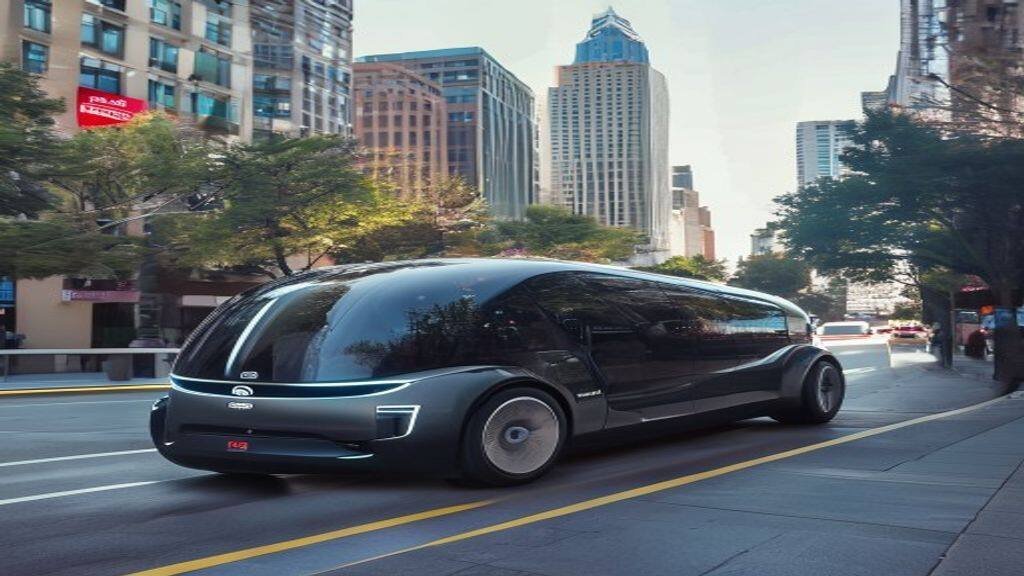
In the rapidly evolving landscape of autonomous transportation, even the most advanced systems are subject to the occasional hiccup. On a recent Tuesday, residents and visitors in San Francisco experienced a brief but notable disruption in one of the city’s most futuristic services: Waymo. The Alphabet-owned company, which has become a staple of the Bay Area’s transit ecosystem, temporarily suspended its driverless ride-hailing operations for approximately one hour. While the pause was relatively short, it served as a stark reminder of the complexities inherent in deploying artificial intelligence on public roads and the rigorous safety protocols that govern the autonomous vehicle (AV) industry.
The Anatomy of the Brief Suspension
The disruption began in the early afternoon, leaving many users unable to hail a vehicle through the Waymo app. For those accustomed to the convenience of summoning a Jaguar I-PACE equipped with Waymo’s fifth-generation Driver system, the sudden unavailability of the fleet was immediately apparent. According to reports from the company, the pause was not prompted by a catastrophic mechanical failure or a collision, but rather by an internal operational decision to address a specific software-related anomaly. In a city as densely populated and logistically challenging as San Francisco, Waymo’s fleet is constantly processing massive amounts of sensor data, from pedestrian movements to unpredictable traffic patterns.
When the system detected a discrepancy that required human oversight, the company’s operations team opted for a “soft pause” of the service. This move, while inconvenient for commuters, highlights the “safety-first” philosophy that Waymo has championed throughout its years of testing. By grounding the fleet, the company ensured that no autonomous vehicles were navigating the complex grid of San Francisco while engineers assessed the integrity of the software update or environmental data feed in question. Within sixty minutes, the diagnostics were completed, the necessary adjustments were pushed to the fleet, and the service resumed its normal operations across the city.
Data-Driven Safety vs. Public Convenience
The incident raises a broader question regarding the balance between the rapid scaling of autonomous technology and the maintenance of public trust. Waymo has been operating in San Francisco for years, transitioning from a restricted testing phase to a fully public, 24/7 ride-hailing service. During this time, the company has faced intense scrutiny from local regulators, labor unions, and the general public, particularly concerning how these vehicles react to emergency responders and unexpected road obstructions. A one-hour suspension, while seemingly minor, represents a significant operational cost for a company that prides itself on reliability.
However, from a technical standpoint, such an interruption is arguably a sign of a mature safety culture. In the early days of autonomous testing, companies often prioritized “uptime” to demonstrate the viability of their hardware. Today, the focus has shifted toward predictive maintenance and proactive safety. If the onboard AI determines that its confidence levels regarding environmental interpretation have dipped below a pre-set threshold, pulling the vehicle over—or pausing the entire service—is the standard operating procedure. These “proactive pauses” are designed to prevent the very accidents that critics fear, ensuring that the technology remains a net positive for urban safety.
The Regulatory Landscape and Public Perception
San Francisco serves as the primary testing ground for the future of urban mobility, and Waymo’s presence is central to that narrative. The California Public Utilities Commission (CPUC) and the Department of Motor Vehicles (DMV) keep a close watch on these developments. Every time a Waymo vehicle is involved in a traffic incident or requires an operational pause, it becomes a data point in a larger debate about whether autonomous technology is truly ready for prime time. The company’s ability to communicate these pauses transparently to the public is crucial for maintaining its “Robotaxi” permit status.
Furthermore, the public’s perception of these vehicles is fragile. While many San Franciscans have embraced the technology as a reliable alternative to traditional rideshare services, others remain skeptical. A temporary pause can be interpreted by critics as evidence of the system’s instability. Conversely, proponents argue that the ability to remotely disable a fleet in response to a software anomaly is a feature that human drivers cannot replicate. A human driver cannot be “patched” mid-commute; an autonomous vehicle, however, can receive real-time updates that enhance its decision-making capabilities across the entire fleet simultaneously.
Technical Resilience in the Modern City
The architecture behind Waymo’s service is a marvel of edge computing and cloud integration. Each vehicle is essentially a high-performance data center on wheels, constantly communicating with Waymo’s operations centers. When a pause occurs, it is rarely due to a single vehicle failing, but rather a fleet-wide check triggered by a central command. This synchronization allows Waymo to maintain a consistent safety standard across thousands of miles of driving. For the average user, the one-hour wait was a minor annoyance, but for the engineers behind the curtain, it was a successful execution of a fail-safe protocol that kept the streets of San Francisco secure.
Future Outlook
Looking ahead, we can expect these types of operational pauses to become both less frequent and more sophisticated as machine learning models improve. As Waymo continues to expand into new markets and increase its vehicle density in San Francisco, the challenge will be to maintain this high level of safety without impacting the user experience. The industry is moving toward a future where autonomous transit is as ubiquitous as the smartphone, but the path to that reality is paved with these minor, necessary interruptions. For now, Waymo’s ability to pause, diagnose, and resume service within an hour serves as a testament to the robustness of its current operational infrastructure, suggesting that the era of the driverless city is still very much on track.
Original reporting: source.