


The Black Sea Stalemate: How Drone Warfare Redefined Maritime Logistics
In the evolving landscape of 21st-century conflict, the intersection of asymmetric drone warfare and global maritime trade has reached a critical inflection point. Recent developments in the Black Sea have demonstrated that a nation without a traditional blue-water navy can effectively neutralize the commercial shipping capabilities of a regional superpower. By leveraging low-cost, high-impact unmanned surface vehicles (USVs), Ukrainian forces have successfully disrupted Russian logistical operations, forcing a re-evaluation of how vital sea corridors are protected and controlled.
The Technological Shift in Naval Asymmetry
For centuries, naval dominance was measured in tonnage, armor plating, and the caliber of ship-borne artillery. However, the ongoing conflict in Ukraine has shifted the paradigm toward cost-effective, remotely operated technology. The emergence of Ukrainian-developed maritime drones—often small, agile, and semi-submersible—has turned the Black Sea into a testing ground for modern naval strategy. These vessels, capable of carrying significant explosive payloads over long distances, have proven to be exceptionally difficult for traditional radar systems to track, especially amidst the clutter of coastal waters.
The strategic brilliance of these strikes lies not just in the physical damage inflicted upon Russian hulls, but in the psychological and operational paralysis they induce. By targeting specific naval assets tasked with protecting commercial shipping lanes, Ukraine has effectively expanded its “anti-access/area-denial” (A2/AD) capabilities far beyond its own shoreline. The result is a tactical environment where the perceived risk of traversing the Black Sea has skyrocketed, leading to a de facto blockade of Russian-controlled ports by the very power that sought to dominate them.
The Economic Ripple Effect on Global Supply Chains
The disruption of shipping in the Black Sea is not merely a regional military issue; it is a global economic concern. Russia has long relied on these corridors for the movement of essential commodities, including grain, fertilizers, and energy products. When Ukrainian drone strikes forced a halt to these shipments, the immediate impact was felt across international commodity markets. Insurance premiums for vessels operating in the region reached prohibitive levels, and many commercial shipping conglomerates opted to suspend operations entirely to avoid the risk of being caught in the crossfire.
This economic pressure has forced Moscow to recalibrate its maritime strategy. Historically, Russia utilized its Black Sea Fleet to project power and maintain a secure perimeter for its merchant vessels. Now, those same warships are increasingly forced to remain in port or navigate with extreme caution, effectively neutering their role as protectors of trade. The disruption demonstrates a stark reality: in an era of precision drone strikes, the traditional “protection” offered by a navy is no longer a guarantee of safe passage.
Engineering Resilience: The “Sea Baby” and Beyond
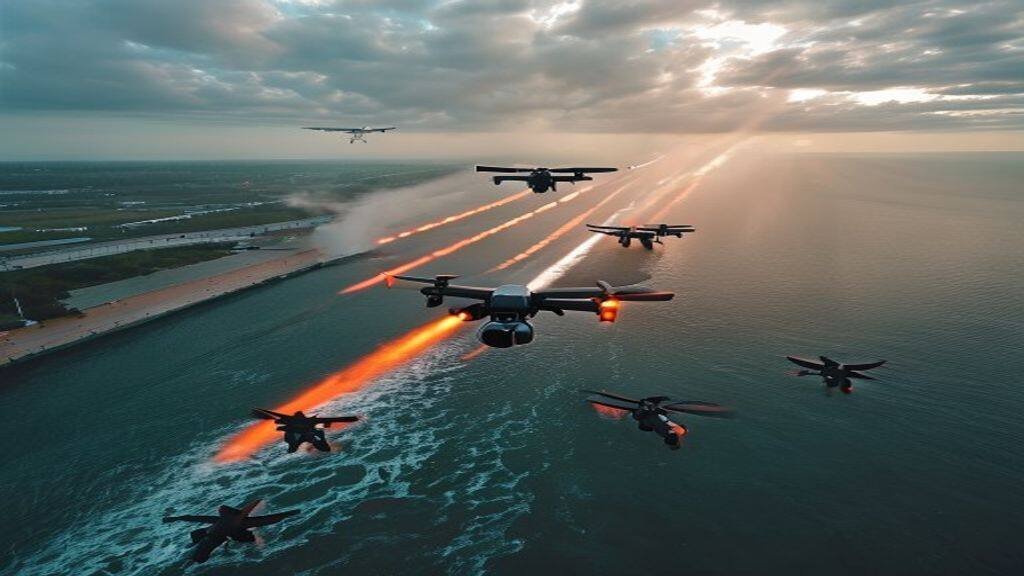
A significant factor in this shift is the rapid innovation cycle exhibited by Ukrainian engineers. The introduction of the “Sea Baby” drone and its successors represents a leap forward in unmanned maritime systems. Unlike early prototypes that were essentially converted civilian watercraft, these are purpose-built military assets designed for stealth, endurance, and target acquisition. Their ability to operate in swarm-like configurations complicates defensive measures for the Russian Navy, which was largely designed to counter conventional threats rather than a swarm of low-profile, high-speed drones.
Furthermore, the integration of satellite communications and advanced AI-driven targeting algorithms has allowed these drones to strike with pinpoint accuracy. By disabling key infrastructure, such as port facilities and oil terminals, Ukraine has shown that it can strike the “economic heart” of the Russian war machine without needing to engage in a traditional ship-to-ship engagement. This approach minimizes the risk to Ukrainian personnel while maximizing the operational costs for the Russian Federation, creating an unsustainable logistical burden that has forced the current pause in shipping.
Strategic Implications for Future Naval Doctrine
The events in the Black Sea serve as a cautionary tale for naval planners worldwide. The vulnerability of large, expensive surface combatants to inexpensive, mass-produced drones is a trend that will define naval procurement for the next decade. Major powers are now scrambling to develop counter-drone technologies, such as directed-energy weapons, high-speed automated interceptors, and improved electronic warfare suites, to protect their maritime interests.
This conflict has stripped away the illusion that naval superiority is an inherent trait of larger nations. It has proven that the democratization of precision strike technology allows smaller actors to punch well above their weight class. As maritime corridors become increasingly contested by unmanned systems, the distinction between “wartime” and “peacetime” shipping zones will continue to blur, necessitating a fundamental rethink of international maritime law and the safety protocols governing commercial transit in conflict-adjacent areas.
Outlook: A New Era of Maritime Uncertainty
Looking ahead, the situation in the Black Sea remains fluid. While Russia may attempt to restore its shipping capabilities through increased aerial surveillance and defensive patrols, the persistent threat posed by Ukrainian drones suggests that the era of unchallenged maritime control in the region has effectively ended. The ongoing standoff serves as a precursor to a new kind of naval warfare—one defined by stealth, automation, and the relentless pursuit of logistical disruption. As both sides continue to iterate on their drone technologies, the Black Sea will remain a volatile theater where the outcome of the war may ultimately be decided not by traditional battles, but by the ability to keep trade moving in the face of an invisible, highly lethal threat.
Original reporting: source.